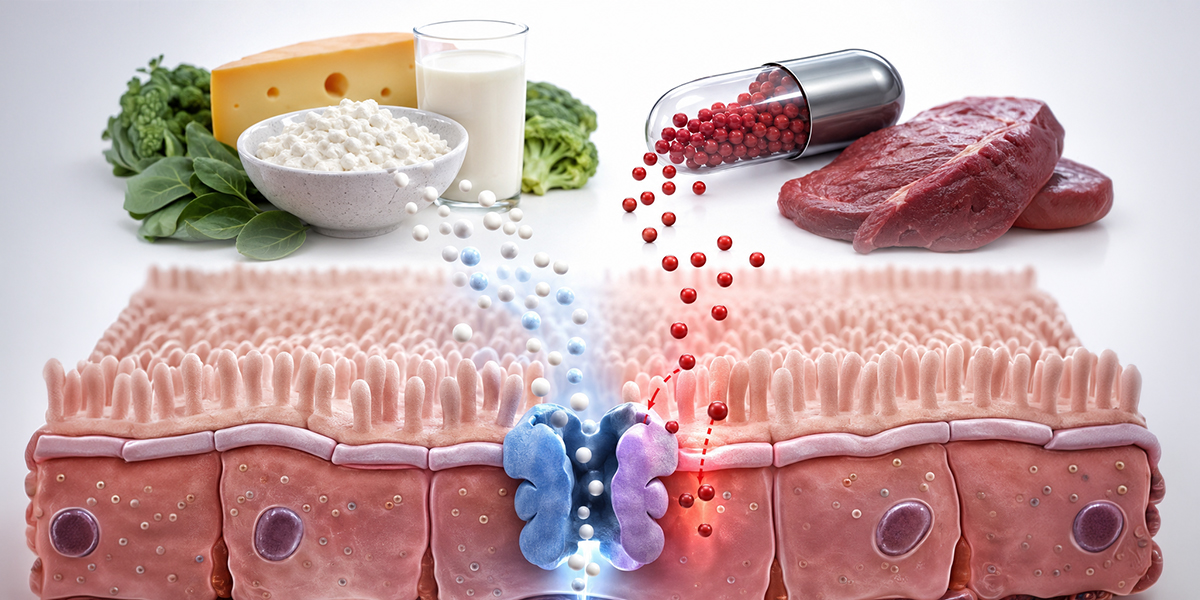


Calcium and iron are essential minerals that support important body functions, including bone strength, oxygen transport, energy production, and overall health.
However, taking calcium and iron together in the same meal or at the same time may reduce iron absorption. Understanding this interaction can help improve mineral utilization and reduce the risk of deficiency, especially in people with higher iron needs.
Table of Contents
Why Calcium and Iron Matter
Calcium is best known for supporting bone and teeth health, but it also plays a role in muscle contraction, nerve signaling, and normal heart function.
Iron is essential for producing hemoglobin, the protein in red blood cells that carries oxygen throughout the body.
Both minerals are important, but they may compete during digestion when taken together, especially when calcium is consumed in high amounts.
How Calcium Affects Iron Absorption
Calcium may interfere with the absorption of both heme iron from animal foods and non-heme iron from plant-based foods and supplements.
When calcium and iron are consumed together, calcium may compete with iron during absorption in the digestive tract, reducing the amount of iron the body can use.
This effect may be more noticeable when calcium supplements or high-calcium meals are taken with iron supplements or iron-rich meals.
- Calcium may reduce absorption of iron from food.
- The effect may apply to both heme and non-heme iron.
- High-dose calcium supplements may have a stronger impact.
- Iron supplements are best taken away from calcium supplements.
- Dairy-rich meals may reduce iron absorption when taken at the same time.
Why This Matters for Iron Levels
Reduced iron absorption over time may contribute to low iron stores, especially in people who already have higher iron needs or lower iron intake.
Women of reproductive age, athletes, people following vegetarian or vegan diets, and individuals with low ferritin may need to pay closer attention to iron absorption.
If calcium is regularly taken with iron-rich meals, it may make it harder to improve iron status through diet or supplementation.
| Situation | Possible Effect | Better Strategy |
|---|---|---|
| Iron supplement with calcium supplement | Reduced iron absorption | Separate by 2 to 3 hours |
| Iron-rich meal with dairy | Possible lower iron uptake | Take dairy at a different meal if iron is a priority |
| Plant-based iron meal | Non-heme iron may be more sensitive to inhibitors | Add vitamin C-rich foods |
| Low ferritin or anemia risk | Iron absorption becomes more important | Plan supplement timing carefully |
When the Interaction Becomes Significant
The interaction becomes more significant when high doses of calcium are taken at the same time as iron supplements or iron-rich meals.
Occasional intake of calcium and iron together may not cause major problems for everyone, especially if overall iron status is normal.
However, regular combination of calcium supplements, dairy-heavy meals, and iron supplements may reduce the effectiveness of iron intake over time.
Best Timing for Calcium and Iron Intake
To maximize absorption, calcium and iron are best taken at different times of the day.
A practical approach is to separate calcium and iron intake by at least two to three hours.
For example, iron may be taken earlier in the day with vitamin C-rich foods, while calcium may be taken later with another meal.
- Take iron away from calcium supplements.
- Separate calcium and iron by at least 2 to 3 hours.
- Avoid taking iron with dairy-rich meals when correcting low iron.
- Take calcium with meals if it improves tolerance.
- Follow professional guidance if using therapeutic iron doses.
Tips to Improve Iron Absorption
Iron absorption can be improved by pairing iron with supportive nutrients and avoiding common inhibitors around the same meal.
Vitamin C-rich foods such as citrus fruits, berries, kiwi, bell peppers, and tomatoes can help increase non-heme iron absorption.
At the same time, it may be helpful to avoid taking iron with calcium supplements, dairy products, tea, coffee, or high-fiber bran meals when iron levels are low.
- Take iron with vitamin C-rich foods or drinks.
- Avoid calcium supplements at the same time as iron.
- Keep tea and coffee away from iron-rich meals when possible.
- Choose well-absorbed iron forms when supplementation is needed.
- Monitor ferritin and hemoglobin if deficiency is suspected.
Frequently Asked Questions
Can I take calcium and iron together?
It is better not to take them together, especially if you are using iron supplements or trying to improve low iron levels. Separating them helps support better absorption.
How long should I separate calcium and iron?
A common recommendation is to separate calcium and iron by at least 2 to 3 hours to reduce competition during absorption.
Does milk reduce iron absorption?
Milk and dairy products contain calcium, which may reduce iron absorption when taken with iron-rich meals or iron supplements, especially in high amounts.
What should I take with iron to improve absorption?
Vitamin C-rich foods such as oranges, kiwi, berries, lemon, tomatoes, or bell peppers may help improve non-heme iron absorption.
Is this interaction important for everyone?
It is most important for people with low ferritin, iron-deficiency anemia, pregnancy, heavy menstrual bleeding, vegetarian diets, or higher iron needs.
Conclusion
Calcium and iron are both essential minerals, but taking them together may reduce iron absorption and limit the benefit of iron-rich foods or supplements.
Separating calcium and iron intake by two to three hours, taking iron with vitamin C-rich foods, and avoiding high-calcium meals around iron supplementation can help support better absorption, improved iron status, and overall energy levels.