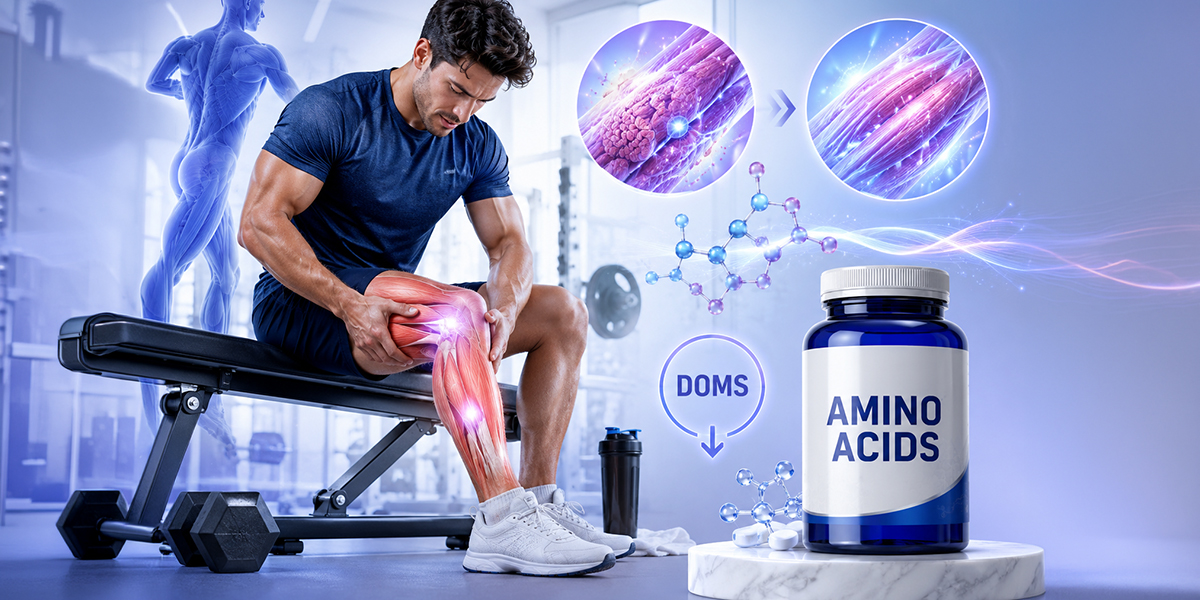


Delayed onset muscle soreness, commonly known as DOMS, is a common issue among athletes, beginners, and people returning to training after a break.
This soreness usually appears hours after intense exercise and may feel like stiffness, tenderness, or reduced muscle comfort. Amino acids can play an important role in supporting muscle repair, reducing exercise-related damage, and improving recovery after workouts.
Table of Contents
What Is DOMS?
DOMS refers to muscle soreness that develops after exercise, especially after intense resistance training, high-volume workouts, eccentric movements, or new exercises the body is not used to.
It is often linked to small amounts of muscle fiber stress, inflammation, and temporary changes in muscle function.
Although DOMS is usually not dangerous, it can affect movement, training consistency, and performance in the following workout sessions.
Amino Acids and Muscle Damage Reduction
Amino acids are the building blocks of protein and are essential for repairing and maintaining muscle tissue.
Certain amino acids, especially branched-chain amino acids known as BCAAs and amino acids such as glutamine, may help support the body’s response to muscle stress caused by exercise.
By supporting muscle tissue repair and reducing the impact of exercise-induced damage, amino acids may help reduce soreness intensity and support faster return to training.
- May help reduce exercise-related muscle breakdown.
- Support repair of stressed muscle fibers.
- May reduce soreness after intense training.
- Help support recovery between workout sessions.
- May be useful during high-volume or frequent training periods.
Stimulating Muscle Protein Synthesis
Amino acids provide the essential building blocks needed for muscle protein synthesis.
Muscle protein synthesis is the process through which the body repairs damaged fibers and builds stronger muscle tissue after training.
Essential amino acids, especially leucine, are particularly important because they help signal the body to begin the muscle repair and rebuilding process.
| Amino Acid Support | Main Role | Recovery Benefit |
|---|---|---|
| BCAAs | Support muscle protein synthesis and reduce breakdown | May help reduce post-workout soreness and fatigue |
| Essential Amino Acids | Provide complete building blocks for repair | Support muscle rebuilding after intense exercise |
| Glutamine | Supports recovery, immune function, and training stress response | May help during demanding training periods |
| Leucine | Key trigger for muscle protein synthesis | Supports repair and adaptation after workouts |
Reducing Inflammation and Oxidative Stress
Intense exercise can temporarily increase inflammation and oxidative stress in the muscles.
This response is part of normal training adaptation, but excessive stress may contribute to more soreness, stiffness, and slower recovery.
Some amino acids may help support antioxidant defenses, immune balance, and tissue repair, which may reduce discomfort and improve readiness for the next workout.
This effect may be especially useful for athletes training frequently, beginners exposed to new movements, or people performing high-intensity workouts.
How to Use Amino Acid Supplements
Amino acid supplements can be taken before, during, or after workouts depending on the goal.
Pre-workout or intra-workout use may help support endurance and reduce muscle breakdown during training, while post-workout use may help support recovery and muscle repair.
Typical serving sizes often range from 5 to 10 grams, depending on the product, amino acid type, body size, training intensity, and overall protein intake.
- Before workout: may support performance and reduce muscle breakdown.
- During workout: may support hydration formulas and endurance training.
- After workout: may support muscle repair and recovery.
- On rest days: may help maintain amino acid availability if protein intake is low.
- Choose high-quality products with clear labels and appropriate doses.
Natural Sources of Amino Acids
Amino acids are naturally found in protein-rich foods.
Animal protein sources such as meat, poultry, fish, eggs, milk, yogurt, and whey protein usually provide complete essential amino acids.
Plant-based sources such as legumes, soy, nuts, seeds, and whole grains can also contribute amino acids, especially when combined across the day to improve overall amino acid variety.
Supplements may provide additional support for athletes, people with high training volume, or individuals who struggle to meet protein needs through food alone.
Frequently Asked Questions
Can amino acids reduce DOMS?
Amino acids may help reduce the intensity of post-workout soreness by supporting muscle repair, reducing muscle breakdown, and improving recovery after intense exercise.
Are BCAAs useful for muscle soreness?
BCAAs may support recovery and reduce exercise-related muscle damage, especially when total protein intake is not optimal or training volume is high.
When should amino acids be taken?
They can be taken before, during, or after workouts. The best timing depends on training style, diet, recovery needs, and the supplement formula.
How much amino acid supplement is commonly used?
Many products provide serving sizes around 5 to 10 grams, but the ideal amount depends on the formula, body size, training intensity, and total protein intake.
Can food provide enough amino acids?
Yes. Protein-rich foods such as meat, eggs, dairy, fish, legumes, soy, nuts, and seeds can provide amino acids. Supplements are mainly useful for convenience or higher training needs.
Conclusion
Amino acids play an important role in reducing delayed onset muscle soreness and supporting muscle recovery after exercise.
By helping reduce muscle damage, stimulate muscle protein synthesis, and support recovery from inflammation and oxidative stress, amino acids can be a useful tool for athletes, beginners, and active individuals. For best results, they should be combined with adequate protein intake, proper hydration, sleep, and a well-structured training plan.