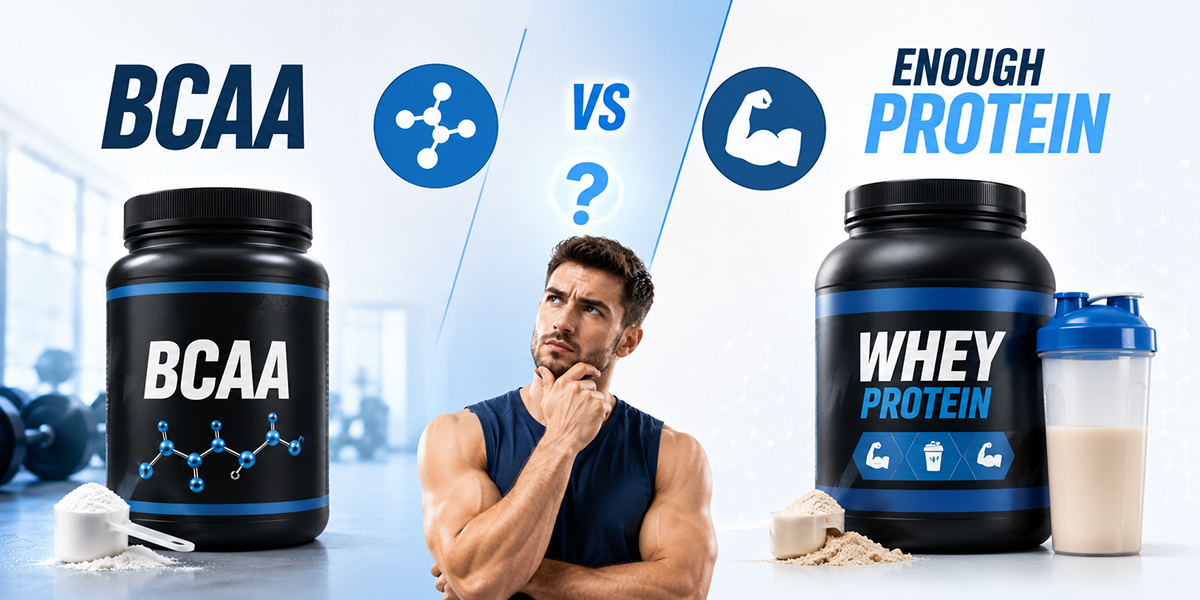


Branched-chain amino acids, commonly known as BCAAs, are among the most popular supplements used by athletes and fitness enthusiasts. They include three essential amino acids: leucine, isoleucine, and valine, which are closely linked to muscle protein synthesis, exercise performance, and recovery.
However, an important question remains: do you really need BCAA supplements if your daily diet already provides enough high-quality protein? Understanding this point helps athletes make smarter supplement choices based on real nutritional needs rather than marketing claims.
Table of Contents
Complete Protein Covers Your Needs
Complete protein sources such as meat, fish, eggs, dairy products, and high-quality protein powders contain all essential amino acids, including the three BCAAs: leucine, isoleucine, and valine.
If your total daily protein intake is already sufficient, your body typically receives enough BCAAs naturally from food. In this case, adding a separate BCAA supplement may not provide a major additional benefit for muscle growth or recovery.
For most active individuals, focusing on total daily protein intake is usually more important than adding isolated amino acids.
Situations Where BCAAs May Be Useful
Although BCAAs are not essential for everyone, they may still be useful in certain situations where protein intake is low or training demands are high.
BCAA supplements may be helpful during:
- Long training sessions.
- High-intensity endurance workouts.
- Training while fasting.
- Low-calorie dieting phases.
- Periods when meals are low in protein.
- Situations where a light intra-workout supplement is preferred.
In these cases, BCAAs may help support endurance, reduce perceived fatigue, and provide amino acid support during exercise.
The Role of Leucine in BCAAs
Leucine is considered the most important BCAA for stimulating muscle protein synthesis. It acts as a key signal that helps activate the muscle-building process.
However, leucine works best when the body also has enough of the other essential amino acids available. This is why complete protein sources or EAA supplements may provide broader support than leucine or BCAAs alone.
Difference Between BCAAs and EAAs
BCAAs contain only three essential amino acids: leucine, isoleucine, and valine. EAAs, or essential amino acids, include all nine essential amino acids required by the body.
This difference matters because muscle protein synthesis requires all essential amino acids, not only BCAAs.
| Supplement Type | Contains | Main Benefit |
|---|---|---|
| BCAAs | Leucine, Isoleucine, Valine | Muscle signaling and exercise support |
| EAAs | All 9 essential amino acids | More complete support for muscle protein synthesis |
| Complete Protein | All essential amino acids plus additional nutrients | Best overall support for daily protein needs |
Strategic Use of Supplements
BCAAs can be used strategically before or during workouts, especially by athletes who train fasted or perform repeated high-intensity sessions.
However, for most people, the priority should be:
- Meeting total daily protein needs.
- Choosing high-quality complete protein sources.
- Distributing protein intake across meals.
- Using BCAAs only when there is a clear need.
- Considering EAAs if a more complete amino acid supplement is desired.
Choosing reliable, high-quality products is also important to ensure safe and effective supplementation.
Frequently Asked Questions
Do I need BCAAs if I eat enough protein?
Usually no. If your daily protein intake is sufficient and comes from complete protein sources, extra BCAAs are generally unnecessary.
When are BCAAs useful?
They may be useful during fasted training, long workouts, low-calorie diets, or when protein intake is low.
Are EAAs better than BCAAs?
EAAs provide broader support because they contain all nine essential amino acids required for muscle protein synthesis.
Is leucine the most important BCAA?
Yes. Leucine plays a key role in activating muscle protein synthesis, but it works best when all essential amino acids are available.
Can BCAAs replace protein powder?
No. BCAAs do not provide complete protein and should not replace whole protein sources or complete protein supplements.
Conclusion
If you consume enough high-quality protein daily, additional BCAA supplements are generally unnecessary for muscle growth and recovery. Complete protein sources already provide leucine, isoleucine, valine, and the other essential amino acids needed for muscle repair.
However, BCAAs may still be useful in specific situations such as fasted training, long workouts, low-protein meals, or calorie-restricted phases. For broader support, EAAs or complete protein sources may be more effective choices.