

Introduction
Casein protein is one of the main proteins found in milk and has characteristics that differ significantly from whey protein. It is commonly known as the “slow protein” because of its gradual digestion and absorption.
This slow-release nature makes casein especially useful at specific times of the day, such as before bedtime, or when the goal is to support prolonged satiety and muscle preservation.
Table of Contents
What Is Casein Protein?
Casein is the predominant protein found in milk and represents a major portion of dairy protein.
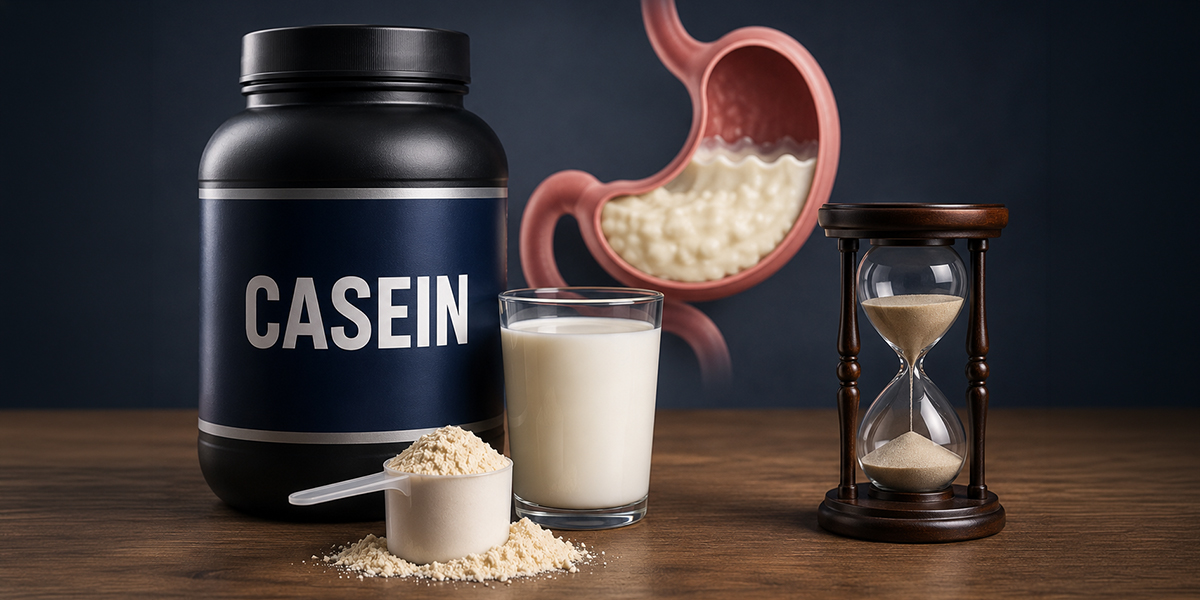
Its unique molecular structure allows it to coagulate in the stomach during digestion, forming a thicker consistency that slows down the digestive process.
This makes casein different from fast-absorbing proteins such as whey.
The Mechanism of Slow Digestion
When casein reaches the stomach, it forms a semi-gel-like substance. This slows gastric emptying and delays the release of amino acids into the bloodstream.
As a result, casein provides a gradual and sustained supply of amino acids over several hours.
Casein’s Effect on Muscle Protein Synthesis
Casein provides a sustained supply of amino acids, which may help reduce muscle protein breakdown during long fasting periods, such as overnight sleep.
While whey protein may stimulate muscle protein synthesis more rapidly, casein supports long-term muscle maintenance by providing amino acids over an extended period.
This makes casein especially useful when the body goes several hours without food.
Casein vs. Whey Protein
Both casein and whey are high-quality dairy proteins, but they behave differently in the body.
- Whey protein: Fast-digesting and ideal after workouts.
- Casein protein: Slow-digesting and ideal before long fasting periods.
- Whey: Rapid amino acid release.
- Casein: Sustained amino acid release.
- Whey: Stronger short-term stimulation of muscle protein synthesis.
- Casein: Better for prolonged amino acid availability.
Best Timing for Casein Protein
One of the most common uses of casein protein is before bedtime, as it can help nourish muscles throughout the night.
It may also be used:
- Between meals to support satiety.
- During long periods without food.
- As part of a muscle maintenance program.
- During weight management plans to help reduce hunger.
Practical Tips for Use
- Use casein before bedtime when aiming for overnight amino acid support.
- Mix with water or milk depending on calorie and taste preferences.
- Use it between meals when you need longer-lasting fullness.
- Combine with a balanced diet rather than relying on protein powder alone.
- Choose high-quality products from trusted brands.
FAQ
1. Why is casein called slow protein?
Casein forms a gel-like structure in the stomach, slowing digestion and releasing amino acids gradually over several hours.
2. Is casein better than whey protein?
Neither is always better. Whey is faster and useful after workouts, while casein is slower and useful before long fasting periods.
3. When should I take casein protein?
Casein is commonly taken before bedtime or between meals to support satiety and prolonged amino acid availability.
4. Can casein help with weight management?
It may help support fullness for longer periods, which can be useful as part of a balanced weight management plan.
5. Is casein suitable for people with lactose intolerance?
Some casein products may still contain lactose. People with lactose intolerance should check labels carefully or choose suitable alternatives.
Conclusion
Casein protein is called the slow protein because of its gradual digestion and sustained amino acid release. This makes it a practical choice for reducing muscle protein breakdown during extended periods without food, especially overnight.
Understanding the difference between casein and faster proteins like whey allows athletes and active individuals to use each protein type more strategically within their nutrition and training programs.