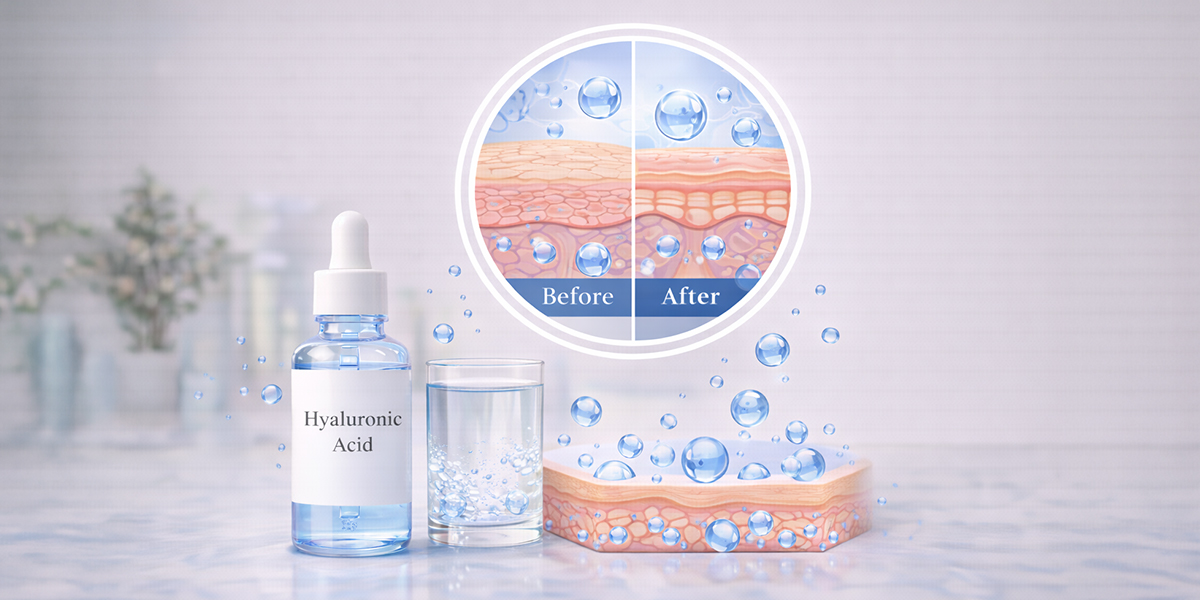


Hyaluronic acid is one of the most celebrated skincare ingredients worldwide for its powerful hydration properties. Known as a moisture magnet, it can hold up to 1,000 times its weight in water, helping the skin feel plump, soft, and smooth.
Beyond hydration, hyaluronic acid also supports the skin barrier, reduces the appearance of fine lines, and enhances the performance of other skincare ingredients. Choosing the right products from categories such as serum, moisturizer, face care, and beauty care can help you build a routine that keeps skin healthier, smoother, and better hydrated.
What Is Hyaluronic Acid and How It Works
Hyaluronic acid is a naturally occurring molecule found in the skin that attracts and retains water. Its main role is to help the skin stay hydrated, supple, and comfortable. Because it supports moisture balance so effectively, it has become a core ingredient in many face care and serum formulas.
Hyaluronic acid is available in different molecular weights, and this affects how it performs on the skin:
- High molecular weight HA: stays closer to the skin surface, helping form a light moisture-locking layer
- Low molecular weight HA: penetrates more deeply to support hydration within the upper skin layers
This combination can help improve elasticity, strengthen the skin barrier, and reduce the visible appearance of dehydration-related lines.
Benefits of Hyaluronic Acid for Skin
When used consistently, hyaluronic acid can provide several visible and practical skincare benefits. It is suitable for almost all skin types and works well in both simple and advanced routines.
- Intense hydration: helps fill moisture gaps and leaves skin feeling softer and smoother
- Plumps fine lines: dehydration lines may look less noticeable when the skin is well hydrated
- Supports the skin barrier: helps protect the skin from dryness and environmental stress
- Enhances other ingredients: works well alongside many active ingredients and supports overall routine performance
- Soothes and comforts skin: often suitable for sensitive or easily irritated skin
Because of these benefits, hyaluronic acid is commonly used in moisturizer, serum, and broader beauty care routines focused on hydration and barrier support.
How to Choose the Right HA Product for Your Skin Type
Choosing the right hyaluronic acid product depends on the texture, formula type, and what your skin needs most. Not every HA product feels the same, and the right choice can make your routine more comfortable and effective.
1. Consider Concentration and Formulation
- Serums: lightweight, absorb quickly, and are ideal if you want focused hydration
- Creams: help hydrate while locking moisture in, making them especially useful for drier skin
- Gels: usually feel lighter and are often more comfortable for oily or combination skin
2. Skin Type Recommendations
- Dry skin: choose a richer moisturizer or HA cream, ideally combined with barrier-supporting ingredients
- Normal skin: a serum or gel formula is often enough
- Oily or combination skin: use a lightweight HA serum and avoid heavy textures if they feel greasy
- Sensitive skin: choose fragrance-free formulas and look for calming ingredients such as panthenol
3. Molecular Weight and Supporting Ingredients
- Multi-weight HA: helps hydrate both surface and deeper layers
- HA with ceramides or squalane: offers added barrier support
Exploring the right product through face care, serum, and moisturizer categories can help you find a better match for your skin type.
How to Use Hyaluronic Acid Effectively
Using hyaluronic acid the right way makes a real difference. The ingredient works best when it is part of a routine that supports moisture retention rather than used in isolation.
Step-by-step routine:
- Cleanse the skin thoroughly with a suitable cleanser
- Apply toner if you use one
- Apply hyaluronic acid while the skin is slightly damp
- Follow with a moisturizer to lock in hydration
- Use sunscreen in the morning
Helpful tips:
- Layering HA with ingredients such as glycerin or panthenol can improve hydration support
- Avoid applying hyaluronic acid to completely dry skin if possible
- It can generally be used both morning and night safely
Common HA Mistakes to Avoid
Although hyaluronic acid is easy to use, a few common mistakes can reduce its benefits or make the skin feel less comfortable than expected.
- Using hyaluronic acid without following it with a moisturizer
- Layering too many HA products at once, which can feel sticky or unnecessary
- Applying HA only on completely dry skin
- Ignoring the formula and concentration, since 1 to 2 percent is usually enough for daily use
Best Hyaluronic Acid Skincare Products
Below are some popular types of hyaluronic acid products and how they may fit different skin needs. Choosing from the right serum or moisturizer format often matters as much as the ingredient itself.
1. The Ordinary Hyaluronic Acid 2% + B5, 30ml
Best for: all skin types
Why: offers direct hydration support with vitamin B5 to help support the skin barrier
Benefits: helps soften and plump the skin while improving the look of dehydration lines
2. Vichy Mineral 89 Gel, 50ml
Best for: sensitive or dehydrated skin
Why: combines hyaluronic acid with mineral-rich water to support hydration and skin comfort
Great for: daily hydration and prepping the skin for other activities
3. Bioderma Hydrabio Serum, 40ml
Best for: dull, dehydrated skin
Why: provides hydration support and helps improve radiance
Benefits: helps plump the skin and improve overall freshness
4. Cosrx Hyaluronic Acid Intensive Cream, 100g
Best for: dry or combination skin needing deeper hydration
Why: the cream texture helps lock moisture in more effectively than a light serum alone
Great for: nighttime routines or layering over hydrating serums
5. Cerave Hydrating Hyaluronic Acid Serum, 30ml
Best for: sensitive or irritated skin
Why: combines hyaluronic acid with barrier-supportive ingredients
Benefits: helps reduce dryness and support barrier repair
For similar options, you can browse serum, moisturizer, and broader face care products depending on your routine and skin type.
FAQ – Hyaluronic Acid Questions Answered
How often should I use hyaluronic acid?
It can usually be used daily, morning and night, before moisturizer.
Can hyaluronic acid overhydrate my skin?
No. It is generally well tolerated, but it works best when followed with a moisturizer to help keep water in the skin.
Can I use hyaluronic acid with other active ingredients?
Yes. Hyaluronic acid layers well with ingredients such as retinol, vitamin C, niacinamide, and acids, which is why it is often used alongside many serum and treatment products.
Is hyaluronic acid suitable for sensitive skin?
Yes. Fragrance-free formulations are often gentle and comfortable for sensitive skin types.
How soon will I see results?
Many people notice immediate plumping after the first uses, while longer-term improvements in hydration and texture often appear within 2 to 4 weeks.
Conclusion
Hyaluronic acid is one of the most useful skincare ingredients for nearly all skin types. By choosing the right formula and using it correctly within your routine, you can improve hydration, support the skin barrier, and help the skin look smoother and more comfortable.
The best results usually come from using hyaluronic acid consistently with a suitable cleanser, a good moisturizer, daily sun screen, and carefully selected face care products that match your skin type.
References
- American Academy of Dermatology – Skincare ingredients and hydration
- Mayo Clinic – Hyaluronic acid benefits for skin
- Cleveland Clinic – Hydration and skincare guidance
This article is for informational purposes only and does not replace professional medical advice. Results may vary from person to person. Consult a dermatologist before using new skincare products, especially if you have sensitive or reactive skin.