
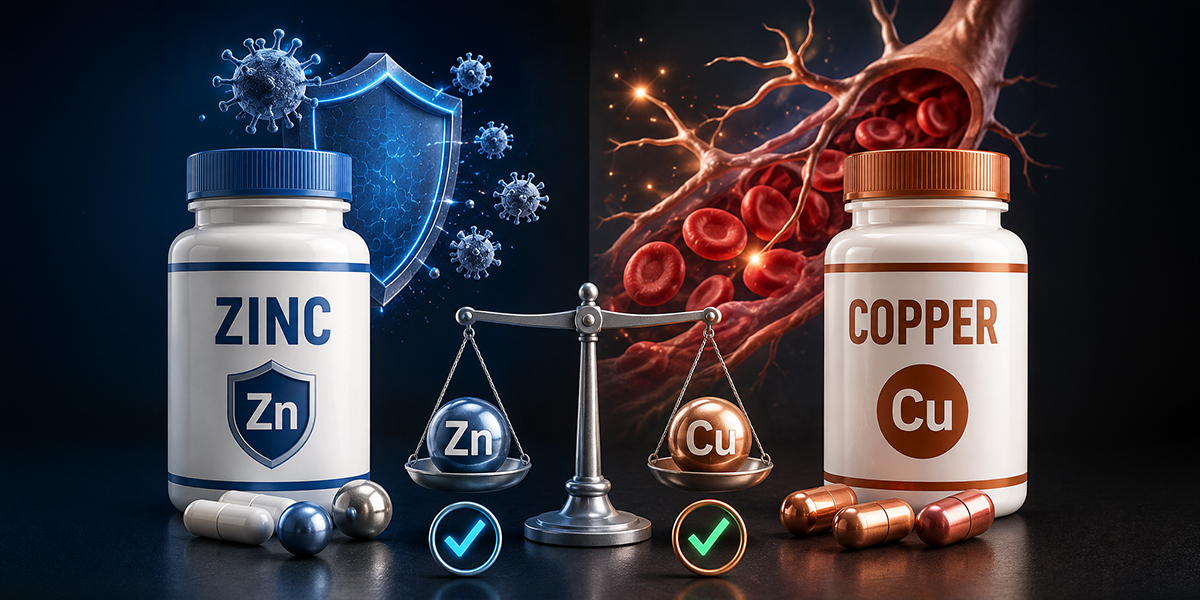


Why Copper Should Be Balanced When Using Zinc Long-Term
Introduction
Zinc and copper are essential minerals that play important roles in immune function, nervous system health, energy production, and many other biological processes.
However, taking zinc supplements for long periods may affect copper balance in the body, making it important to monitor copper intake and maintain the proper ratio between the two minerals.
Table of Contents
The Competitive Relationship Between Zinc and Copper
Zinc and copper compete for absorption in the intestines.
High zinc intake may reduce the body’s ability to absorb copper efficiently, which can eventually lead to copper deficiency if it is not properly replaced.
This interaction becomes more important during long-term or high-dose zinc supplementation.
Effects of Copper Deficiency on the Body
Copper deficiency may negatively affect multiple body systems because copper is involved in several essential physiological functions.
Possible symptoms and effects may include:
- Weakened immune function
- Fatigue and low energy
- Anemia
- Poor bone and joint health
- Nervous system dysfunction
- Cardiovascular health concerns
Recommended Zinc-to-Copper Balance
To maintain proper mineral balance, copper intake is often recommended at approximately 1 mg of copper for every 10–15 mg of zinc consumed daily.
This ratio may help reduce the risk of copper depletion while still allowing individuals to benefit from long-term zinc supplementation.
For example:
- 15 mg zinc may be balanced with approximately 1 mg copper
- 30 mg zinc may require around 2 mg copper depending on individual needs
Actual requirements may vary depending on diet, health status, and supplementation duration.
Importance of Monitoring and Blood Testing
When using zinc supplements for extended periods, regular monitoring and periodic blood testing can help evaluate mineral balance and reduce the risk of deficiency or excess.
This is especially important for individuals taking:
- High-dose zinc supplements
- Immune support formulas
- Long-term mineral regimens
Testing may help assess:
- Zinc status
- Copper levels
- Iron and anemia markers
- Overall mineral balance
Safety and Precautions
Although both minerals are important, excessive intake of zinc or copper may cause side effects and disrupt overall mineral balance.
Potential issues from excessive intake include:
- Digestive discomfort
- Nausea
- Mineral imbalances
- Reduced absorption of other nutrients
Following recommended dosages and seeking professional guidance when needed is the safest approach.
FAQ
1. Can zinc supplementation cause copper deficiency?
Yes. Long-term high-dose zinc supplementation may reduce copper absorption and increase the risk of copper deficiency.
2. Why is copper important in the body?
Copper supports immune function, energy production, nervous system health, and healthy red blood cell formation.
3. What is the recommended zinc-to-copper ratio?
A commonly used guideline is approximately 1 mg of copper for every 10–15 mg of zinc, although individual needs may vary.
4. Should I take copper with zinc supplements?
People using zinc supplements long term or at higher doses may benefit from balanced copper intake, preferably under professional guidance.
Conclusion
Maintaining proper copper intake during long-term zinc supplementation is essential for preserving mineral balance, immune health, nervous system function, and overall wellness.
Using balanced dosages, following professional guidance, and monitoring mineral status regularly can help maximize the benefits of supplementation while minimizing potential risks.