

Whey protein is one of the most widely used protein sources in sports nutrition because it is fast-digesting, rich in essential amino acids, and highly effective for supporting muscle recovery and growth.
However, the body’s ability to benefit from whey protein does not depend only on the amount consumed. It also depends on how efficiently the digestive system breaks protein down into amino acids and small peptides that can be absorbed and used. This is where digestive enzymes may play a supportive role.
Table of Contents
Why Protein Digestion Matters
Protein must be broken down before the body can use it effectively.
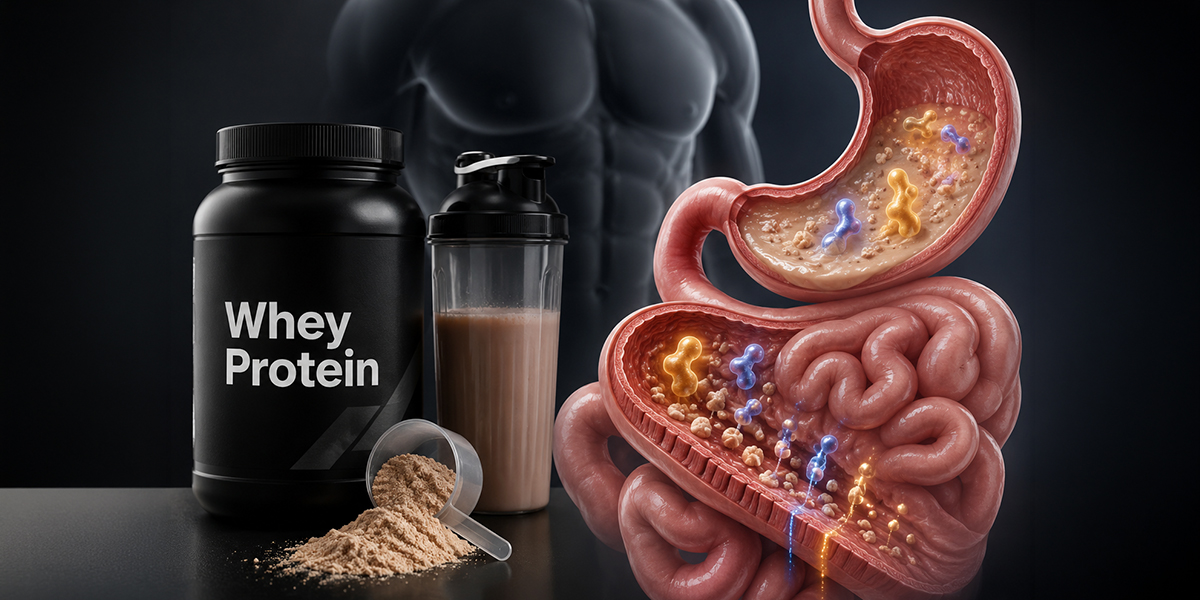
When whey protein is consumed, the digestive system breaks it into smaller peptides and amino acids. These amino acids then enter the bloodstream and become available for muscle repair, muscle protein synthesis, immune support, and other body functions.
If digestion is efficient, whey protein can be absorbed and utilized more comfortably. If digestion is weak, some people may experience bloating, gas, heaviness, or poor tolerance after drinking protein shakes.
What Are Digestive Enzymes?
Digestive enzymes are specialized proteins that help break down food into smaller units the body can absorb.
Different enzymes work on different nutrients. Proteases break down proteins, amylases break down carbohydrates, and lipases break down fats.
For whey protein utilization, protease enzymes are especially important because they help break protein into amino acids and small peptide chains.
- Proteases help break down proteins into amino acids and peptides.
- Amylases help digest carbohydrates.
- Lipases help digest fats.
- Lactase helps digest lactose, which may matter for some whey users.
- Digestive enzymes may support comfort when digestion is not optimal.
How Do Enzymes Affect Whey Protein?
When whey protein reaches the stomach and intestines, natural digestive enzymes begin breaking it down.
Protease enzymes help convert large protein molecules into smaller peptides and amino acids that are easier for the body to absorb.
The more efficiently this process occurs, the more available amino acids become for muscle repair, post-workout recovery, and muscle protein synthesis.
| Digestive Factor | Role | Benefit for Whey Protein Use |
|---|---|---|
| Protease Enzymes | Break protein into peptides and amino acids | Support protein absorption and utilization |
| Lactase | Helps digest lactose | May reduce discomfort in lactose-sensitive users |
| Stomach Acid | Supports protein denaturation and enzyme activation | Helps prepare protein for digestion |
| Gut Health | Supports normal digestion and absorption | Improves tolerance and nutrient efficiency |
Does Whey Protein Require Additional Enzymes?
Under normal conditions, the body is usually capable of digesting whey protein efficiently without additional enzyme support.
Whey is naturally fast-digesting, which is one reason it is commonly used after workouts. Many healthy individuals can absorb and utilize whey protein well without digestive enzyme supplements.
However, some people may benefit from added enzymes, especially if they experience bloating, stomach discomfort, gas, heaviness, or poor tolerance after consuming protein shakes.
Impact of Digestive Efficiency on Results
Muscle recovery and growth depend on amino acid availability, especially after exercise.
If digestion is inefficient, protein may not be fully broken down or may cause discomfort, making it harder to consume enough protein consistently.
In some cases, improving digestive efficiency may help the user tolerate whey protein better, absorb amino acids more comfortably, and maintain a consistent nutrition plan.
- Better digestion may support better amino acid availability.
- Improved tolerance can make daily protein intake easier.
- Comfortable digestion supports consistency with protein use.
- Reduced bloating may improve the overall supplement experience.
- Efficient protein breakdown supports recovery after training.
Do Enzymes Always Improve Results?
Digestive enzymes may help in specific cases, but they do not automatically improve muscle growth or recovery for everyone.
For people with normal digestion, enough natural enzyme activity, and good tolerance to whey protein, adding enzymes may not create a noticeable difference.
The biggest factors for results remain total daily protein intake, training quality, calorie balance, sleep, hydration, and consistency.
If a person has digestive discomfort with standard whey, they may also consider whey isolate, hydrolyzed whey, lactose-free formulas, smaller serving sizes, or taking protein with food.
- Use enzymes if whey causes bloating or discomfort.
- Try smaller servings if a full scoop feels heavy.
- Choose whey isolate if lactose sensitivity is suspected.
- Hydrolyzed whey may be easier to digest for some users.
- Do not rely on enzymes alone to improve muscle results.
Frequently Asked Questions
Do digestive enzymes help with whey protein?
They may help some people digest whey protein more comfortably by supporting the breakdown of protein into amino acids and peptides.
Does everyone need enzymes with whey protein?
No. Most healthy individuals can digest whey protein efficiently without added enzymes. Enzymes are mainly helpful for people with digestive discomfort or poor tolerance.
Which enzyme is most important for protein digestion?
Protease enzymes are the most important for protein digestion because they break protein into smaller peptides and amino acids.
Can enzymes reduce bloating from whey protein?
They may help if bloating is related to poor protein digestion. If bloating is due to lactose sensitivity, lactase or whey isolate may be more useful.
Do enzymes increase muscle growth directly?
No. Enzymes do not directly build muscle. They may support digestion and amino acid availability, while muscle growth still depends on training, protein intake, calories, and recovery.
Conclusion
Digestive enzymes play a supportive role in improving the body’s utilization of whey protein by helping break it down into absorbable amino acids and peptides.
For most healthy individuals, the body can digest whey protein efficiently on its own. However, enzyme support may be useful for people who experience bloating, discomfort, or poor tolerance, helping improve digestive comfort, protein consistency, and nutrient efficiency.