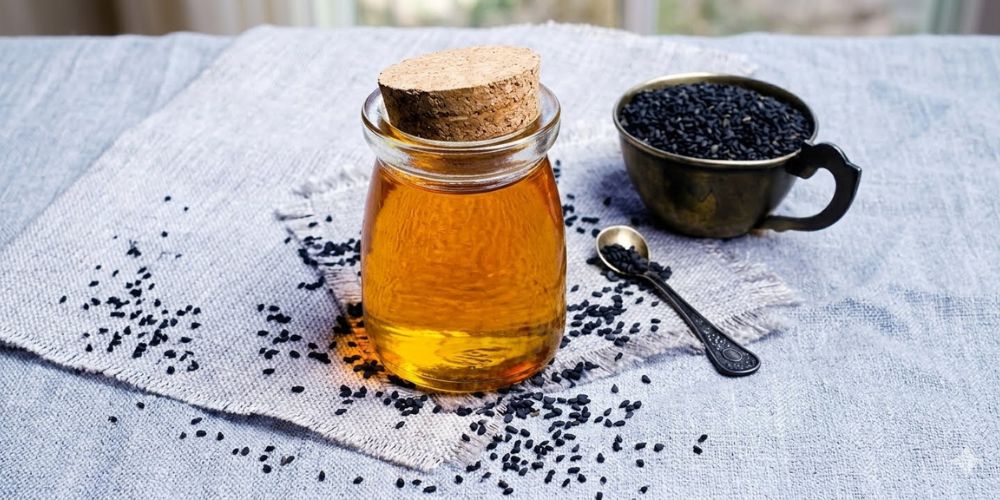


Black Seed Oil, derived from the seeds of Nigella sativa, is a traditional herbal oil that has gained increasing attention for its potential health and wellness benefits. Also known as black cumin seed oil or kalonji oil, it contains naturally occurring compounds such as thymoquinone, which has been extensively studied for its antioxidant and anti-inflammatory properties.
Today, Black Seed Oil is commonly used as a dietary supplement to support immune health, antioxidant protection, healthy inflammation response, digestive wellness, skin health, and overall well-being. Its versatility and long history of traditional use have made it a popular addition to modern wellness routines.
But what does the research actually suggest about Black Seed Oil? Which potential benefits have attracted the most scientific interest, and how can it be used responsibly?
This guide explores the potential Black Seed Oil benefits, its key active compounds, common uses, dosage considerations, possible side effects, and important safety precautions to help you make a more informed decision about incorporating Black Seed Oil into your daily wellness routine.
Table of Contents
- What Is Black Seed Oil?
- Key Compounds in Black Seed Oil
- Black Seed Oil for Immune System Support
- Black Seed Oil and Antioxidant Supportl
- Black Seed Oil and Healthy Inflammatory Balance
- Black Seed Oil for Skin Health
- Black Seed Oil for Hair and Scalp Wellness
- Black Seed Oil and Digestive Wellnesss
- Black Seed Oil and Metabolic Health
- How to Use Black Seed Oil: Dosage and Best Practices
- Black Seed Oil Side Effects and Safety Considerations
- How to Choose a High-Quality Black Seed Oil Supplement
- FAQ
- Conclusion
What Is Black Seed Oil?
Black Seed Oil is a natural oil extracted from the small black seeds of Nigella sativa, a flowering plant traditionally used in various cultures for centuries. The seeds are sometimes referred to as black cumin, black seed, or kalonji, although these names can vary depending on the region.
Black Seed Oil has attracted modern scientific interest because it contains a range of naturally occurring bioactive compounds. Among the most studied is thymoquinone, a compound associated with antioxidant and inflammation-related biological activity.
Unlike a single-nutrient supplement, Black Seed Oil contains several naturally occurring components that may work together to support different aspects of general wellness. It is commonly included in health routines focused on:
- Immune system support
- Antioxidant protection
- Healthy inflammatory balance
- Digestive wellness
- Skin health
- Overall health and wellness
Although Black Seed Oil has a long history of traditional use and promising areas of research, it should be viewed as a supportive wellness supplement rather than a replacement for medical treatment. Individual results can vary, and people with health conditions or those taking medications should consider professional advice before using it.
Key Compounds in Black Seed Oil
The potential benefits of Black Seed Oil are largely associated with its naturally occurring bioactive compounds. The most widely studied is thymoquinone, which has attracted research interest because of its antioxidant and inflammation-modulating properties.
Antioxidants help protect cells from oxidative stress caused by unstable molecules known as free radicals. Maintaining a healthy balance between oxidative processes and antioxidant defenses is an important part of overall cellular health.
Black Seed Oil also contains other naturally occurring components, including fatty acids and plant compounds that contribute to its nutritional profile. Together, these compounds make Black Seed Oil an interesting botanical ingredient for supporting overall wellness.
However, the concentration of active compounds can vary depending on the source of the seeds, extraction method, processing, and product formulation. For this reason, choosing a high-quality supplement from a reputable source is an important part of responsible use.
Black Seed Oil for Immune System Support
Black seed oil, derived from the seeds of Nigella sativa, has been traditionally used as a natural wellness ingredient for centuries. Today, it continues to attract interest because it contains bioactive compounds, particularly thymoquinone, that have been studied for their potential antioxidant and immune-supporting properties.
The immune system relies on balanced inflammatory responses and protection against oxidative stress. Black seed oil may help support these natural processes, making it a popular addition to wellness routines focused on maintaining overall immune health.
While black seed oil may provide nutritional support, it should not be considered a treatment or replacement for medical care. A balanced diet, adequate sleep, regular physical activity, and healthy lifestyle habits remain essential for maintaining normal immune function.
Black Seed Oil and Antioxidant Support
Oxidative stress occurs when free radicals exceed the body's natural antioxidant defenses. Over time, excessive oxidative stress can contribute to cellular damage and may affect overall health.
Black seed oil contains naturally occurring compounds with antioxidant activity. Thymoquinone is one of the most studied components and has attracted scientific interest for its potential role in helping the body manage oxidative stress.
Adding black seed oil to a balanced wellness routine may therefore provide additional antioxidant support. However, it works best alongside a nutrient-rich diet that includes fruits, vegetables, whole grains, nuts, seeds, and other sources of naturally occurring antioxidants.
Black Seed Oil and Healthy Inflammatory Balance
Inflammation is a normal biological response that helps the body respond to injury and other challenges. Maintaining a healthy inflammatory balance is an important part of long-term wellness.
Research into Nigella sativa has explored its potential effects on inflammatory pathways, with particular interest in thymoquinone and other naturally occurring compounds. This has contributed to growing interest in black seed oil as a nutritional supplement for general wellness and healthy inflammatory balance.
Individual results can vary, and black seed oil should not be used as a substitute for treatment of inflammatory or chronic medical conditions.
Explore Black Seed Oil Supplements to discover available options.
Black Seed Oil for Skin Health
Healthy skin depends on adequate nutrition, hydration, antioxidant protection, and a balanced skin barrier. Black seed oil has gained attention in skincare and wellness because its naturally occurring compounds may support antioxidant activity and healthy inflammatory balance.
The thymoquinone and other bioactive compounds found in Nigella sativa have been investigated for their potential effects on processes involved in skin health. As a result, black seed oil is commonly included in wellness routines focused on maintaining healthy-looking skin.
Black seed oil may support:
- Healthy skin appearance
- Antioxidant protection
- Normal inflammatory balance
- Overall skin wellness
Although black seed oil may complement a healthy skincare routine, it should not be considered a treatment for acne, eczema, psoriasis, or other skin conditions without professional advice.
Black Seed Oil for Hair and Scalp Wellness
Hair health is influenced by nutrition, genetics, hormones, scalp condition, stress, and overall health. Black seed oil has become increasingly popular in hair and scalp care because of its antioxidant properties and traditional use in natural beauty routines.
When used appropriately, black seed oil may help support a healthy scalp environment and maintain the overall condition and appearance of hair. Its natural fatty acids and bioactive compounds can also complement a nutrient-rich approach to hair wellness.
For best results, black seed oil should be viewed as part of a broader hair-care routine that includes adequate protein, essential nutrients, gentle scalp care, and good lifestyle habits.
Black Seed Oil and Digestive Wellness
Digestive health plays an important role in nutrient absorption, energy production, and overall well-being. Traditionally, Nigella sativa has been used in various wellness practices to support digestive comfort.
Modern research has explored the potential effects of black seed and its active compounds on different aspects of gastrointestinal health. However, evidence is still developing, and individual responses may differ.
Black seed oil should not replace appropriate medical evaluation if you experience persistent abdominal pain, severe bloating, ongoing diarrhea, constipation, vomiting, or other unexplained digestive symptoms.
Black Seed Oil and Metabolic Health
Maintaining healthy blood sugar and cholesterol levels is an important part of overall metabolic wellness. Some research has investigated Nigella sativa for its potential effects on metabolic markers, including blood glucose and lipid levels.
These findings have increased interest in black seed oil as a supportive supplement for healthy metabolic function. However, supplements should complement—not replace—a balanced diet, regular exercise, healthy body weight, and appropriate medical care.
Explore Black Seed Oil Supplements for available options.
How to Use Black Seed Oil: Dosage and Best Practices
The appropriate amount of black seed oil can vary depending on the product, concentration, formulation, and individual needs. There is no single universal dosage that applies to every supplement.
For responsible use, always follow the serving instructions provided on the product label. Taking more than the recommended amount does not necessarily provide greater benefits and may increase the risk of unwanted effects.
When introducing black seed oil into your routine:
- Start according to the product directions: Follow the manufacturer's recommended serving size.
- Take it consistently: Regular use may be more appropriate than occasionally taking large amounts.
- Consider taking it with food: This may improve comfort for people who experience digestive sensitivity.
- Choose a quality product: Look for transparent ingredient information and reputable manufacturing standards.
- Monitor your response: Stop use and seek professional advice if you experience unusual or persistent symptoms.
Black Seed Oil Side Effects and Safety Considerations
Black seed oil is generally well tolerated by many adults when used appropriately. However, like other concentrated supplements, it may cause unwanted effects in some individuals.
Possible side effects may include:
- Digestive discomfort
- Nausea
- Bloating
- Changes in bowel habits
- Allergic or skin reactions in sensitive individuals
People who are pregnant or breastfeeding, have an existing medical condition, or take prescription medications should consult a healthcare professional before using black seed oil. This is particularly important when taking medicines that affect blood sugar, blood pressure, or blood clotting, because black seed products may potentially influence these processes.
How to Choose a High-Quality Black Seed Oil Supplement
Not all black seed oil supplements are formulated in the same way. Product quality, concentration, extraction method, and storage conditions can influence the overall quality of the supplement.
When choosing a product, consider:
- Ingredient transparency: The label should clearly identify the ingredients and serving size.
- Product quality: Choose products from established and reputable manufacturers.
- Clear usage instructions: Follow the recommended serving rather than assuming that a higher amount is better.
- Suitable formulation: Select an oil, softgel, or other format that fits your preferences and routine.
- Proper storage: Follow storage instructions to help maintain product quality.
Explore Black Seed Oil Supplements to discover available products.
FAQ
1. What is black seed oil used for?
Black seed oil is commonly used as a wellness supplement to support antioxidant protection, immune health, healthy inflammatory balance, skin wellness, and overall well-being. Its active compound, thymoquinone, is one of the components that has attracted scientific interest.
2. What are the main benefits of black seed oil?
Potential black seed oil benefits include antioxidant support, immune wellness, healthy inflammatory balance, and support for skin, hair, digestive, and metabolic health. Research is ongoing, and results may vary between individuals.
3. Can black seed oil be taken every day?
Many adults can use black seed oil as directed on the product label. However, the appropriate serving depends on the formulation and individual circumstances. People with medical conditions or those taking medications should consult a healthcare professional before regular use.
4. Does black seed oil support the immune system?
Black seed oil contains bioactive compounds that have been studied for their potential antioxidant and immune-supporting properties. However, it should be considered a supportive wellness supplement rather than a treatment for infections or immune disorders.
5. Can black seed oil help skin and hair?
Black seed oil is traditionally used in skin and hair wellness routines. Its naturally occurring fatty acids and antioxidant compounds may support healthy-looking skin and scalp wellness, although it should not replace appropriate treatment for diagnosed skin or hair conditions.
Conclusion
Black seed oil has become a popular natural wellness supplement because of its unique combination of bioactive compounds, including thymoquinone. Research continues to explore its potential role in antioxidant protection, immune support, healthy inflammatory balance, skin and hair wellness, digestive health, and metabolic function.
While black seed oil may offer valuable nutritional support for some individuals, it should not be viewed as a cure or replacement for medical treatment. Its potential benefits are best considered as part of a broader healthy lifestyle that includes balanced nutrition, regular physical activity, adequate sleep, hydration, and effective stress management.
Choosing a high-quality product, following the recommended serving instructions, and using black seed oil consistently and responsibly can help make it a practical addition to a wellness routine. If you have a medical condition, take prescription medication, or are pregnant or breastfeeding, speaking with a healthcare professional before use is an important safety step.
With an informed approach and realistic expectations, black seed oil can be one option to consider when building a comprehensive approach to everyday health and wellness.