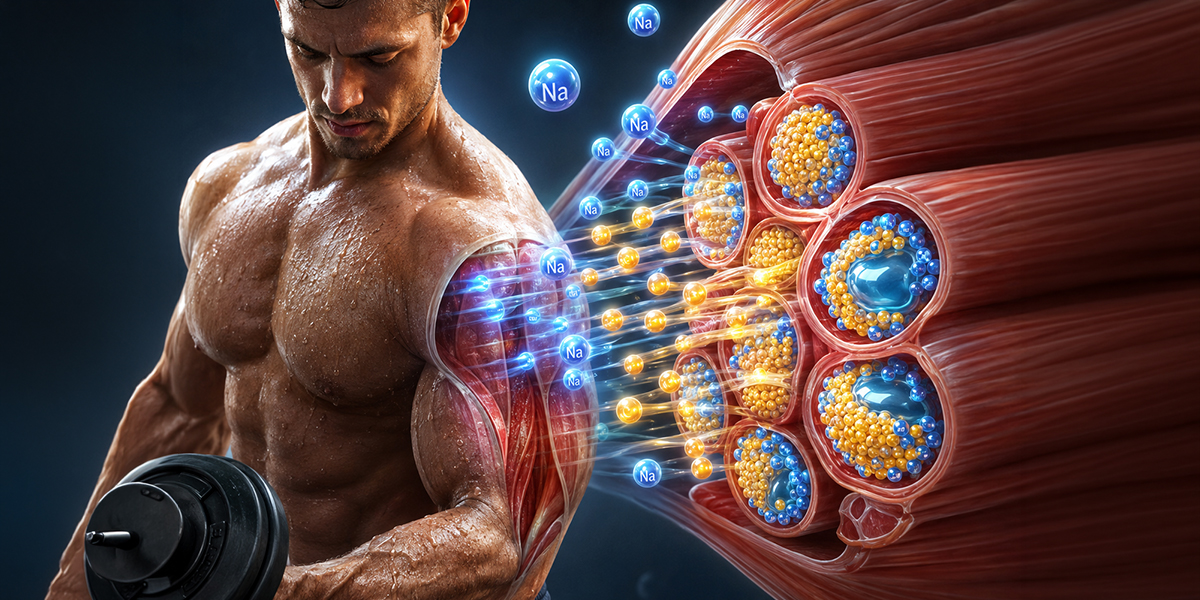


Sodium is an essential electrolyte that helps the body maintain fluid balance, nerve signaling, muscle contraction, and hydration status.
Although sodium is often associated with water retention, it also plays an important role in athletic performance, carbohydrate use, hydration, and the fuller muscle appearance that athletes and bodybuilders often aim for during training or physique preparation.
Table of Contents
Why Sodium Matters for Muscle Fullness
Muscle fullness depends on several factors, including glycogen storage, intracellular water, electrolyte balance, carbohydrate intake, training status, and overall hydration.
Sodium helps regulate fluid movement and supports normal muscle and nerve function, both of which are essential for performance and the appearance of hydrated, full muscles.
When sodium, potassium, carbohydrates, and water intake are balanced, muscles are more likely to look full and perform well instead of appearing flat, depleted, or poorly hydrated.
How Carbohydrates Are Stored in Muscles
When carbohydrates are consumed, they are digested into glucose and absorbed into the bloodstream.
Part of this glucose can be stored as glycogen in the muscles and liver. Glycogen is the body’s stored form of carbohydrate and serves as an important energy reserve during exercise.
Each gram of glycogen is stored with water, which contributes to a fuller and more volumized muscle appearance when glycogen stores are well replenished.
| Factor | Role in Muscle Fullness | Practical Impact |
|---|---|---|
| Carbohydrates | Provide glucose for glycogen storage | Supports energy and muscle volume |
| Glycogen | Stored carbohydrate inside muscles | Helps muscles look fuller |
| Water | Stored alongside glycogen | Improves muscle hydration and volume |
| Sodium | Supports fluid balance and hydration | Helps maintain a fuller, hydrated appearance |
Sodium’s Role in Glucose and Carbohydrate Support
Sodium is involved in several processes that support carbohydrate digestion, absorption, and hydration.
In the intestine, sodium-dependent transport systems help absorb glucose from food. Once glucose reaches the bloodstream, muscle uptake is mainly influenced by insulin and GLUT4 transporters, especially after carbohydrate intake and exercise.
Therefore, sodium supports carbohydrate use more indirectly by helping with glucose absorption, hydration status, blood volume, nerve signaling, and muscle performance, rather than acting as the only driver of carbohydrates into muscle cells.
| Process | Main Role | How Sodium Helps |
|---|---|---|
| Glucose Absorption | Moves glucose from the intestine into the body | Supports sodium-dependent glucose transport in digestion |
| Muscle Glucose Uptake | Moves glucose into muscle cells | Indirectly supports the environment for performance and glycogen storage |
| Glycogen Storage | Stores carbohydrate for training energy | Works best with proper carbs, hydration, and electrolytes |
| Training Performance | Supports repeated contractions and endurance | Maintains nerve impulses, muscle function, and fluid balance |
Sodium and Fluid Balance Inside Muscles
Sodium plays a major role in regulating fluid distribution inside and outside cells.
When sodium intake is balanced with potassium, carbohydrates, and water, the body can maintain better hydration status and support normal muscle cell function.
This balance may help muscles appear fuller and more responsive during training, while poor electrolyte or fluid balance may make muscles appear flat, soft, or depleted.
- Sodium helps maintain extracellular fluid balance.
- Potassium supports intracellular fluid balance.
- Carbohydrates help replenish muscle glycogen.
- Water is needed to support glycogen storage and hydration.
- Training improves the muscles’ ability to store glycogen.
What Happens When Sodium Levels Are Too Low?
Very low sodium levels may negatively affect athletic performance, hydration, and muscle function.
When sodium is too low, especially during heavy sweating, intense exercise, or excessive water intake without electrolytes, the body may struggle to maintain proper fluid and nerve function.
This can contribute to fatigue, headaches, muscle cramps, weakness, reduced pump, lower endurance, and a flatter muscle appearance due to poor fluid and glycogen balance.
| Low Sodium Effect | Possible Impact | Performance Result |
|---|---|---|
| Poor Fluid Balance | Hydration becomes harder to maintain | Reduced muscle fullness |
| Weak Nerve Signaling | Muscle contraction may feel less efficient | Lower training performance |
| Heavy Sweating Losses | Electrolytes are lost during intense activity | Cramps, fatigue, or reduced endurance |
| Poor Glycogen Support | Carb storage may feel less effective when hydration is poor | Flat or depleted look |
The Importance of Balance and Avoiding Excess
Sodium is important, but more is not always better.
Excessive sodium intake may contribute to water retention, bloating, and elevated blood pressure in some individuals, especially when overall diet quality, hydration, kidney health, or cardiovascular risk factors are not considered.
The goal is to maintain a healthy sodium balance based on activity level, sweat rate, climate, hydration, carbohydrate intake, potassium intake, and individual health needs.
| Goal | What Supports It | What to Avoid |
|---|---|---|
| Muscle Fullness | Carbs, sodium, potassium, water, training | Extreme sodium restriction or random loading |
| Workout Performance | Balanced electrolytes and hydration | Training dehydrated or under-fueled |
| Healthy Fluid Balance | Consistent sodium and potassium intake | Large sudden changes in salt intake |
| Cardiovascular Safety | Personalized intake based on health status | High sodium intake with blood pressure concerns |
Frequently Asked Questions
Does sodium help muscles look fuller?
Yes, balanced sodium intake may help support hydration and fluid balance, which can contribute to a fuller muscle appearance when combined with carbohydrates, water, potassium, and training.
Does sodium directly push carbohydrates into muscles?
Sodium supports glucose absorption in digestion and helps hydration and performance. Muscle glucose uptake is mainly controlled by insulin, exercise, and GLUT4 transporters, while sodium supports the overall environment for glycogen storage.
Why do muscles look flat when electrolytes are low?
Low electrolyte balance may disrupt hydration, muscle contraction, and glycogen storage support, which can make muscles appear less full or depleted.
Should athletes avoid sodium?
Not necessarily. Athletes who sweat heavily may need adequate sodium to support hydration and performance, but intake should be balanced and individualized.
Can too much sodium be harmful?
Yes. Excess sodium may contribute to bloating, water retention, or high blood pressure in some people. Individuals with blood pressure, kidney, or heart concerns should follow medical guidance.
Conclusion
Sodium plays an important role in supporting carbohydrate use, hydration, nerve signaling, muscle contraction, and fluid balance, all of which can influence muscle fullness and workout performance.
However, sodium works best as part of a balanced nutrition strategy that includes adequate carbohydrates, water, potassium, and consistent training. The goal is not excessive sodium intake, but the right balance for activity level, sweat losses, hydration needs, and individual health status.