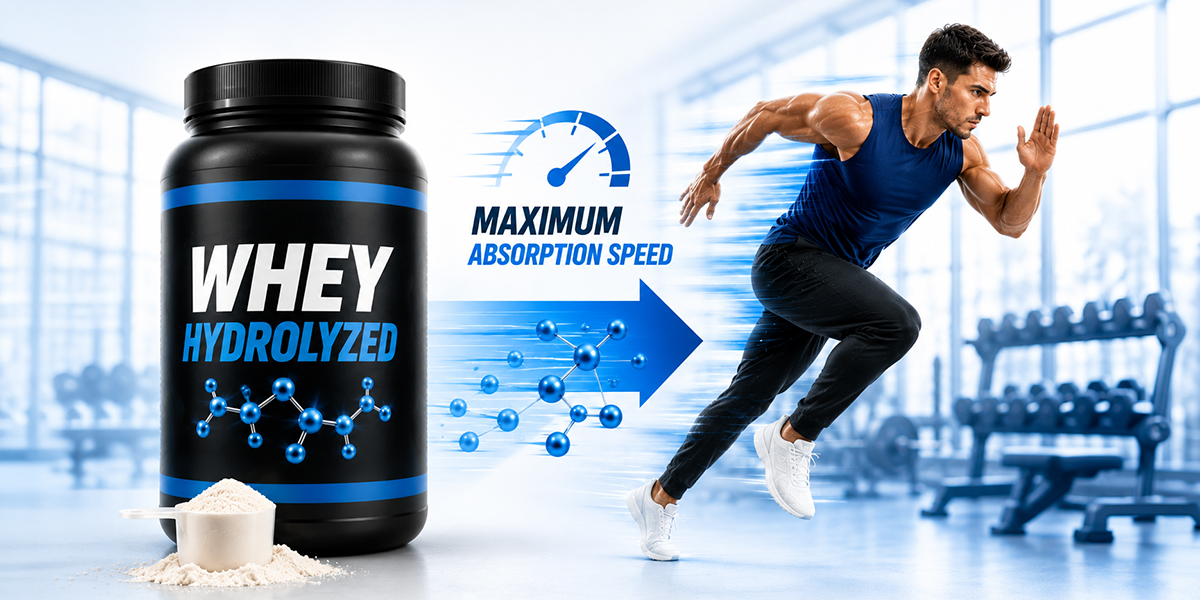


Hydrolyzed whey protein is one of the most advanced forms of protein in terms of absorption speed and biological efficiency. It is enzymatically broken down into short peptides, making it an ideal choice for advanced athletes and situations that require rapid amino acid delivery.
Its unique processing allows amino acids to reach the bloodstream faster, helping support recovery and muscle protein synthesis when rapid nutrient delivery is desired.
Table of Contents
What Is Hydrolyzed Whey Protein?
Hydrolyzed whey protein is whey protein that has undergone enzymatic hydrolysis, during which long protein chains are broken into smaller peptide fragments.
This process mimics partial digestion before consumption, reducing the digestive workload and allowing for faster absorption compared to less processed forms of whey protein.
Because it is partially pre-digested, hydrolyzed whey protein is often favored in sports nutrition products designed for rapid nutrient delivery.
Absorption Speed Compared to Other Types
Hydrolyzed whey protein provides the fastest absorption among common whey protein forms, including whey concentrate and whey isolate.
The short peptide chains require less digestive processing, resulting in a quicker rise in blood amino acid levels, particularly leucine, one of the key amino acids involved in stimulating muscle protein synthesis.
Impact on Muscle Building and Recovery
The rapid absorption of hydrolyzed whey protein helps support muscle protein synthesis and may reduce muscle protein breakdown following intense training sessions.
This makes it particularly useful immediately after workouts, when the body benefits from a rapid supply of amino acids to support recovery and adaptation.
Athletes undergoing frequent training sessions or periods of high physical stress may also find strategic use of hydrolyzed whey beneficial.
Digestive Tolerance and Sensitivity
Due to enzymatic hydrolysis, hydrolyzed whey protein is generally easier to digest than many other protein forms and may reduce the likelihood of gastrointestinal discomfort in some individuals.
Most high-quality hydrolyzed whey products contain very low levels of lactose, making them suitable for people with mild lactose sensitivity.
However, digestive responses can vary between individuals, and product formulation may also influence tolerance.
Cost and Practical Use
Hydrolyzed whey protein is typically the most expensive form of whey protein because of the additional processing and manufacturing steps required.
| Feature | Whey Concentrate | Whey Isolate | Hydrolyzed Whey |
|---|---|---|---|
| Absorption Speed | Fast | Very Fast | Fastest |
| Digestibility | Good | Excellent | Excellent |
| Lactose Content | Higher | Very Low | Very Low |
| Cost | Lowest | Moderate to High | Highest |
Because of its premium cost, hydrolyzed whey protein is often used strategically after workouts rather than as the primary protein source throughout the day.
Frequently Asked Questions
What makes hydrolyzed whey different from whey isolate?
Hydrolyzed whey undergoes enzymatic breakdown into smaller peptides, allowing for faster digestion and absorption than standard whey isolate.
Is hydrolyzed whey better for muscle growth?
It may provide faster amino acid delivery, but overall muscle growth still depends largely on total daily protein intake and training quality.
Is it suitable for people sensitive to lactose?
Most high-quality hydrolyzed whey proteins contain very low amounts of lactose and are often well tolerated by individuals with mild lactose sensitivity.
When is the best time to take hydrolyzed whey protein?
It is commonly consumed immediately after exercise to take advantage of its rapid absorption profile.
Why is hydrolyzed whey protein more expensive?
The additional enzymatic processing and advanced manufacturing techniques increase production costs compared to other whey protein forms.
Conclusion
Hydrolyzed whey protein provides the fastest available absorption among common whey protein types, making it a valuable option for athletes seeking rapid recovery and efficient amino acid delivery.
However, its higher cost means that it should be selected based on actual training demands, recovery needs, and nutritional goals rather than simply choosing the most advanced protein form available.