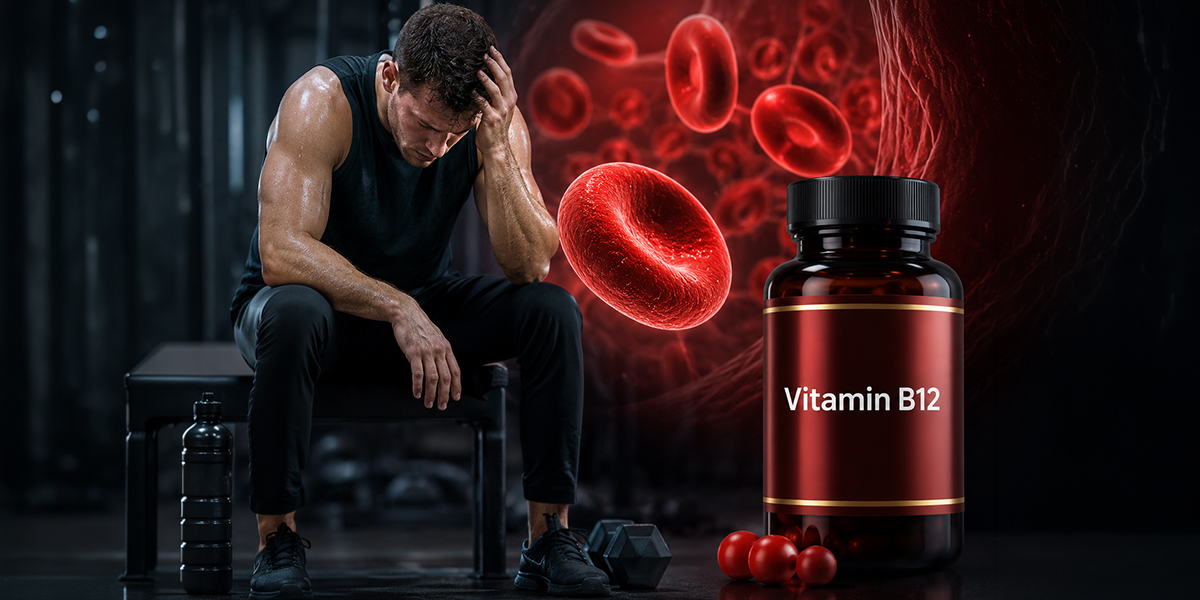


Vitamin B12 is an essential nutrient for energy production, red blood cell formation, nervous system function, and overall physical performance.
When vitamin B12 levels are low, the body may struggle to produce energy efficiently and transport oxygen properly to muscles. This can lead to persistent fatigue, reduced endurance, weaker exercise performance, and difficulty staying active in daily life.
Table of Contents
What Is Vitamin B12?
Vitamin B12, also known as cobalamin, is a water-soluble B vitamin that supports several essential functions in the body.
It is especially important for red blood cell production, DNA synthesis, nerve health, and normal energy metabolism. Because of these roles, low B12 levels can affect both physical energy and mental performance.
Unlike some vitamins found widely in plant foods, vitamin B12 is mainly found in animal-based foods, which makes intake and absorption important factors to monitor in certain groups.
B12 and Energy Production
Vitamin B12 plays a key role in helping the body convert food into usable energy.
One of its most important functions is supporting red blood cell formation. Red blood cells carry oxygen to the muscles and tissues, which is essential for energy production and physical performance.
When B12 is deficient, red blood cell production may be affected, and oxygen delivery can become less efficient. This may lead to tiredness, weakness, shortness of breath during activity, and reduced stamina.
- Supports normal red blood cell production.
- Helps transport oxygen to working muscles.
- Contributes to normal energy metabolism.
- Supports nervous system function.
- Helps reduce fatigue related to deficiency.
Impact of B12 Deficiency on Physical Activity
Vitamin B12 deficiency can affect physical activity by reducing energy availability and impairing normal muscle and nerve function.
Athletes and physically active individuals may notice lower endurance, slower recovery, reduced training quality, and difficulty completing high-intensity workouts when B12 levels are low.
For non-athletes, the impact may appear as difficulty walking long distances, feeling tired after simple tasks, or reduced motivation to stay active.
| Effect of Low B12 | What Happens in the Body | Impact on Activity |
|---|---|---|
| Reduced Oxygen Transport | Red blood cell production may be affected | Fatigue and lower stamina |
| Nervous System Stress | Nerve function may become less efficient | Tingling, weakness, or coordination issues |
| Lower Energy Metabolism | The body may produce energy less efficiently | Reduced workout performance |
| Poor Recovery | Fatigue may persist after exercise | Slower return to training |
Symptoms of B12 Deficiency
Symptoms of vitamin B12 deficiency can develop gradually and may be mistaken for stress, poor sleep, or general tiredness.
Common signs include chronic fatigue, weakness, numbness or tingling in the hands and feet, difficulty concentrating, mood changes, and reduced exercise tolerance.
Because B12 is important for nerve function, neurological symptoms should not be ignored, especially if they persist or worsen over time.
- Persistent fatigue and low energy.
- Muscle weakness.
- Shortness of breath during activity.
- Numbness or tingling in hands and feet.
- Difficulty concentrating or brain fog.
- Mood changes or irritability.
- Poor endurance and reduced exercise capacity.
Sources of B12 and Supplements
Vitamin B12 is mainly found in animal-based foods such as meat, poultry, fish, eggs, milk, yogurt, and cheese.
People who eat little or no animal products may need fortified foods or supplements to maintain healthy B12 levels.
For people with confirmed deficiency, absorption issues, or increased needs, vitamin B12 supplements may help restore levels and support energy, nerve function, and physical performance when used appropriately.
| Source | Examples | Best For |
|---|---|---|
| Animal Foods | Meat, fish, poultry, eggs | Regular dietary B12 intake |
| Dairy Products | Milk, yogurt, cheese | Daily nutrition support |
| Fortified Foods | Fortified cereals or plant-based drinks | Vegetarians or low animal-food intake |
| Supplements | B12 tablets, capsules, drops, sprays, or injections when prescribed | Deficiency or absorption concerns |
Who Is More at Risk of B12 Deficiency?
Some people are more likely to develop vitamin B12 deficiency because of diet, absorption problems, age, or certain health conditions.
Those at higher risk include vegans, some vegetarians, older adults, people with digestive disorders, individuals after certain stomach or intestinal surgeries, and people using medications that may affect B12 absorption.
Testing is useful when symptoms are present or when a person belongs to a higher-risk group.
- Vegans and people with very low animal-food intake.
- Older adults.
- People with digestive or absorption issues.
- Individuals after bariatric or certain gastrointestinal surgeries.
- People with persistent fatigue or neurological symptoms.
- Those using certain long-term medications that may affect absorption.
Frequently Asked Questions
Can vitamin B12 deficiency cause low energy?
Yes. Low B12 levels may reduce red blood cell production and energy metabolism, leading to fatigue, weakness, and reduced stamina.
How does B12 affect exercise performance?
B12 supports oxygen transport, nerve function, and energy metabolism. Deficiency may reduce endurance, strength, recovery, and overall training quality.
What are common symptoms of B12 deficiency?
Common symptoms include fatigue, weakness, numbness or tingling, poor concentration, mood changes, and reduced physical performance.
Can B12 supplements improve energy?
B12 supplements may improve energy when fatigue is related to low B12 levels. If B12 levels are already normal, extra supplementation may not provide a noticeable energy boost.
Who should consider checking B12 levels?
People with persistent fatigue, neurological symptoms, low animal-food intake, digestive disorders, older adults, and those with absorption concerns may benefit from testing.
Conclusion
Vitamin B12 deficiency can directly affect energy levels, physical activity, nervous system health, and exercise performance.
Maintaining adequate B12 through animal-based foods, fortified foods, or supplements when needed can help support oxygen transport, energy metabolism, endurance, and overall health. If symptoms such as persistent fatigue, tingling, or weakness appear, testing and professional guidance are important for safe and effective correction.