

Phosphorus is an essential mineral involved in many vital processes in the body, including bone health, cell structure, metabolism, and energy production.
One of its most important roles is supporting cellular energy transfer through adenosine triphosphate, known as ATP. ATP is the main energy molecule that cells use to perform daily functions such as muscle contraction, nerve signaling, repair, and nutrient metabolism.
Table of Contents
What Is ATP?
ATP, or adenosine triphosphate, is often called the body’s “energy currency” because it stores and transfers energy inside cells.
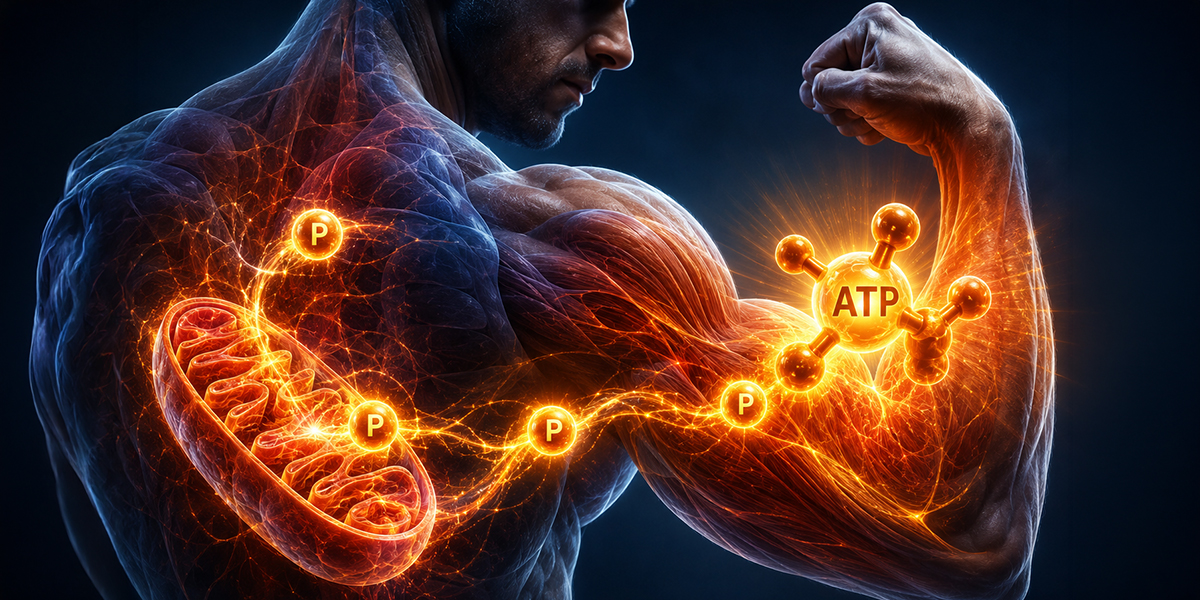
ATP is made of adenosine attached to three phosphate groups. The bonds between these phosphate groups store energy that can be released when the cell needs to perform work.
When one phosphate bond is broken, ATP releases energy and becomes ADP, or adenosine diphosphate. The body can then rebuild ATP again, allowing energy production and energy use to continue throughout the day.
How Phosphorus Contributes to Energy Production
Phosphorus is essential for forming the phosphate groups within ATP molecules.
Without enough phosphorus, the body may not be able to support ATP production efficiently, which can affect cellular energy availability.
Because ATP powers many body functions, low energy production may contribute to fatigue, reduced exercise performance, poor concentration, and slower recovery, especially when overall nutrition is not balanced.
| ATP Component | Role of Phosphorus | Why It Matters |
|---|---|---|
| Phosphate Groups | Phosphorus forms the phosphate units in ATP | Allows energy storage and release |
| High-Energy Bonds | Phosphate bonds hold transferable energy | Provides fuel for cellular work |
| ATP Regeneration | Phosphate is reused to rebuild ATP from ADP | Supports continuous energy supply |
| Cellular Metabolism | Supports energy-dependent reactions | Helps cells function efficiently |
Phosphorus, Muscles, and Physical Performance
Muscles rely heavily on ATP for contraction, relaxation, and repeated movement during daily activity and exercise.
During physical activity, ATP is broken down quickly to provide energy for muscle fibers. Phosphorus helps support the ATP cycle, allowing muscles to continue working efficiently.
Adequate phosphorus intake may therefore support endurance, strength output, exercise capacity, and recovery when combined with proper hydration, protein, carbohydrates, and overall nutrition.
| Muscle Function | How ATP Is Involved | Phosphorus Connection |
|---|---|---|
| Muscle Contraction | ATP provides energy for contraction | Phosphate groups help store and release energy |
| Muscle Relaxation | ATP helps reset muscle fibers | Supports normal muscle function |
| Exercise Endurance | ATP demand increases during activity | Supports ongoing energy turnover |
| Recovery | Energy is needed for repair processes | Helps support post-exercise recovery pathways |
Its Role in the Nervous System
The nervous system also depends on ATP to transmit signals, maintain cell membrane function, and support communication between nerve cells.
Nerve cells require a steady energy supply because they are constantly involved in electrical signaling, neurotransmitter release, and maintaining ion balance.
By supporting ATP formation, phosphorus indirectly contributes to normal nerve response, mental focus, coordination, and overall neurological performance.
Connection to Metabolic Processes
Phosphorus is involved in the metabolism of carbohydrates, fats, and proteins through energy transfer and phosphorylation reactions.
Phosphorylation is a process where phosphate groups are added to molecules, helping activate or regulate many metabolic reactions.
This makes phosphorus important for converting nutrients into usable energy, supporting enzyme activity, and maintaining overall energy balance throughout the body.
| Metabolic Process | Role of Phosphorus | Possible Benefit |
|---|---|---|
| Carbohydrate Metabolism | Participates in energy-releasing pathways | Helps convert glucose into usable energy |
| Fat Metabolism | Supports ATP-dependent energy processes | Helps cells use fats as fuel |
| Protein Metabolism | Supports energy needs for protein synthesis | Contributes to repair and maintenance |
| Phosphorylation | Adds phosphate groups to regulate reactions | Helps control metabolic activity |
Dietary Sources and Phosphorus Balance
Phosphorus is widely available in many foods, so deficiency is uncommon in people who eat a balanced diet.
Good sources include dairy products, meat, poultry, fish, eggs, legumes, nuts, seeds, whole grains, and some fortified foods.
However, balance is important. Very high phosphorus intake from processed foods or supplements may disrupt mineral balance, especially when calcium intake is low or kidney function is impaired.
- Include protein-rich foods such as fish, poultry, eggs, dairy, or legumes.
- Choose whole foods more often than highly processed foods.
- Maintain balanced calcium and vitamin D intake for bone and mineral health.
- Avoid high-dose phosphorus supplements unless recommended by a healthcare professional.
- People with kidney disease should follow medical advice about phosphorus intake.
- Support energy production with adequate sleep, hydration, and balanced meals.
Frequently Asked Questions
Why is phosphorus important for ATP?
Phosphorus forms the phosphate groups in ATP. These phosphate bonds store and release energy that cells use for daily functions.
Can low phosphorus cause fatigue?
Low phosphorus may affect ATP production and cellular energy availability, which can contribute to fatigue, weakness, or reduced physical performance.
Does phosphorus support muscle performance?
Yes. Muscles need ATP for contraction and relaxation, and phosphorus is essential for ATP structure and energy transfer.
What foods are rich in phosphorus?
Phosphorus is found in dairy products, meat, poultry, fish, eggs, legumes, nuts, seeds, and whole grains.
Should I take phosphorus supplements for energy?
Most people get enough phosphorus from food. Supplements are usually not needed unless recommended by a healthcare professional, especially because excess phosphorus may be risky for some people.
Conclusion
Phosphorus is fundamental for ATP formation, making it essential for energy transfer inside cells, muscle performance, nerve function, and metabolic activity.
Maintaining normal phosphorus levels through a balanced diet supports physical activity, neurological function, and efficient nutrient metabolism. However, like all minerals, phosphorus works best in balance with overall nutrition and should not be supplemented in high doses without professional guidance.