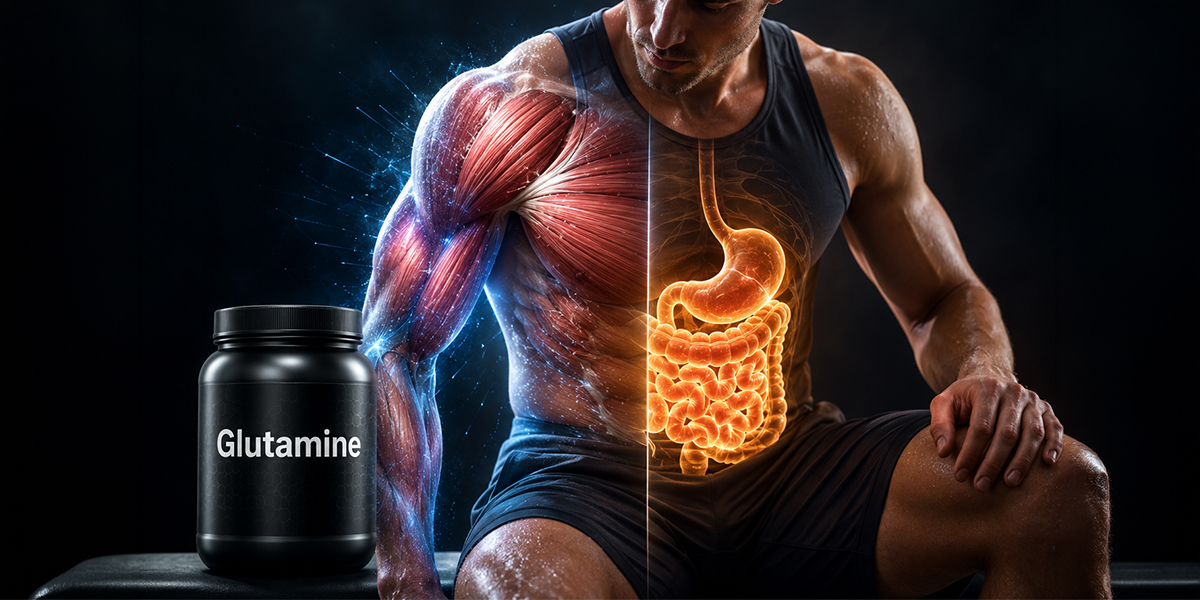


Glutamine is one of the most abundant amino acids in the human body and plays an important role in muscle recovery, immune function, and digestive health.
For athletes, fitness enthusiasts, and individuals following intensive training or restricted diets, glutamine may help support recovery after exercise while also nourishing the cells of the digestive tract and helping maintain the integrity of the gut lining.
Table of Contents
What Is Glutamine?
Glutamine is a conditionally essential amino acid, meaning the body can usually produce it, but demand may increase during periods of physical stress, intense training, illness, injury, or calorie restriction.
It is found in high amounts in muscles and is also used by immune cells and intestinal cells as an important source of fuel.
Because of its role in recovery and gut support, glutamine supplements are commonly used by athletes, bodybuilders, and people looking to support digestive wellness.
Glutamine and Muscle Recovery
After intense workouts, muscle fibers experience stress and micro-damage. The body then begins a repair process that requires amino acids, energy, hydration, and adequate recovery time.
Glutamine may support this process by helping maintain amino acid availability, reducing excessive muscle protein breakdown, and supporting recovery after demanding exercise sessions.
While glutamine is not a replacement for total daily protein intake, it may be helpful as part of a complete recovery strategy that includes protein, carbohydrates, sleep, hydration, and progressive training.
- Supports recovery after intense training.
- May help reduce excessive muscle protein breakdown.
- Supports amino acid availability during physical stress.
- May help reduce post-workout fatigue in some individuals.
- Works best alongside adequate protein and proper nutrition.
Glutamine and Gut Health
Glutamine plays a key role in nourishing intestinal cells, especially the cells that line the digestive tract.
These cells need a steady energy supply to maintain the gut barrier, support nutrient absorption, and help protect the body from unwanted substances passing through the intestinal lining.
Because intense training, stress, restrictive dieting, and digestive discomfort may place additional pressure on the gut, glutamine may be useful for supporting digestive balance and gut lining integrity.
| Area | How Glutamine May Help | Why It Matters |
|---|---|---|
| Gut Lining | Helps nourish intestinal cells | Supports gut barrier integrity |
| Nutrient Absorption | Supports a healthy digestive environment | May help the body use nutrients efficiently |
| Immune Support | Provides fuel for immune cells | Supports defense during physical stress |
| Training Stress | May support recovery demands | Useful during intense exercise phases |
Optimal Dosage and Usage
Glutamine is commonly taken after workouts, before sleep, or between meals, depending on the goal and personal routine.
Typical supplemental doses often range from 5 to 10 grams daily, although individual needs may vary based on training intensity, diet, body size, digestive health, and product instructions.
For best results, glutamine should be used consistently as part of a balanced nutrition plan rather than as a standalone solution.
| Timing | Purpose | Practical Use |
|---|---|---|
| After Workout | Recovery support | Use with protein or a recovery meal |
| Before Sleep | Overnight recovery support | Useful during intense training phases |
| Between Meals | Gut and amino acid support | May be used when digestive support is the goal |
| During Cutting | Support during calorie restriction | Combine with adequate protein intake |
Natural Sources of Glutamine
Glutamine is naturally present in many protein-rich foods. People who consume enough daily protein usually receive glutamine through their regular diet.
Animal-based sources include meat, poultry, fish, eggs, milk, yogurt, and cheese. Plant-based sources include beans, lentils, legumes, cabbage, spinach, and some whole grains.
Supplements may be useful when additional support is needed, especially during intense training, calorie restriction, or periods of increased recovery demand.
- Meat and poultry.
- Fish and seafood.
- Eggs and dairy products.
- Beans, lentils, and legumes.
- Spinach, cabbage, and some vegetables.
- Whole grains and protein-rich plant foods.
Who May Benefit from Glutamine?
Glutamine may be especially useful for people who experience high physical stress, intense training, or increased recovery needs.
Athletes, bodybuilders, endurance trainees, and individuals following calorie-restricted diets may use glutamine to support recovery, muscle maintenance, gut comfort, and immune resilience.
However, the response can vary. People already consuming a high-protein diet may not notice dramatic effects, while those under greater stress or with digestive concerns may find it more useful.
| User Type | Potential Benefit | Best Approach |
|---|---|---|
| Strength Athletes | Recovery and muscle support | Use after training with adequate protein |
| Endurance Athletes | Support during high training load | Use during intense training blocks |
| People on Cutting Diets | Muscle maintenance and recovery support | Combine with sufficient daily protein |
| Digestive Health Focus | Gut lining and intestinal cell support | Use consistently with balanced meals |
Frequently Asked Questions
What does glutamine do for muscle recovery?
Glutamine may support recovery by helping maintain amino acid availability, supporting repair processes, and reducing excessive muscle protein breakdown during physical stress.
How does glutamine support gut health?
Glutamine provides fuel for intestinal cells and may help support the integrity of the gut lining, nutrient absorption, and digestive balance.
When should I take glutamine?
Common timing includes after workouts, before sleep, or between meals. The best timing depends on whether your main goal is recovery, gut support, or general wellness.
How much glutamine is usually taken daily?
Many supplements suggest around 5 to 10 grams daily, but the right amount depends on the product instructions, training level, diet, and individual needs.
Can I get glutamine from food?
Yes. Glutamine is found in protein-rich foods such as meat, eggs, dairy, fish, legumes, beans, spinach, and other whole foods.
Conclusion
Glutamine is an important amino acid that may support both muscle recovery and gut health, especially during periods of intense training, calorie restriction, or increased physical stress.
By helping nourish intestinal cells, supporting amino acid availability, and contributing to recovery processes, glutamine can be a useful addition to a complete wellness or sports nutrition plan. For best results, it should be combined with adequate protein intake, balanced nutrition, hydration, quality sleep, and consistent training recovery habits.