

Selenium and iodine are two essential minerals that play an important role in supporting thyroid gland function and maintaining healthy metabolism.
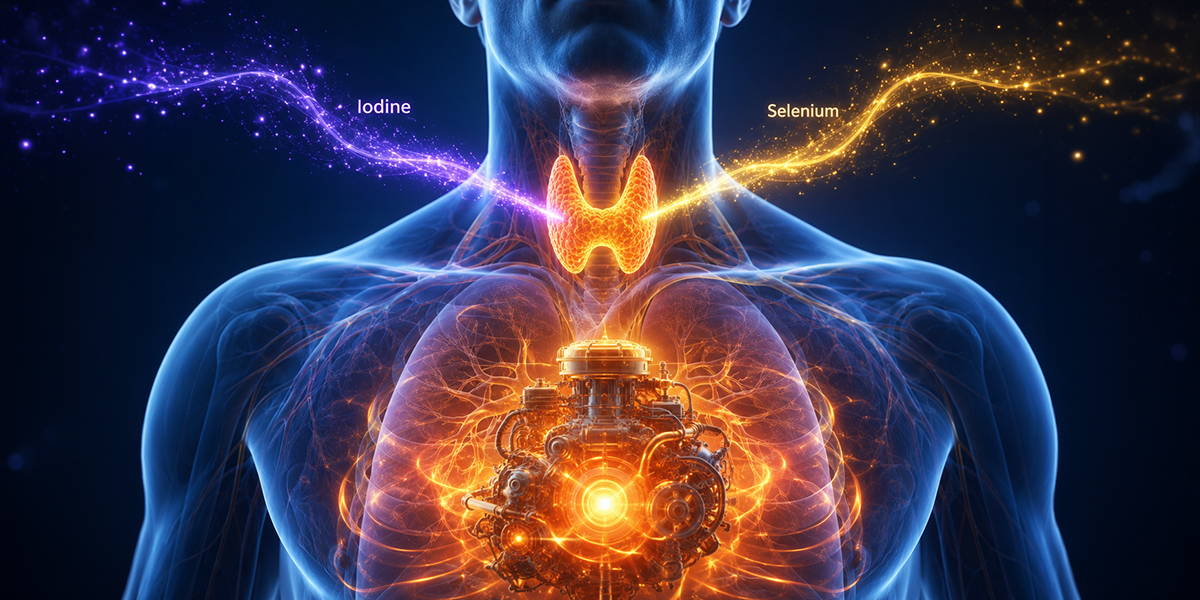
The thyroid gland is often described as the body’s metabolic engine because it helps regulate energy production, calorie burning, body temperature, and overall metabolic activity. While iodine is needed to produce thyroid hormones, selenium helps activate these hormones and protect thyroid cells from oxidative stress.
Table of Contents
Why the Thyroid Is Called the Metabolic Engine
The thyroid gland produces hormones that influence how efficiently the body uses energy.
These hormones help regulate calorie burning, body temperature, heart rate, energy levels, and the way cells use nutrients.
When thyroid function is balanced, metabolism tends to work more efficiently. When thyroid hormone production or activation is disrupted, a person may experience fatigue, cold sensitivity, weight changes, or low energy.
The Role of Iodine in Thyroid Hormone Production
Iodine is a key mineral required for the production of thyroid hormones, mainly T4 and T3.
The thyroid gland uses iodine to build these hormones, which then help regulate metabolism, body temperature, energy production, and calorie burning.
If iodine intake is too low, the thyroid may struggle to produce enough hormones, which can affect metabolic efficiency and overall energy levels.
- Supports production of thyroid hormones T3 and T4.
- Helps regulate metabolism and energy output.
- Supports normal body temperature regulation.
- Contributes to healthy growth and development.
- Must be balanced, as both deficiency and excess may affect thyroid function.
Selenium’s Role in Hormone Activation
Selenium supports enzymes that help convert T4, the less active thyroid hormone, into T3, the more active form.
T3 is the hormone more directly involved in stimulating metabolism and helping the body use energy efficiently.
Without enough selenium, thyroid hormone activation may become less efficient, even if iodine intake is adequate.
| Mineral | Main Thyroid Role | Metabolic Benefit |
|---|---|---|
| Iodine | Helps produce T3 and T4 thyroid hormones | Supports hormone availability for metabolism |
| Selenium | Helps convert T4 into active T3 | Supports efficient energy use and metabolic activity |
| Together | Support thyroid hormone production, activation, and protection | Help maintain balanced thyroid and metabolic function |
The Importance of Balance Between Selenium and Iodine
The relationship between selenium and iodine is closely connected.
Adequate iodine helps the thyroid produce hormones, while selenium helps activate those hormones and protect thyroid tissue during hormone production.
A deficiency in either mineral may reduce thyroid efficiency and may contribute to slower metabolic activity, fatigue, or reduced energy production.
Balance is important because excessive intake of iodine or selenium may also create problems, especially in people with thyroid disorders or autoimmune thyroid conditions.
Oxidative Stress and Thyroid Protection
The process of producing thyroid hormones naturally generates oxidative compounds inside the thyroid gland.
Selenium supports antioxidant enzymes that help protect thyroid cells from oxidative stress and maintain healthy gland function.
This protective role is one reason selenium is considered important for thyroid health, not only for hormone activation but also for cellular defense.
- Supports antioxidant enzyme activity.
- Helps protect thyroid cells from oxidative stress.
- Supports healthier thyroid tissue function.
- May help maintain better hormone balance when intake is adequate.
- Works best as part of a balanced diet, not excessive supplementation.
Best Natural Sources of Selenium and Iodine
A balanced diet can help maintain healthy levels of selenium and iodine naturally.
Iodine is commonly found in seafood, seaweed, dairy products, eggs, and iodized salt.
Selenium is found in foods such as Brazil nuts, fish, poultry, eggs, whole grains, and some meats.
Food-based intake is often the safest approach for many people, while supplementation may be considered when deficiency, restricted diets, or increased needs are confirmed.
- Iodine sources: seafood, iodized salt, dairy products, eggs, and seaweed.
- Selenium sources: Brazil nuts, tuna, sardines, eggs, poultry, whole grains, and meat.
- Avoid excessive seaweed intake due to very high iodine content in some types.
- Use supplements carefully and avoid combining multiple high-dose thyroid-support products.
- Check thyroid status if symptoms of imbalance persist.
Frequently Asked Questions
Why are iodine and selenium important for thyroid health?
Iodine helps produce thyroid hormones, while selenium helps activate thyroid hormones and protect thyroid cells from oxidative stress.
Can selenium improve metabolism?
Selenium may support metabolism indirectly by helping convert T4 into active T3, but it does not work like a stimulant or direct fat burner.
Can iodine deficiency slow metabolism?
Low iodine intake may affect thyroid hormone production, which can reduce metabolic efficiency and contribute to fatigue or low energy in some cases.
Should selenium and iodine be taken together?
They can work together nutritionally, but supplementation should be based on individual needs. High doses should be avoided unless recommended by a healthcare professional.
What foods provide selenium and iodine naturally?
Iodine is found in seafood, dairy, eggs, and iodized salt, while selenium is found in Brazil nuts, fish, poultry, eggs, and whole grains.
Conclusion
The interaction between selenium and iodine plays an important role in supporting thyroid health and maintaining efficient metabolism.
Iodine helps produce thyroid hormones, while selenium helps activate and protect them. Ensuring balanced intake of both minerals through healthy nutrition may support energy production, calorie burning, and overall metabolic health, while avoiding unnecessary high-dose supplementation unless professionally advised.