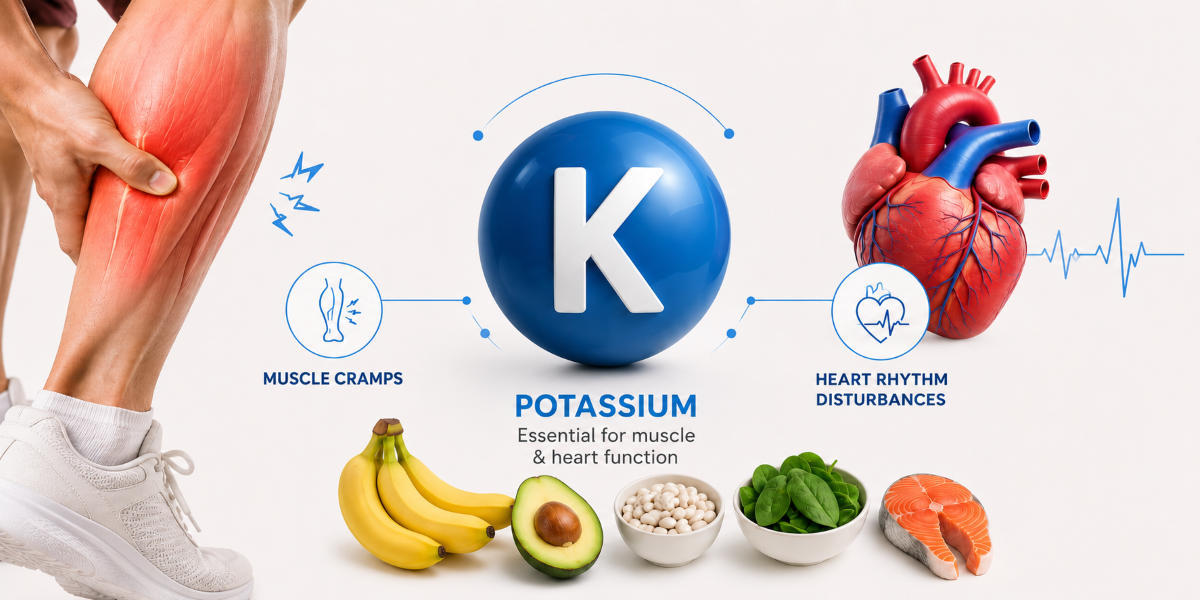


Potassium is an essential mineral that supports muscle contraction, nerve signaling, fluid balance, and normal heart rhythm.
When potassium levels become too low, the body may develop noticeable symptoms affecting muscles, digestion, energy levels, and cardiovascular function. In more serious cases, potassium deficiency may contribute to heart rhythm disturbances that require prompt medical attention.
Table of Contents
Why Potassium Is Important
Potassium is one of the main electrolytes in the body. It helps regulate the movement of fluids between cells and supports normal communication between nerves and muscles.
It also plays a key role in maintaining proper electrical activity in the heart, which is necessary for a steady and regular heartbeat.
Because potassium is involved in many vital processes, even moderate deficiency may affect daily energy, muscle performance, digestion, and cardiovascular stability.
Effect of Potassium Deficiency on Muscles
One of the most common signs of potassium deficiency is muscle cramps, spasms, or unusual tightness.
Potassium helps nerves send proper signals to muscles. When levels are low, neuromuscular communication may become less efficient, leading to cramping, weakness, or poor muscle control.
These cramps may affect the legs, arms, feet, hands, back, or abdominal muscles. They may appear during activity, after exercise, or even at rest.
- Muscle cramps or spasms.
- Muscle weakness or heaviness.
- Reduced exercise tolerance.
- Delayed recovery after activity.
- Twitching or abnormal muscle contractions.
Effect of Potassium Deficiency on the Heart
Potassium is essential for maintaining normal electrical activity in the heart.
When potassium levels are too low, the heart’s electrical signals may become unstable, which can lead to palpitations, irregular heartbeat, or more serious arrhythmias.
People with existing heart disease, kidney problems, medication use, or severe electrolyte imbalance may be at higher risk of complications from low potassium.
| Affected System | Possible Symptoms | Why It Happens |
|---|---|---|
| Muscles | Cramps, spasms, weakness, fatigue | Impaired nerve and muscle signaling |
| Heart | Palpitations or rhythm disturbances | Unstable electrical activity in the heart |
| Digestive System | Constipation or slow digestion | Reduced smooth muscle activity |
| Nervous System | Numbness, tingling, or weakness | Disrupted nerve signaling |
Other Symptoms Associated with Deficiency
In addition to muscle cramps and heart rhythm disturbances, potassium deficiency may cause several other symptoms.
These symptoms may develop gradually, especially when potassium loss continues over time through urine, sweating, vomiting, diarrhea, or medication use.
Common symptoms may include general fatigue, muscle weakness, constipation, numbness, tingling, and reduced physical performance.
- General fatigue or low energy.
- Muscle weakness or reduced endurance.
- Constipation or slow bowel movement.
- Numbness or tingling in the extremities.
- Palpitations or irregular heartbeat sensation.
- Dizziness or weakness in more significant deficiency.
Common Causes of Potassium Deficiency
Potassium deficiency may occur when intake is too low, loss is too high, or the body’s electrolyte balance is disrupted.
Poor nutrition may contribute, but significant potassium deficiency is often linked to excessive losses through urine or the digestive tract.
Certain medications, especially diuretics, may increase potassium loss. Chronic diarrhea, vomiting, excessive sweating, and some medical conditions may also lower potassium levels.
- Poor dietary intake of fruits, vegetables, legumes, and other potassium-rich foods.
- Excessive sweating during intense activity or hot weather.
- Chronic diarrhea or repeated vomiting.
- Use of certain diuretics or medications that affect electrolytes.
- Kidney, hormonal, or digestive disorders.
- Uncontrolled fluid or electrolyte loss.
Diagnosis and Treatment
Potassium deficiency is diagnosed through a blood test that measures potassium concentration.
Treatment depends on the severity of deficiency and the underlying cause. Mild cases may improve with a potassium-rich diet, while more significant deficiency may require supplements or medical treatment under supervision.
Potassium-rich foods include bananas, oranges, potatoes, sweet potatoes, spinach, tomatoes, beans, lentils, avocado, yogurt, and coconut water.
Potassium supplements should be used carefully because both low and high potassium levels can affect the heart.
Frequently Asked Questions
What are the main symptoms of potassium deficiency?
The main symptoms may include muscle cramps, spasms, weakness, fatigue, constipation, numbness, tingling, palpitations, or heart rhythm disturbances.
Can low potassium cause muscle cramps?
Yes. Low potassium may interfere with nerve and muscle signaling, leading to cramps, spasms, twitching, or muscle weakness.
Can potassium deficiency affect the heart?
Yes. Potassium is essential for normal heart electrical activity, and low levels may cause palpitations or irregular heart rhythms in some cases.
What causes potassium deficiency?
Common causes include poor intake, excessive sweating, chronic diarrhea, vomiting, certain diuretics, and medical conditions that affect electrolyte balance.
Should potassium supplements be taken without medical advice?
Potassium supplements should be used carefully and preferably under medical guidance, especially for people with kidney disease, heart conditions, or medication use.
Conclusion
Potassium deficiency can significantly affect muscle and heart health, causing symptoms such as muscle cramps, weakness, fatigue, constipation, and heart rhythm disturbances.
Early diagnosis, identifying the cause, improving dietary potassium intake, and using supplements only when appropriate can help restore balance and protect against serious complications.