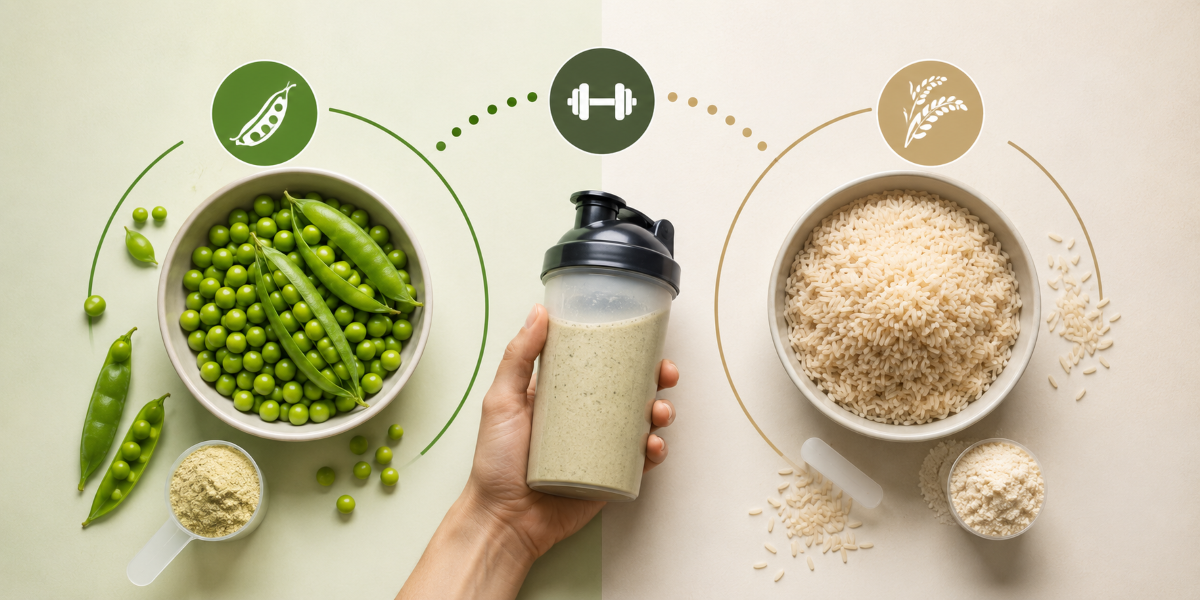


The use of plant-based proteins has increased among athletes, active individuals, and health-conscious consumers for dietary, ethical, digestive, and environmental reasons.
Pea protein and rice protein are among the most popular plant-based protein sources. However, the main challenge with many plant proteins is achieving a complete amino acid profile that effectively supports muscle building, recovery, and daily protein needs.
Table of Contents
Complete vs. Incomplete Proteins
A protein is considered complete when it contains all essential amino acids in sufficient amounts. Essential amino acids cannot be produced by the body and must be obtained from food.
Many animal-based proteins naturally provide a complete amino acid profile. In contrast, most plant proteins may be limited in one or more essential amino acids when consumed alone.
This does not mean plant proteins are ineffective. It simply means that combining the right plant protein sources can create a more balanced amino acid profile.
Strengths of Pea Protein
Pea protein is a popular plant-based protein because it is naturally rich in several important amino acids, including leucine and arginine.
Leucine plays a key role in stimulating muscle protein synthesis, which is the process the body uses to build and repair muscle tissue after training.
Arginine may also support blood flow, which can help deliver nutrients and oxygen to working muscles during exercise.
However, pea protein is relatively low in methionine, one of the essential amino acids needed for a fully balanced protein profile.
Strengths of Rice Protein
Rice protein provides a good amount of methionine and cysteine, two amino acids that are often more limited in pea protein.
This makes rice protein a useful partner in plant-based protein blends, especially when the goal is to create a more complete amino acid profile.
However, rice protein tends to be lower in leucine and lysine compared to some other protein sources, which is why it is often combined with pea protein.
| Protein Source | Strengths | Amino Acid Limitation |
|---|---|---|
| Pea Protein | Rich in leucine and arginine | Lower in methionine |
| Rice Protein | Provides methionine and cysteine | Lower in leucine and lysine |
| Pea + Rice Blend | More balanced amino acid profile | Depends on blend ratio and total dose |
How Pea and Rice Complement Each Other
When pea protein is combined with rice protein, the amino acid weaknesses of each protein are balanced by the strengths of the other.
Pea protein helps provide higher amounts of leucine and lysine, while rice protein helps improve the methionine and cysteine content of the blend.
This combination creates an amino acid profile closer to a complete protein, making it more effective for supporting muscle growth, repair, and recovery.
- Pea protein supports leucine intake for muscle protein synthesis.
- Rice protein helps improve methionine availability.
- The blend creates a more complete plant-based protein option.
- It can be suitable for vegan diets and dairy-free lifestyles.
- It may support recovery when consumed in adequate amounts.
Practical Effectiveness for Athletes
A pea and rice protein blend can be a suitable option for vegan athletes, people with dairy intolerance, or individuals who prefer plant-based nutrition.
When consumed in adequate doses, this blend may support muscle protein synthesis and recovery in a way that can be comparable to animal-based protein sources.
For athletes, the total daily protein intake, protein quality, training program, recovery, and calorie intake all play important roles in results.
How to Use Pea and Rice Protein Effectively
To get the best results from a pea and rice protein blend, focus on total protein intake throughout the day rather than depending on one serving only.
- Use a balanced pea and rice protein blend after workouts or between meals.
- Combine protein intake with carbohydrates after training to support recovery.
- Spread protein intake across meals during the day.
- Choose products with clear protein content and amino acid information when available.
- Pair protein supplementation with consistent resistance training.
Frequently Asked Questions
Is pea protein a complete protein?
Pea protein contains many essential amino acids but is relatively low in methionine, so it is often improved by combining it with rice protein.
Is rice protein a complete protein?
Rice protein provides useful amino acids such as methionine and cysteine, but it may be lower in leucine and lysine compared to other protein sources.
Why combine pea and rice protein?
Combining pea and rice protein helps balance the amino acid profile, making the blend closer to a complete protein source.
Can pea and rice protein support muscle growth?
Yes, when consumed in adequate amounts alongside resistance training, a pea and rice protein blend can support muscle growth and recovery.
Who can benefit from pea and rice protein?
Vegan athletes, people with dairy intolerance, and anyone seeking a plant-based protein option may benefit from a balanced pea and rice protein blend.
Conclusion
Achieving a complete amino acid profile from plant protein is possible through strategic blending of pea and rice proteins.
This combination offers a balanced and effective plant-based alternative for supporting muscle health, recovery, and daily protein needs without relying on animal-based sources.