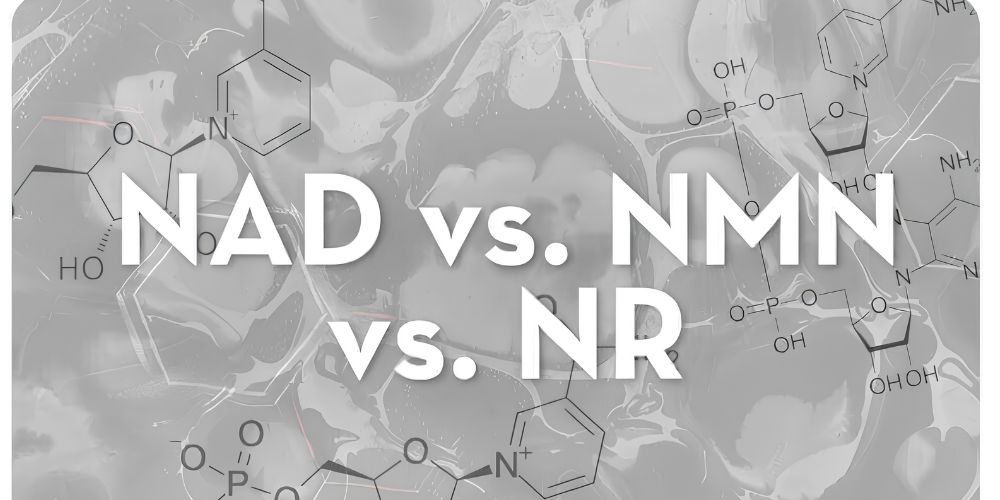


As interest in healthy aging, cellular energy, and longevity continues to grow, two ingredients have attracted significant attention: Nicotinamide Riboside (NR) and Nicotinamide Mononucleotide (NMN). Both are naturally related to vitamin B3 metabolism and are studied for their potential role in increasing levels of NAD+, a molecule involved in many essential cellular processes.
Although NR and NMN are often discussed together and are sometimes marketed for similar purposes, they are not the same compound. They have different chemical structures and follow different steps within the body's pathways for NAD+ production. Understanding these differences can help you make sense of the growing number of NR and NMN supplements available today.
But which one is better? The answer is not that simple. Research on both ingredients is still developing, and differences in study design, dosage, formulation, and individual factors make direct comparisons difficult. Rather than focusing on a single “winner,” it is more useful to understand how NR and NMN work, what the research suggests, and where the evidence remains limited.
Table of Contents
- What Are NR and NMN?
- Why Is NAD+ Important?
- Nicotinamide Riboside (NR): What You Should Know
- Nicotinamide Mononucleotide (NMN): What You Should Know
- NR vs. NMN: What’s the Difference?
- Potential Benefits of NR and NMN
- How to Use NR or NMN Supplements
- Safety and Important Considerations
- Frequently Asked Questions
- Conclusion
What Are NR and NMN?
Nicotinamide Riboside (NR) and Nicotinamide Mononucleotide (NMN) are compounds involved in the body's production of nicotinamide adenine dinucleotide, commonly known as NAD+. NAD+ is a coenzyme found in cells throughout the body and participates in processes related to energy metabolism, cellular signaling, and maintaining normal cellular function.
Both NR and NMN are considered NAD+ precursors, meaning the body can use them as building blocks in pathways that produce NAD+. This is one reason they have become popular subjects in nutritional and aging research.
While they are closely related, NR and NMN have different molecular structures. NR consists of nicotinamide and ribose, while NMN contains nicotinamide, ribose, and an additional phosphate group. These structural differences are relevant because they influence how each compound is processed within the body's NAD+ synthesis pathways.
Why Is NAD+ Important?
NAD+ plays an essential role in converting nutrients into usable cellular energy. It also participates in oxidation-reduction reactions and supports several enzymes involved in cellular maintenance and signaling.
NAD+ levels can change with factors such as age, metabolic demands, and cellular stress. This has led researchers to investigate whether increasing NAD+ availability through precursors such as NR and NMN could influence aspects of cellular function and healthy aging. However, increased NAD+ levels do not automatically translate into proven improvements in every health outcome.
Nicotinamide Riboside (NR): What You Should Know
Nicotinamide Riboside (NR) is a form of vitamin B3 that has become widely studied as an NAD+ precursor. After NR is absorbed, the body can convert it through a series of enzymatic steps into NMN and subsequently into NAD+. This pathway has made NR particularly interesting in research focused on cellular metabolism and healthy aging.
Human studies have shown that NR supplementation can increase NAD+ or related metabolites in blood and certain tissues. Researchers are investigating whether these changes may translate into meaningful effects on metabolic function, physical performance, cardiovascular health, or other aspects of human health. However, evidence for specific health outcomes remains mixed, and increasing NAD+ levels should not be interpreted as proof that NR can prevent or treat disease.
NR is available in various dietary supplement formulations, including capsules and powders. When considering an NR supplement, it is important to follow the manufacturer's serving instructions and choose products from reputable manufacturers with appropriate quality controls.
Nicotinamide Mononucleotide (NMN): What You Should Know
Nicotinamide Mononucleotide (NMN) is another NAD+ precursor that has attracted substantial scientific interest. NMN is structurally different from NR because it contains an additional phosphate group. Within NAD+ metabolism, NMN is a direct intermediate in the pathway that leads to NAD+ formation.
Studies in humans have investigated NMN supplementation for its effects on NAD+ metabolism and areas such as metabolic health, physical function, and aging-related measures. Some findings are promising, but human research is still developing, and results do not establish NMN as a treatment for aging or any specific medical condition.
Like NR, NMN is available as a dietary supplement in different formulations. Product quality, purity, dosage, and formulation can vary, so consumers should carefully check the supplement label and follow the recommended serving instructions.
NR vs. NMN: What’s the Difference?
The biggest difference between NR and NMN is their chemical structure and position within the NAD+ production pathway. NR is converted into NMN before it can contribute to NAD+ synthesis, while NMN is already an intermediate in that pathway.
However, this does not automatically mean that NMN is more effective simply because it appears later in the pathway. The body uses multiple mechanisms to absorb, transport, and metabolize these compounds, and the biological response can depend on the tissue, dose, formulation, and individual factors.
Potential Benefits of NR and NMN
Research into both NR and NMN is largely centered on their ability to influence NAD+ metabolism. Potential areas of interest include cellular energy production, metabolic function, physical performance, and healthy aging. Some studies have reported changes in NAD+ levels or related biomarkers, while evidence for broader health benefits is still being investigated.
It is therefore important to distinguish between a biological effect, such as increasing NAD+ availability, and a proven clinical benefit. More research is needed to determine when these changes translate into meaningful improvements in long-term health.
How to Use NR or NMN Supplements
NR and NMN supplements are available in different forms and dosages, so there is no single serving size that applies to every product. If you choose to use either supplement, follow the serving instructions provided on the product label rather than assuming that a higher amount will provide greater benefits.
Consistency and product quality are also important considerations. Choose supplements from reputable manufacturers that clearly identify the ingredient, amount per serving, and other ingredients included in the formulation. Taking NR or NMN with or without food may depend on the specific product, so follow the manufacturer's directions.
It is also worth remembering that NAD+ precursors are supplements, not replacements for a balanced diet, regular physical activity, adequate sleep, or appropriate medical care. A supplement should complement healthy lifestyle habits rather than serve as a substitute for them.
Safety and Important Considerations
Research into NR and NMN supplementation is continuing, particularly regarding long-term use. Short-term human studies have generally investigated these compounds at specific doses and for limited periods, so their long-term safety profile is not as well established as that of many traditional nutrients.
As with any supplement, individual responses can vary. Possible considerations include the dose, product formulation, existing health conditions, and medications or other supplements being used. Anyone taking prescription medication or managing a health condition should discuss the use of NR or NMN with a healthcare professional before starting supplementation.
It is also important to avoid assuming that increasing NAD+ levels will necessarily produce a specific anti-aging, performance, or disease-related outcome. Research is still evaluating which effects are clinically meaningful in humans.
Frequently Asked Questions
What is the main difference between NR and NMN?
Both are NAD+ precursors, but they have different chemical structures. NR can be converted into NMN within NAD+ metabolism, while NMN is already an intermediate in the pathway leading to NAD+.
Is NR better than NMN?
Current research does not establish one as universally superior. Both can influence NAD+ metabolism, while differences in absorption, formulation, dosage, tissues, and individual responses may affect their effects.
Do NR and NMN increase NAD+ levels?
Human studies have found that supplementation with NR or NMN can increase NAD+ or related metabolites under certain conditions. However, the size and significance of these changes can vary between studies and individuals.
Can NR or NMN support healthy aging?
Healthy aging is an active area of research for both compounds. While their effects on NAD+ metabolism are scientifically interesting, there is not enough evidence to conclude that NR or NMN can slow aging or prevent age-related diseases in humans.
Can NR and NMN be taken together?
There is currently no established need to combine NR and NMN. Because both are NAD+ precursors, using them together may not necessarily provide additional benefits. If you are considering combining supplements, discuss the approach with a healthcare professional.
Conclusion
Nicotinamide Riboside (NR) and Nicotinamide Mononucleotide (NMN) are closely related NAD+ precursors that have attracted significant interest in research on cellular metabolism and healthy aging. Although they follow different steps within NAD+ metabolism, both are being studied for their ability to increase NAD+ availability.
The key difference is not simply that one is “better” than the other. Their chemistry, metabolism, formulations, and available human evidence all matter when evaluating these supplements. As research continues, understanding the difference between NR and NMN can help you make more informed decisions based on the evidence rather than marketing claims.