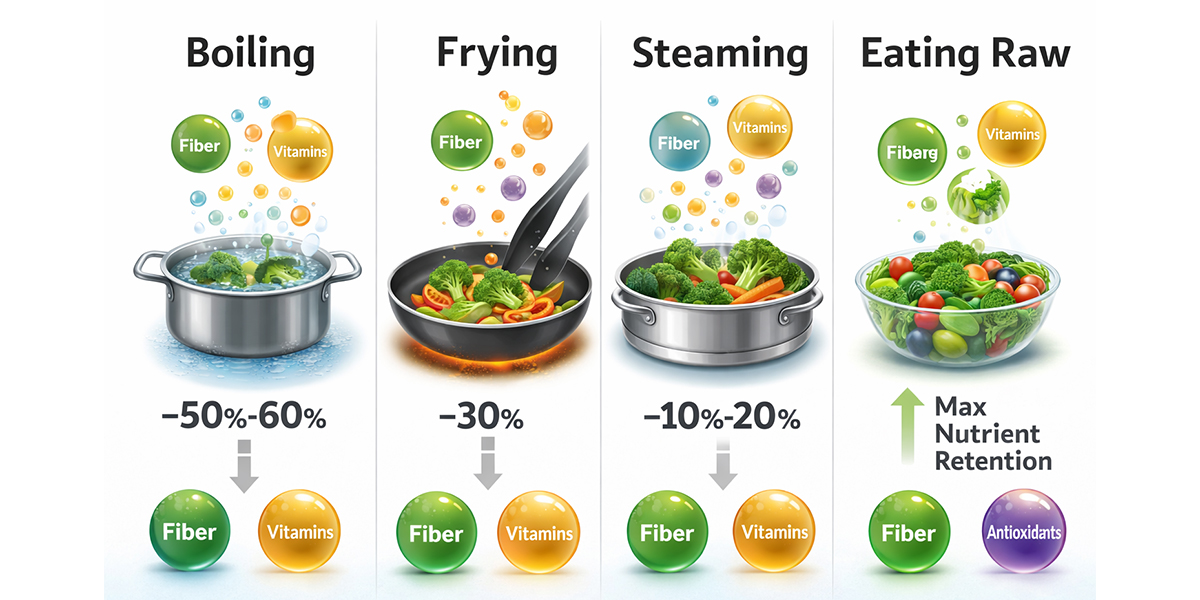


Cooking methods play a major role in determining the nutritional value of food. Some techniques help preserve vitamins and minerals, while others may lead to significant nutrient loss.
With growing awareness of healthy eating, understanding how common cooking methods such as boiling, frying, grilling, and steaming affect food quality has become essential. This knowledge helps you choose the best cooking approach to maximize nutritional benefits and support a healthier lifestyle.
Boiling and Its Effect on Vitamins
Boiling is one of the most common cooking methods, but it can lead to the loss of water-soluble vitamins such as vitamin C and B-complex vitamins.
When vegetables are boiled for long periods, these nutrients may leach into the cooking water, reducing their nutritional value.
However, boiling can still be healthy if:
- Minimal water is used
- Cooking time is kept short
Using the leftover water in soups can also help retain some of the dissolved nutrients.
Frying: Increased Fat and Nutrient Loss
Frying, especially deep frying, is considered one of the least healthy cooking methods. It causes food to absorb large amounts of fat, increasing calorie intake and reducing overall nutritional quality.
High temperatures can also destroy heat-sensitive nutrients such as vitamin C and certain antioxidants.
While fried food may taste appealing, frequent consumption can negatively affect heart health and digestion. Healthier alternatives, such as air frying, are recommended.
Grilling: Flavorful and Nutrient-Preserving
Grilling is a popular method that enhances flavor while reducing the need for added fats. It helps preserve proteins and minerals effectively.
However, cooking at very high temperatures may produce harmful compounds. To minimize risks:
- Use antioxidant-rich marinades like lemon or herbs
- Avoid charring or burning food
Grilling is an excellent choice for athletes and those seeking high-protein, low-fat meals.
Steaming: The Best Method for Nutrient Retention
Steaming is one of the best cooking methods for preserving nutrients, especially in vegetables rich in vitamins and antioxidants.
This method minimizes nutrient loss compared to boiling or frying and helps retain the natural texture and flavor of food.
Steaming also enhances nutrient absorption, making it ideal for those aiming to improve immunity, digestion, or weight management.
Roasting: Enhancing Flavor Without Excess Fat
Roasting is an effective way to bring out the natural flavors of food without excessive use of fats.
Moderate heat helps preserve minerals and fiber, but very high temperatures should be avoided to prevent oxidation or burning.
Using small amounts of healthy oils like olive oil and adding anti-inflammatory spices such as turmeric or thyme can further enhance nutritional value.
Air Frying: A Modern and Healthier Alternative
Air fryers have become a popular alternative to traditional frying. They use minimal oil, significantly reducing fat and calorie content.
Despite using hot air, air frying retains more nutrients compared to deep frying.
This method is ideal for people who want crispy food while maintaining a healthy diet and supporting weight management goals.
Tips to Maximize Nutritional Value While Cooking
You can enhance the nutritional value of your meals with simple steps, such as:
- Cutting vegetables into larger pieces to reduce nutrient loss
- Using high-quality cookware
- Avoiding overheating oils
- Combining cooking methods, such as steaming followed by light roasting
These strategies help preserve nutrients while improving taste and overall food quality.