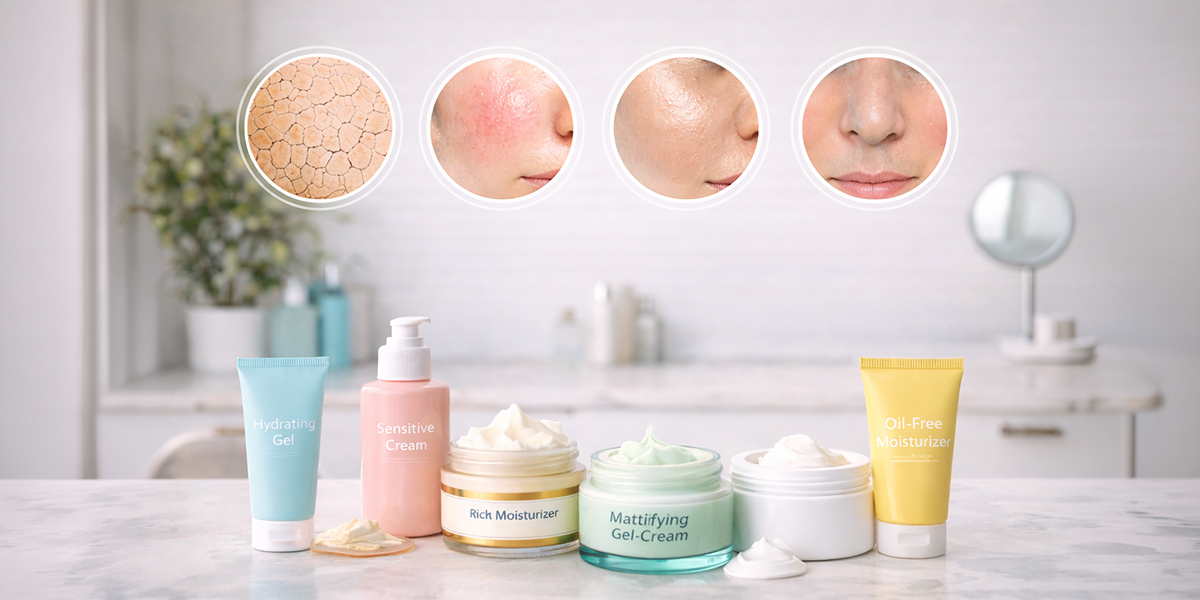


Moisturizers are an essential part of any skincare routine. They help maintain the skin’s hydration, strengthen the skin barrier, and protect the skin from dryness and environmental damage. However, choosing the right moisturizer depends largely on your skin type and specific skin concerns. Using the wrong formula may leave the skin feeling greasy, irritated, or insufficiently hydrated. Understanding how moisturizers work can help you select the most suitable product for healthy and balanced skin.
Article Contents
Why Moisturizing Is Important
Moisturizers play a critical role in maintaining the health of the skin. The outer layer of the skin, known as the skin barrier, helps retain moisture and protect the body from environmental stressors. When the skin barrier becomes weakened, the skin may become dry, irritated, or more sensitive.
Regular use of moisturizers helps:
- Maintain skin hydration
- Strengthen the skin barrier
- Reduce dryness and flaking
- Improve skin texture and elasticity
- Protect skin from environmental factors
According to dermatology experts at the American Academy of Dermatology, moisturizing regularly helps maintain healthy skin and can improve many common skin concerns such as dryness and irritation.
Skincare Tip
Types of Moisturizers
Moisturizers are formulated with different textures and ingredients designed to hydrate the skin in different ways.
Cream Moisturizers
Cream moisturizers are thicker and provide deeper hydration. They are often recommended for dry or very dry skin because they contain more oils that help seal moisture into the skin.
Lotion Moisturizers
Lotions have a lighter texture than creams and contain more water. They are suitable for normal to combination skin and are commonly used for daily hydration.
Gel Moisturizers
Gel moisturizers are lightweight and absorb quickly into the skin. They are typically oil-free and ideal for oily or acne-prone skin.
Ointments
Ointments contain the highest concentration of oils and provide the strongest barrier against moisture loss. They are often recommended for very dry or compromised skin barriers.
Choosing Moisturizer Based on Skin Type
Selecting a moisturizer that matches your skin type helps maintain balanced hydration without causing additional skin concerns.
Moisturizer for Oily Skin
People with oily skin should choose moisturizers that provide hydration without adding excess oil.
Recommended features include:
- Oil-free formulas
- Gel-based moisturizers
- Non-comedogenic products
- Lightweight texture
Ingredients such as hyaluronic acid or niacinamide can help hydrate the skin while maintaining oil balance.
Moisturizer for Dry Skin
Dry skin requires richer moisturizers that help lock moisture into the skin and repair the skin barrier.
Look for moisturizers containing:
- Ceramides
- Shea butter
- Glycerin
- Hyaluronic acid
Cream-based moisturizers usually provide longer-lasting hydration for dry skin.
Moisturizer for Sensitive Skin
Sensitive skin benefits from gentle formulas that minimize irritation.
Recommended options include:
- Fragrance-free moisturizers
- Products labeled hypoallergenic
- Moisturizers with soothing ingredients such as aloe vera or colloidal oatmeal
Moisturizer for Combination Skin
Combination skin has both oily and dry areas. Lightweight moisturizers that hydrate without feeling heavy are usually the best choice.
Gel-cream formulas often work well because they provide hydration without excess oil.
Quick Selection Guide
Key Ingredients to Look for in Moisturizers
Moisturizers contain different types of ingredients that work together to keep the skin hydrated.
Humectants
Humectants attract water into the skin and help maintain hydration.
Common examples include:
- Hyaluronic acid
- Glycerin
- Urea
Emollients
Emollients smooth and soften the skin by filling in small gaps between skin cells.
Examples include:
- Fatty acids
- Squalane
- Plant oils
Occlusives
Occlusive ingredients create a protective barrier on the skin to prevent moisture loss.
Examples include:
- Petrolatum
- Beeswax
- Dimethicone
According to guidance from the National Eczema Association, combining humectants, emollients, and occlusives can significantly improve skin hydration and barrier protection.
Tips for Using Moisturizers Correctly
Apply Moisturizer on Damp Skin
Moisturizers work best when applied to slightly damp skin because they help seal moisture into the skin.
Use Moisturizer Twice Daily
Dermatologists often recommend applying moisturizer morning and night as part of a consistent skincare routine.
Adjust Moisturizer According to Climate
Skin hydration needs can change depending on weather conditions. In colder or drier climates, heavier creams may be needed to prevent dryness.
Use Sunscreen After Morning Moisturizer
During the daytime, sunscreen should be applied after moisturizer to protect the skin from UV damage.
Important Note
Conclusion
Moisturizers are a key component of maintaining healthy, hydrated skin. Choosing the right moisturizer depends on your skin type, the ingredients in the formula, and your daily skincare routine. By selecting an appropriate moisturizer and using it consistently, you can help maintain the skin barrier, improve hydration, and support overall skin health.