

Artificial colorings, commonly identified by their E-numbers, are used in some vitamin capsules and dietary supplements to improve product appearance, distinguish products from one another, and maintain a consistent look across manufacturing batches. Although these additives are widely used throughout the food industry, their presence in supplements often raises questions about their purpose, necessity, and safety.
Table of Contents
What Are E-Numbers?
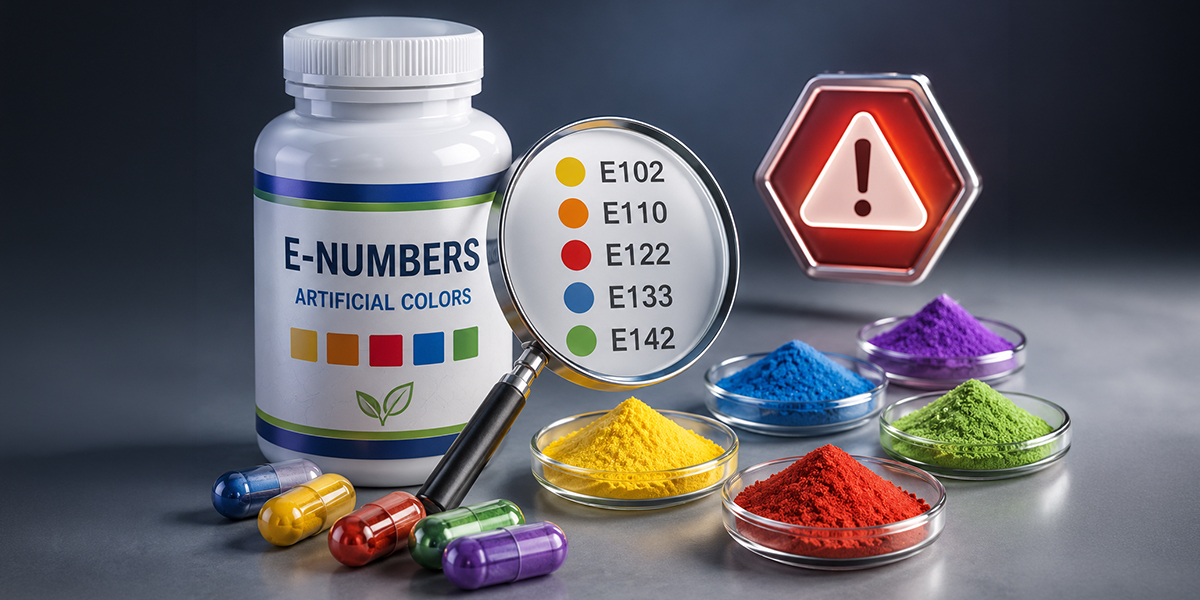
E-numbers are identification codes assigned by European regulatory authorities to approved food additives. These additives include colorings, preservatives, antioxidants, emulsifiers, stabilizers, and other ingredients used in food and dietary supplement manufacturing.
When used as colorants, E-number additives are added in very small quantities to provide a specific color to capsules, tablets, or coatings without contributing nutritional value.
Examples include:
- E102 (Tartrazine)
- E110 (Sunset Yellow)
- E129 (Allura Red)
- E133 (Brilliant Blue)
Why Are They Used in Vitamins?
Artificial colorings are primarily used for manufacturing and product identification purposes.
Common reasons include:
- Distinguishing different supplement formulas.
- Identifying different strengths or dosages.
- Improving product appearance.
- Creating brand consistency.
- Maintaining a uniform appearance between production batches.
In many cases, colorings help consumers easily recognize products and reduce confusion between similar-looking supplements.
Do They Affect Vitamin Effectiveness?
No. Artificial colorings do not affect the nutritional value, absorption, or biological activity of vitamins and minerals contained within a supplement.
Their function is purely cosmetic and does not influence how effectively the body uses the active ingredients.
Are They Safe?
Most color additives approved under the E-number system have undergone safety evaluations by regulatory organizations and are considered safe when consumed within established limits.
These organizations evaluate:
- Toxicology data.
- Long-term exposure studies.
- Acceptable daily intake levels.
- Potential allergic or sensitivity reactions.
However, some artificial colorings continue to be discussed in scientific literature, particularly regarding excessive intake or use by individuals who may be sensitive to certain additives.
Why Do Some People Prefer to Avoid Them?
Some consumers choose products without artificial colorings for personal or dietary reasons.
Common reasons include:
- Sensitivity to certain additives.
- Preference for natural products.
- Desire to minimize non-nutritive ingredients.
- Following clean-label lifestyles.
- Personal health philosophies.
For these individuals, supplements without artificial colors may provide greater peace of mind, even when approved additives are considered safe.
Are Natural Alternatives Available?
Yes. Many manufacturers now use naturally derived colorings instead of synthetic additives.
Common natural coloring sources include:
- Beetroot extract.
- Turmeric.
- Paprika extract.
- Chlorophyll.
- Spirulina extract.
- Fruit and vegetable concentrates.
These alternatives are often found in products marketed as natural, clean-label, organic, or free from artificial additives.
Tips for Choosing Supplements
- Read ingredient labels carefully.
- Check for artificial or natural color sources.
- Focus on active ingredient quality first.
- Choose products from reputable manufacturers.
- Consider your personal preferences and sensitivities.
- Avoid judging supplement quality based solely on color or appearance.
Frequently Asked Questions
What do E-numbers mean?
E-numbers are regulatory identification codes assigned to approved food additives, including colorings, preservatives, and stabilizers.
Do artificial colorings improve supplement effectiveness?
No. They are used only for appearance and product identification purposes.
Are artificial colorings safe?
Most approved color additives are considered safe when consumed within established regulatory limits.
Why do some supplements avoid artificial colors?
Some brands target consumers who prefer natural ingredients or wish to avoid unnecessary additives.
Can I find vitamins with natural colorings?
Yes. Many modern supplements use plant-derived colorings such as beetroot, turmeric, chlorophyll, or spirulina extracts.
Conclusion
Artificial colorings identified by E-numbers are primarily used in vitamin capsules for appearance, identification, and manufacturing consistency. They do not affect the nutritional value, absorption, or effectiveness of dietary supplements.
While approved color additives are generally considered safe within regulatory limits, some consumers prefer to avoid them due to personal preferences or sensitivity concerns. Fortunately, many supplements are now available with natural coloring alternatives, allowing individuals to choose products that align with their needs and values.