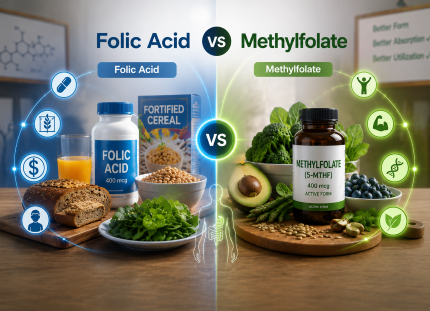
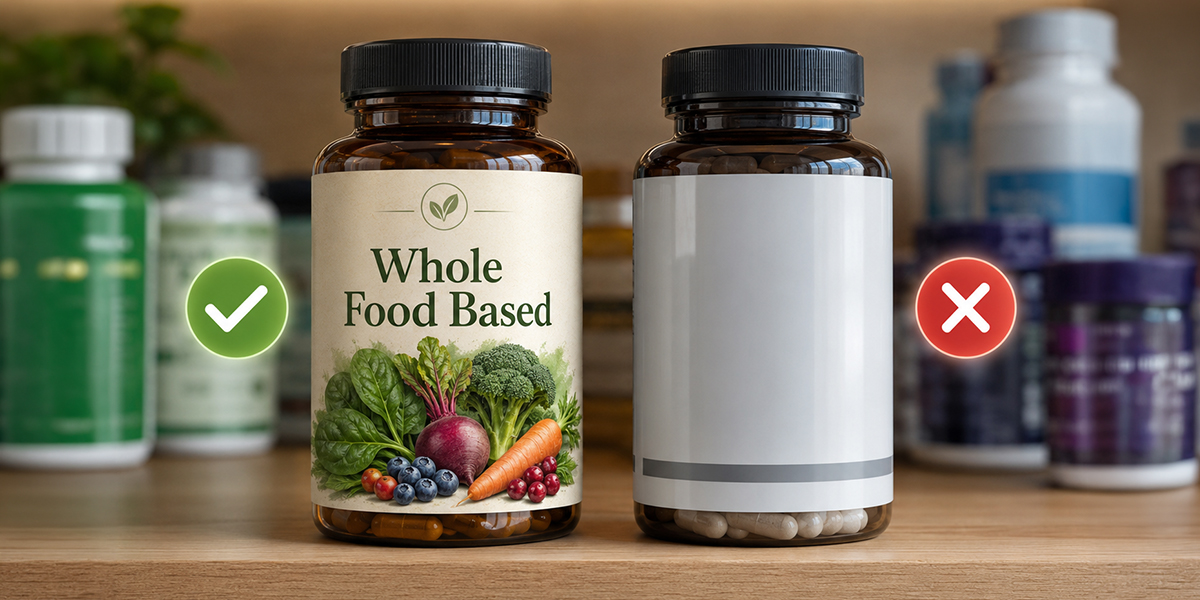


The term "Whole Food Based" has become increasingly common in the supplement industry. It often suggests that nutrients are derived from real foods rather than being added only as isolated synthetic compounds.
However, because the term is not always strictly regulated, consumers need to look beyond the front label. Reading the full supplement facts panel, ingredient list, and nutrient source descriptions is essential for understanding whether a product truly fits the whole food based concept.
Table of Contents
Look for Food Sources in the Ingredient List
One of the first indicators of a whole food based supplement is the presence of recognizable food ingredients listed as nutrient sources.
These may include fruit concentrates, vegetable powders, herb extracts, fermented foods, sprouted grains, or dehydrated whole foods. Their presence suggests that at least part of the formula comes from food-based materials.
Examine the Nutrient Source Description
Whole food supplements often specify where individual nutrients come from. For example, a label may state that vitamin C is derived from acerola cherry, folate from spinach, or minerals from plant-based complexes.
In contrast, products that list only isolated nutrient names without identifying food sources may rely mainly on synthetic or isolated forms.
This does not automatically mean the product is low quality, but it may not fully match what consumers expect from a whole food based supplement.
Be Cautious of Marketing Claims
Terms such as "natural," "food-grown," "plant-based," or "made with whole foods" can be used for promotional purposes. These phrases do not always guarantee that all nutrients come exclusively from whole food sources.
This is why it is important to evaluate the full ingredient list rather than relying only on the front label.
| Label Claim | What to Check | Why It Matters |
|---|---|---|
| Whole Food Based | Food source names in the ingredient list | Confirms whether nutrients are linked to real food ingredients |
| Natural | Full ingredient and nutrient source details | The term can be broad and may not define nutrient origin |
| Food-Grown | Manufacturing and sourcing explanation | Helps determine whether nutrients are cultured or simply blended |
| Plant-Based | Whether active nutrients are plant-derived or just the capsule base | Prevents misunderstanding of the claim |
Review the Other Ingredients Section
A whole food based supplement may still contain excipients or processing aids, such as capsule materials, binders, or stabilizers.
The presence of these ingredients does not automatically mean the supplement is not whole food based. However, the overall formula should still emphasize food-derived ingredients and transparent sourcing.
Reviewing the "Other Ingredients" section helps consumers understand how simple or complex the full product formulation is.
Check for Transparency
Manufacturers that specialize in whole food supplements often provide clear details about sourcing, production methods, quality testing, and whether nutrients come from food concentrates, fermented materials, or isolated compounds.
A transparent label or official product page should make it easy to identify:
- The food sources used in the formula.
- Whether nutrients are naturally occurring or added separately.
- Any isolated vitamins or minerals included for standardization.
- Testing standards and manufacturing quality.
- Dietary suitability such as vegan, gluten-free, or allergen-free claims.
Frequently Asked Questions
What does whole food based mean?
It generally means the supplement includes nutrients or ingredients derived from real food sources rather than relying only on isolated synthetic compounds.
How can I identify a whole food based supplement?
Look for recognizable food ingredients such as fruit powders, vegetable concentrates, herb extracts, or named food sources for specific nutrients.
Does whole food based mean 100% natural?
Not necessarily. Some products may still include isolated nutrients, excipients, or processing aids.
Are whole food based supplements always better?
Not always. Quality depends on formulation, nutrient levels, testing standards, bioavailability, and individual needs.
Should I avoid synthetic vitamins completely?
Not necessarily. Some synthetic or isolated forms can be effective and useful, especially when specific nutrient levels are needed.
Conclusion
Identifying a truly whole food based supplement requires careful label reading rather than relying only on marketing statements. Consumers should pay attention to food source names, nutrient origin descriptions, and overall ingredient transparency.
A good whole food based supplement should clearly explain where its nutrients come from and how the formula is built. By reviewing the full label and understanding the difference between food-derived and isolated nutrients, consumers can make more informed supplement choices.