
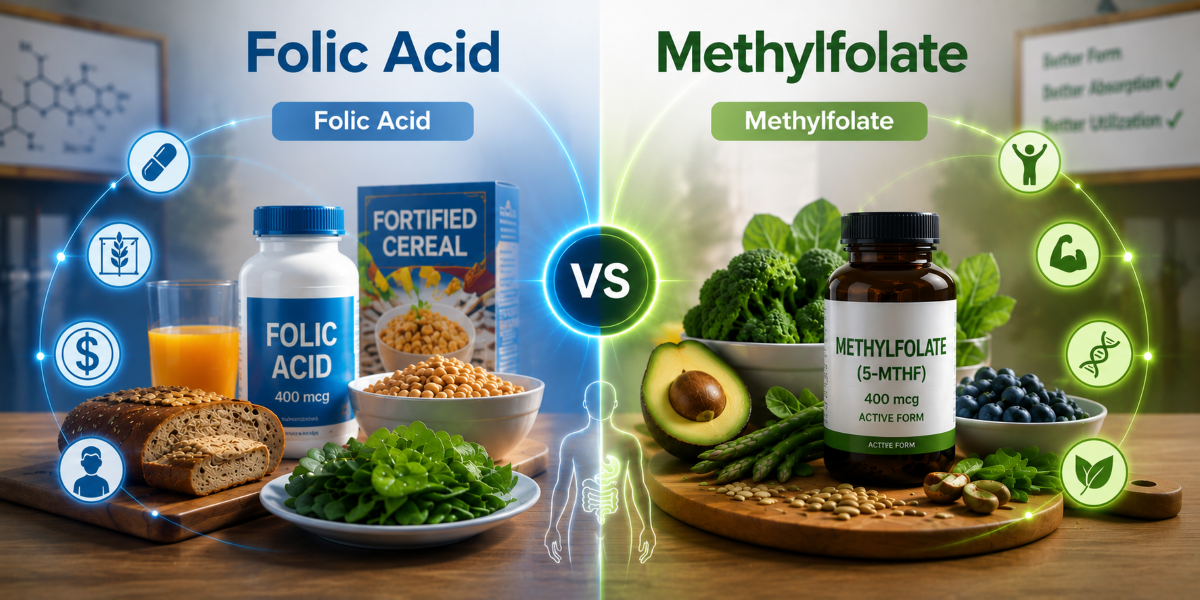


Folate is an essential B vitamin involved in cell production, DNA formation, brain function, and red blood cell health.
In supplements and fortified foods, folate is commonly available in two main forms: folic acid and methylfolate. Although both are related to vitamin B9, they differ in how the body processes and uses them, which may affect how certain individuals respond to supplementation.
Table of Contents
What Is Folic Acid?
Folic acid is the synthetic form of vitamin B9 commonly found in dietary supplements and fortified foods.
Before the body can use folic acid efficiently, it must go through several conversion steps in the liver and body tissues to become the active form of folate.
For many people, this conversion process works well, making folic acid an effective and widely used form of vitamin B9 support.
What Is Methylfolate?
Methylfolate, often listed as L-Methylfolate or 5-MTHF, is the active form of folate that the body can use directly without major conversion.
Because it is already active, methylfolate may be easier for some individuals to absorb and utilize efficiently.
This makes it a popular option for people who may have difficulty converting folic acid into its active form.
Why Do Some People Respond Better to Methylfolate?
Some individuals have genetic variations that may reduce the activity of enzymes responsible for converting folic acid into active folate.
In these cases, methylfolate may provide better biological availability and more direct support for energy, mood, red blood cell production, and overall wellness.
However, response varies from person to person, and not everyone needs the active form.
| Form | How the Body Uses It | Best Suited For |
|---|---|---|
| Folic Acid | Requires conversion into active folate | Many healthy individuals with normal conversion |
| Methylfolate | Already active and ready for use | People with conversion difficulties or specific needs |
| Food Folate | Naturally found in foods | Daily nutrition from leafy greens, legumes, and whole foods |
Real-Life Example: Energy and Fatigue
A person taking regular folic acid supplements may not notice major improvements in energy levels or general well-being if their body struggles with conversion.
After switching to methylfolate, some individuals may report better energy, mental clarity, or improved response because the body can use this form more directly.
This does not mean methylfolate is always superior for everyone, but it may be more suitable for people who do not respond well to standard folic acid.
Real-Life Example: Pregnancy Support
Folate is especially important during pregnancy because it supports fetal development, healthy cell growth, and normal DNA formation.
Some healthcare professionals may recommend methylfolate for individuals who have difficulty converting folic acid efficiently or who have specific nutritional needs.
Pregnancy supplementation should always follow professional medical guidance, especially when choosing the form and dosage of folate.
Does Everyone Need Methylfolate?
Not necessarily. Many people can effectively convert and use folic acid without problems.
For healthy individuals with good nutrient absorption and no known conversion issues, traditional folic acid may still provide adequate vitamin B9 support.
The best choice depends on individual needs, health status, genetics, diet, and professional advice when needed.
- Folic acid may work well for many healthy individuals.
- Methylfolate may be useful for people with conversion difficulties.
- Food folate remains important as part of a balanced diet.
- Pregnancy and medical conditions require professional guidance.
- Supplement choice should match the person’s needs and tolerance.
Frequently Asked Questions
What is the difference between folic acid and methylfolate?
Folic acid is a synthetic form that requires conversion, while methylfolate is the active form that the body can use more directly.
Is methylfolate better than folic acid?
Methylfolate may be better for some individuals with conversion difficulties, but folic acid can still be effective for many people.
Who may benefit from methylfolate?
People with reduced folate conversion, certain nutritional needs, or poor response to folic acid may benefit from methylfolate under professional guidance.
Is folate important during pregnancy?
Yes. Folate supports fetal development, cell growth, and DNA formation, but the correct form and dose should be discussed with a healthcare professional.
Can I get folate from food?
Yes. Natural food sources of folate include leafy greens, legumes, asparagus, avocado, citrus fruits, and fortified foods.
Conclusion
Folic acid and methylfolate both provide vitamin B9 support, but they differ in how the body processes and uses them.
Methylfolate may offer advantages for individuals with conversion difficulties or specific health needs, while folic acid remains effective for many people. Understanding these differences can help individuals make more informed choices about supplementation and overall nutritional support.