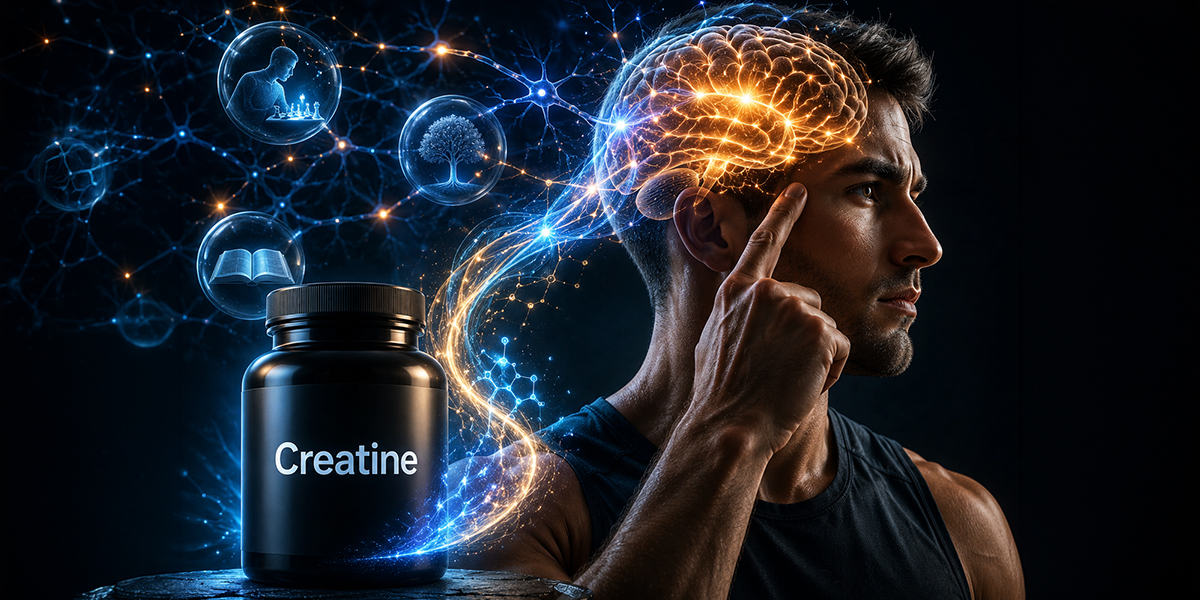


Creatine is widely known for supporting muscle strength, power, and athletic performance, but its role is not limited to muscles only.
The brain is also a high-energy organ that depends on rapid energy production to support focus, memory, neural signaling, and mental performance. Because creatine helps regenerate ATP, the body’s quick energy molecule, it may also support brain function and cognitive health.
Table of Contents
Creatine Beyond Muscle Performance
Creatine is commonly associated with gym performance because it supports short bursts of energy during high-intensity exercise.
However, the same energy-supporting system also exists in the brain. Brain cells need a constant and efficient energy supply to process information, communicate with other neurons, and maintain focus during demanding mental tasks.
This is why creatine has become an interesting nutrient in research related to cognition, memory, mental fatigue, sleep deprivation, and healthy aging.
Presence of Creatine in the Brain
Creatine is naturally present in brain tissue, where it exists partly as phosphocreatine.
Phosphocreatine acts as an energy reserve that helps nerve cells respond to rapid changes in energy demand. This is especially important during intense mental effort, cognitive stress, or periods when the brain needs to maintain alertness for a long time.
Although the brain can produce some creatine, dietary intake and supplementation may influence creatine availability, especially in people with lower dietary creatine intake.
- Creatine is naturally found in brain tissue.
- It is stored partly as phosphocreatine.
- Phosphocreatine helps support rapid energy availability.
- Brain energy demand increases during intense focus.
- Low dietary creatine intake may reduce baseline availability in some people.
Supporting Neural Energy Production
Creatine plays a central role in helping regenerate ATP inside cells.
ATP is the primary energy molecule used by the body, including nerve cells. In the brain, ATP supports neural signaling, neurotransmitter activity, membrane function, and overall communication between neurons.
By supporting ATP recycling, creatine may help the brain maintain energy availability during mentally demanding situations, which may support sustained focus and cognitive performance.
| Brain Function | How Creatine May Help | Potential Benefit |
|---|---|---|
| Neural Signaling | Supports ATP availability in nerve cells | May improve communication efficiency |
| Mental Focus | Helps maintain cellular energy during cognitive stress | May support sustained attention |
| Memory Processing | Supports energy-demanding brain activity | May support short-term memory tasks |
| Mental Fatigue | May support energy resilience | May reduce performance decline under fatigue |
Effects of Creatine on Memory and Focus
Some studies suggest that creatine supplementation may support short-term memory, attention, and mental processing speed, particularly when the brain is under stress.
These situations may include sleep deprivation, mental fatigue, intense study periods, high workload, or low dietary creatine intake.
The cognitive benefits of creatine may be more noticeable in people whose baseline creatine stores are lower, such as vegetarians, vegans, older adults, or individuals with high mental demands.
Neuroprotective Benefits
Creatine may also offer neuroprotective support by helping nerve cells maintain energy stability.
When brain cells have better energy availability, they may be more resilient during periods of metabolic stress. Creatine may also support antioxidant defense indirectly by helping reduce cellular energy strain.
Because of these properties, creatine has become a subject of interest in research related to brain health, cognitive aging, neurological resilience, and mental fatigue.
| Potential Brain Benefit | Possible Mechanism | Most Relevant Situation |
|---|---|---|
| Energy Stability | Supports ATP regeneration | Mental fatigue or high cognitive demand |
| Neuronal Support | Helps cells manage energy stress | Cognitive stress and aging research |
| Oxidative Stress Support | May reduce energy-related cellular strain | Periods of high physical or mental load |
| Cognitive Resilience | Supports energy reserves in brain tissue | Sleep loss or demanding mental tasks |
Who May Benefit Most Cognitively?
Not everyone will notice the same cognitive response from creatine supplementation.
People with lower dietary creatine intake may experience more noticeable benefits because their baseline creatine stores may be lower. This includes vegetarians and vegans, since creatine is mainly found in animal-based foods such as meat and fish.
Older adults and people exposed to high mental stress may also be more likely to benefit from creatine’s role in supporting energy metabolism and cognitive resilience.
- Vegetarians and vegans with low dietary creatine intake.
- Older adults interested in cognitive and energy support.
- People exposed to high mental workload or stress.
- Individuals experiencing mental fatigue or sleep deprivation.
- Athletes who need both physical and mental performance support.
- Students or professionals during demanding cognitive periods.
Frequently Asked Questions
Can creatine support brain function?
Yes. Creatine may support brain function by helping regenerate ATP, which nerve cells use for energy-demanding tasks such as signaling, focus, and memory processing.
Does creatine improve memory?
Creatine may support short-term memory and mental processing in some people, especially during sleep deprivation, mental fatigue, or low dietary creatine intake.
Why might vegetarians benefit more from creatine?
Vegetarians may have lower dietary creatine intake because creatine is mainly found in animal-based foods, so supplementation may have a stronger effect on baseline creatine stores.
Is creatine only for athletes?
No. Creatine is commonly used by athletes, but it may also support brain energy, cognitive performance, and healthy aging in certain individuals.
Can creatine replace sleep or caffeine for focus?
No. Creatine may support energy metabolism, but it does not replace quality sleep, hydration, balanced meals, stress control, or healthy lifestyle habits.
Conclusion
Creatine supports not only muscle performance but also brain function by helping improve energy availability inside nerve cells.
Through its role in ATP regeneration, phosphocreatine storage, and cellular energy stability, creatine may support memory, focus, cognitive resilience, and brain health in certain situations. Moderate supplementation may be especially useful for people with low dietary creatine intake, older adults, or individuals exposed to high mental demands, while balanced nutrition, sleep, hydration, and a healthy lifestyle remain the foundation for long-term cognitive performance.