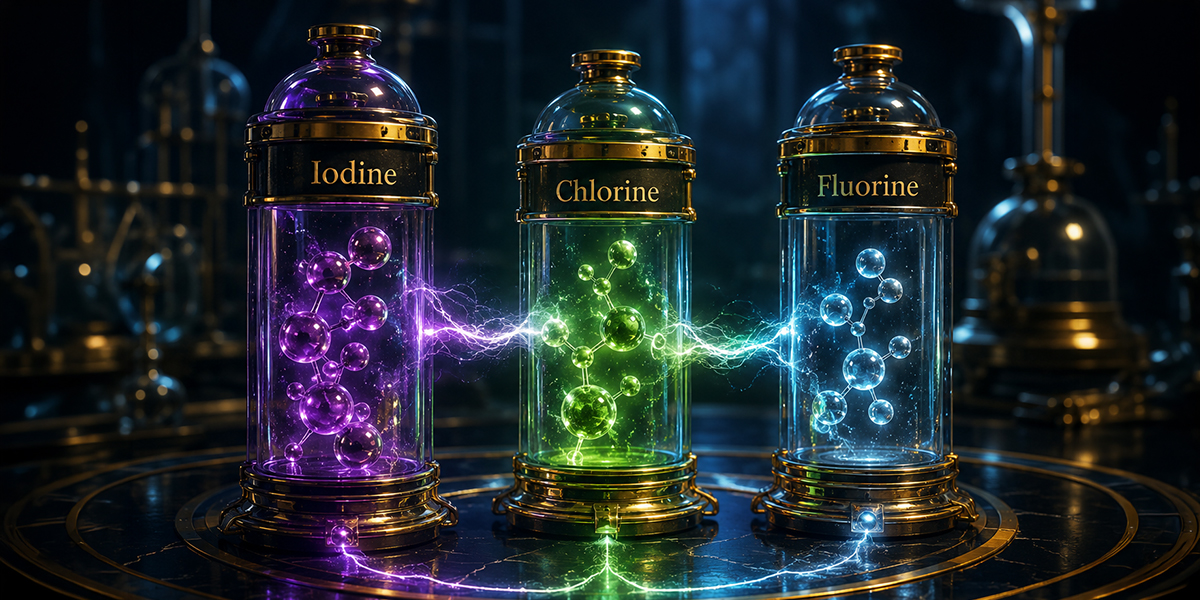


Iodine, chlorine, and fluorine are chemical elements that belong to the halogen family in the periodic table. They share similar chemical characteristics, including high reactivity and the ability to form compounds with metals, hydrogen, and organic molecules.
Although they are chemically related, each element has a different biological role in the human body. Iodine is essential for thyroid hormone production, chlorine is mainly present as chloride and supports digestion and fluid balance, while fluorine is commonly associated with dental and bone mineral support.
Table of Contents
What Are Halogens?
Halogens are a group of elements found in Group 17 of the periodic table. This family includes fluorine, chlorine, bromine, iodine, and astatine.
The word “halogen” means “salt-forming,” because these elements can react with metals to form salts, such as sodium chloride.
In health and nutrition, iodine, chlorine, and fluorine are discussed because they can influence thyroid function, digestion, fluid balance, dental strength, and mineral metabolism in different ways.
Common Properties of Halogens
Halogens have seven electrons in their outer electron shell. Because of this structure, they tend to gain one electron during chemical reactions, making them highly reactive.
They can bond with hydrogen to form acids such as hydrochloric acid, hydrofluoric acid, and hydroiodic acid. They can also react with metals to form mineral salts.
However, their reactivity differs significantly. Fluorine is the most reactive halogen, chlorine is also highly reactive, while iodine is less reactive compared with the lighter halogens.
| Element | Halogen Type | General Reactivity | Main Health Relevance |
|---|---|---|---|
| Fluorine | Halogen | Highest among these three | Teeth and bone mineral support in controlled amounts |
| Chlorine | Halogen | More reactive than iodine | Digestion, stomach acid, and fluid balance as chloride |
| Iodine | Halogen | Least reactive among these three | Thyroid hormones, metabolism, and growth |
Iodine and Its Biological Role
Iodine is essential for the production of thyroid hormones, mainly T3 and T4.
These hormones regulate metabolism, energy production, growth, nervous system development, temperature regulation, and many other body functions.
Although iodine is less reactive than fluorine and chlorine, it is required in precise amounts. Both iodine deficiency and excessive iodine intake may affect thyroid function in sensitive individuals.
- Supports production of T3 and T4 thyroid hormones.
- Helps regulate metabolism and energy use.
- Supports growth and brain development.
- Contributes to nervous system function.
- Requires balance because both low and excessive intake may be problematic.
Chlorine and Its Biological Role
In the human body, chlorine is mainly found as chloride, an important electrolyte.
Chloride helps maintain fluid balance, acid-base balance, and normal cellular function. It is also a key component of hydrochloric acid in the stomach, which supports digestion and helps the body break down food.
Unlike iodine, chloride is not mainly used for hormone production. Its role is more related to digestion, hydration, electrolyte balance, and stomach acidity.
Fluorine and Its Role in the Body
Fluorine is commonly discussed in the form of fluoride, especially in relation to dental health.
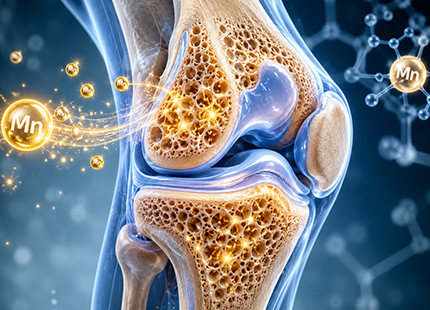
Fluoride can interact with calcium and phosphorus in teeth and bones, helping form stronger mineral structures such as fluorapatite or hydroxyfluorapatite. This is why fluoride is often associated with tooth enamel strength and cavity prevention.
However, balance is important. Excessive fluoride intake over time may contribute to dental fluorosis or skeletal fluorosis, especially when exposure is high.
| Element | Common Body Form | Main Function | Excess Concern |
|---|---|---|---|
| Iodine | Iodide | Thyroid hormone production | Thyroid imbalance in sensitive individuals |
| Chlorine | Chloride | Fluid balance and stomach acid | Electrolyte imbalance if intake is excessive or poorly regulated |
| Fluorine | Fluoride | Tooth enamel and mineral support | Dental or skeletal fluorosis with excessive intake |
Chemical Relationship Among Halogens
Iodine, chlorine, and fluorine are chemically related because they belong to the same halogen group and share similar outer electron structures.
Because of this similarity, they can form compounds with metals, hydrogen, and organic molecules. In some chemical reactions, halogens may compete or substitute for one another depending on the compound and reaction conditions.
Reactivity generally increases as we move upward in the halogen group. This means fluorine is the most reactive, chlorine is less reactive than fluorine but more reactive than iodine, and iodine is the least reactive among these three.
| Comparison Point | Fluorine | Chlorine | Iodine |
|---|---|---|---|
| Chemical Reactivity | Very high | High | Lower |
| Common Nutritional Form | Fluoride | Chloride | Iodide |
| Main Body Role | Teeth and mineral structure | Fluid balance and digestion | Thyroid hormone production |
| Need for Balance | Excess can be harmful | Electrolyte balance matters | Deficiency and excess can affect thyroid health |
Frequently Asked Questions
Are iodine, chlorine, and fluorine related?
Yes. They all belong to the halogen family in the periodic table and share similar chemical properties, although their biological roles are different.
What is iodine’s main role in the body?
Iodine is essential for producing thyroid hormones such as T3 and T4, which help regulate metabolism, growth, and nervous system function.
Is chlorine important for the body?
Yes, but mainly in the form of chloride. Chloride helps maintain fluid balance and is part of hydrochloric acid in the stomach, which supports digestion.
What does fluorine do in the body?
Fluorine is commonly present as fluoride, which supports tooth enamel strength and may contribute to mineral structure in teeth and bones.
Which halogen is the most reactive?
Fluorine is the most reactive halogen among iodine, chlorine, and fluorine, while iodine is the least reactive of the three.
Conclusion
Iodine, chlorine, and fluorine are members of the halogen family, sharing important chemical similarities while performing very different biological functions.
Iodine supports thyroid hormone production, chlorine is mainly used as chloride for digestion and fluid balance, and fluorine is commonly used as fluoride for dental and mineral support. Their relationship shows how elements from the same chemical family can have very different roles in health, depending on their form, dose, and biological context.