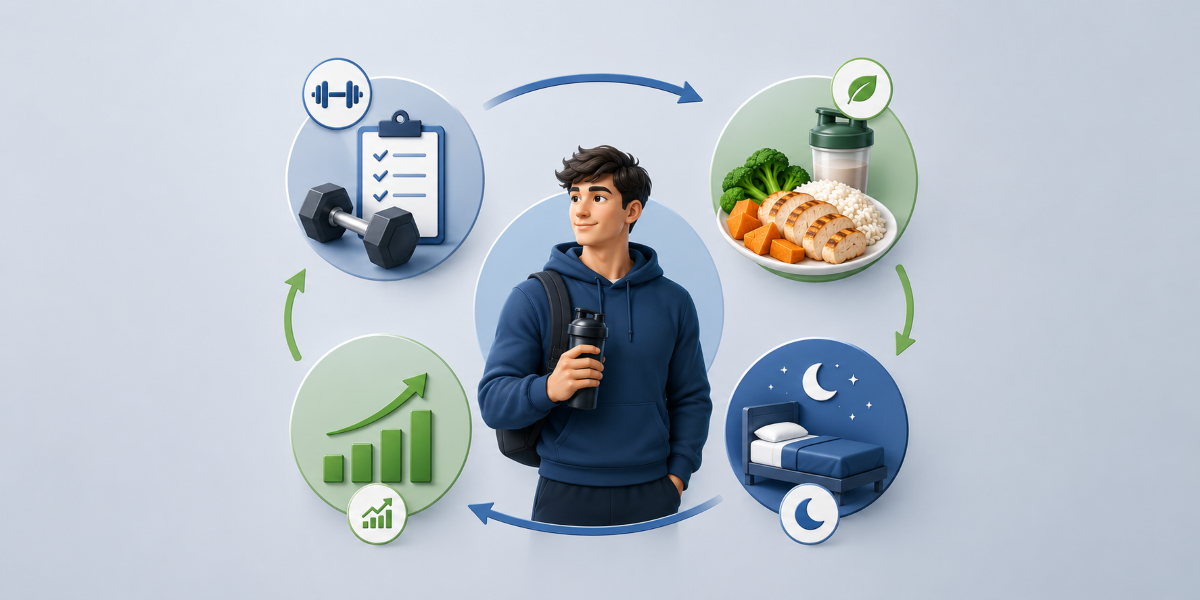


Being skinny does not necessarily mean having a weak body, but it can make building muscle more challenging for some individuals. Muscle growth requires the right combination of nutrition, resistance training, recovery, and consistency.
A proper muscle-building program should combine a calorie-surplus diet rich in protein, carbohydrates, and healthy fats with regular resistance training. This approach helps increase muscle mass in a healthy and effective way over time.
Table of Contents
Nutrition for Muscle Building in Skinny Individuals
Nutrition is the foundation of any successful muscle-building plan, especially for skinny individuals who may struggle to eat enough calories during the day.
To gain muscle, the body needs enough calories, protein, carbohydrates, fats, vitamins, minerals, and fluids to support training performance and recovery.
Increase Caloric Intake
To build muscle, the body needs a calorie surplus, meaning you consume more calories than your body burns.
This does not mean eating unhealthy foods in large amounts. Instead, gradually increase meal sizes or add extra meals and snacks throughout the day.
Small, frequent meals can help increase calorie intake without causing excessive fullness or digestive discomfort.
Protein for Muscle Growth
Protein is the foundation for building and repairing muscle tissue after resistance training.
Excellent protein sources include meat, poultry, fish, eggs, dairy products, legumes, nuts, and high-quality protein supplements when needed.
For better results, distribute protein intake across the day rather than relying on one large protein meal.
Healthy Carbohydrates and Fats
Carbohydrates provide the energy needed for intense workouts and help replenish glycogen stores after training.
Healthy carbohydrate sources include oats, brown rice, potatoes, quinoa, whole grains, and fruits.
Healthy fats support hormone production, calorie intake, and overall health. Good sources include avocado, nuts, olive oil, chia seeds, flaxseeds, and fatty fish.
| Nutrient | Main Role | Examples |
|---|---|---|
| Protein | Builds and repairs muscle tissue | Eggs, chicken, fish, dairy, legumes |
| Carbohydrates | Provide workout energy | Oats, rice, potatoes, quinoa, fruits |
| Healthy Fats | Support hormones and calorie intake | Avocado, nuts, olive oil, chia seeds |
Exercises for Muscle Building
Resistance training is essential for stimulating muscle growth. Weightlifting, dumbbells, machines, or bodyweight resistance exercises can all be effective when performed consistently.
Skinny individuals should focus on compound exercises because they train multiple muscle groups at once and help build overall strength and size.
- Squats
- Bench Press
- Pull-Ups or Lat Pulldown
- Deadlifts
- Rows
- Overhead Press
Repetitions, Sets, and Progression
A good starting point is to use moderate weights and perform 8 to 12 repetitions per exercise for 3 to 4 sets.
As strength improves, gradually increase the weight, repetitions, or training volume. This is known as progressive overload, which is one of the main principles of muscle growth.
Training should be challenging, but technique must remain controlled and safe to reduce injury risk.
Rest and Recovery
Muscles grow during recovery, not during the workout itself. For this reason, sleep, rest days, and proper nutrition are essential.
Aim for 7 to 9 hours of quality sleep per night and allow enough recovery time for each muscle group before training it again.
Overtraining without enough food or rest can slow progress and increase fatigue.
Additional Tips for Skinny Individuals
- Eat small, frequent meals to increase calories without feeling overly full.
- Drink enough water to support muscle function and recovery.
- Combine protein with carbohydrates after workouts to enhance recovery.
- Track body weight and strength progress weekly.
- Do not skip breakfast if you struggle to meet daily calories.
- Use calorie-dense foods such as nuts, nut butter, olive oil, smoothies, and dairy when appropriate.
- Be patient and consistent, as muscle gain takes time.
Building muscle for skinny individuals may take longer than expected, but consistent nutrition and training can lead to visible and sustainable results.
Frequently Asked Questions
Can skinny individuals build muscle?
Yes. Skinny individuals can build muscle with a calorie surplus, enough protein, progressive resistance training, and proper recovery.
How many meals should I eat to gain muscle?
Many skinny individuals benefit from 4 to 6 smaller meals or snacks daily to increase calories without feeling too full.
What exercises are best for muscle gain?
Compound exercises such as squats, deadlifts, bench press, rows, pull-ups, and overhead press are excellent for building strength and muscle size.
Do I need protein supplements?
Protein supplements are not mandatory, but they can help if you struggle to meet your daily protein needs from food alone.
How long does it take to see results?
Visible results vary, but with consistent training, enough calories, and proper recovery, many people begin noticing changes within several weeks to a few months.
Conclusion
A muscle-building program for skinny individuals relies on a balanced, nutrient-rich diet, regular resistance training, and adequate rest.
By maintaining a calorie surplus, eating enough protein, training progressively, and allowing the body to recover, skinny individuals can build healthy muscle mass and achieve a stronger, more proportionate body over time.