
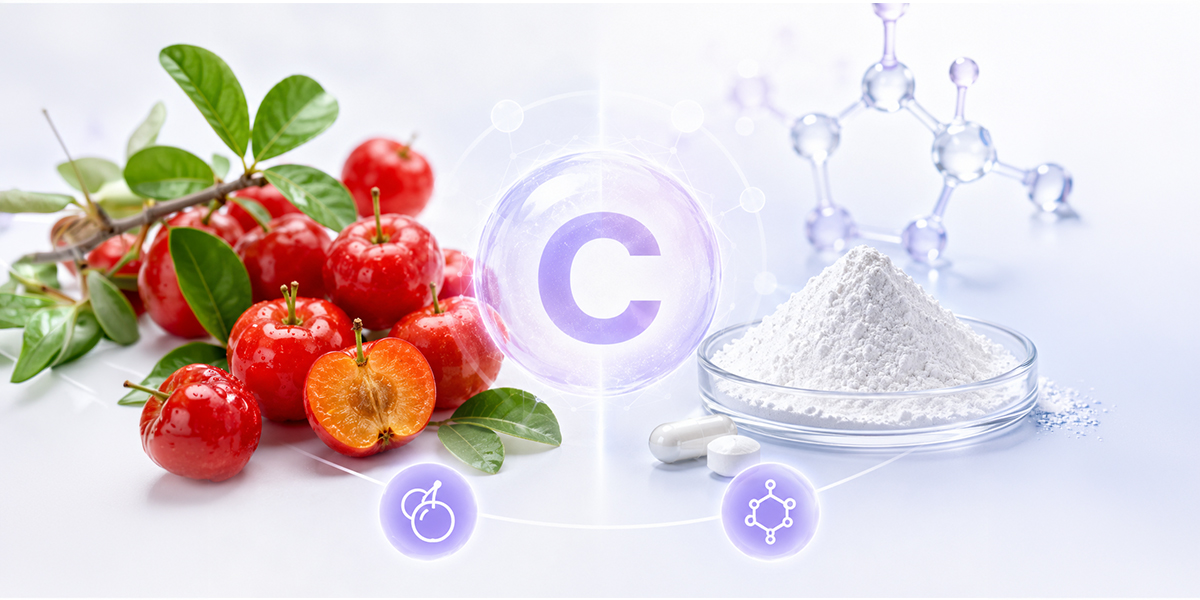


Vitamin C supplements are available in several forms, including pure ascorbic acid and natural sources such as cherry extracts. Marketing often suggests that natural vitamin C is superior, gentler, or better absorbed than synthetic forms.
However, the scientific question is whether vitamin C from cherry extract actually performs differently in the body compared with pure ascorbic acid.
Table of Contents
What Is Ascorbic Acid?
Ascorbic acid is the chemically pure form of vitamin C. It is the same vitamin C molecule found naturally in foods such as citrus fruits, berries, and vegetables.
This form is widely used in clinical studies, research, and most dietary supplements because it is stable, effective, predictable, and easy to dose accurately.
When the goal is to increase vitamin C intake in a controlled way, ascorbic acid remains one of the most reliable and cost-effective options.
What About Cherry-Derived Vitamin C?
Vitamin C from cherry extracts is usually not vitamin C alone. It is often part of a broader plant-based complex that may include polyphenols, flavonoids, anthocyanins, and other antioxidant compounds.
These additional compounds may contribute to the overall antioxidant profile of the product, making cherry-derived vitamin C different from pure ascorbic acid in composition.
However, this does not necessarily mean that the vitamin C molecule itself is stronger or more effective.
Is Absorption Different?
From a physiological perspective, the body absorbs vitamin C as the same molecule regardless of whether it comes from cherry extract or pure ascorbic acid.
Once absorbed, vitamin C from both sources becomes indistinguishable in the bloodstream.
There is no strong scientific evidence showing that cherry-derived vitamin C is absorbed more efficiently than pure ascorbic acid.
Do Natural Complexes Offer Extra Benefits?
Natural extracts may offer additional benefits because they contain phytonutrients and antioxidants that are naturally present in the plant source.
For example, cherry extracts may contain polyphenols and flavonoids that support antioxidant activity beyond vitamin C itself.
These potential benefits come from the surrounding plant compounds, not because the vitamin C is inherently more powerful or better absorbed.
| Form | Main Advantage | Key Consideration |
|---|---|---|
| Ascorbic Acid | Reliable, predictable, and cost-effective vitamin C source | Does not include extra plant compounds |
| Cherry-Derived Vitamin C | May include polyphenols and flavonoids | Not proven to absorb better than ascorbic acid |
Which One Is More Effective?
If the goal is to reliably increase vitamin C levels, ascorbic acid remains the most consistent and predictable option.
Cherry-derived vitamin C may be useful for people who prefer plant-based formulas or want additional antioxidant compounds from natural extracts.
The better choice depends on the goal: ascorbic acid is ideal for straightforward vitamin C supplementation, while cherry extract may offer broader antioxidant support.
Frequently Asked Questions
Is cherry-derived vitamin C better absorbed?
There is no strong evidence that cherry-derived vitamin C is absorbed better than pure ascorbic acid.
Is ascorbic acid the same vitamin C found in food?
Yes. Ascorbic acid is the same active vitamin C molecule found naturally in foods.
Why do some people prefer natural vitamin C?
Natural sources may contain additional plant compounds such as polyphenols and flavonoids.
Which form is better for raising vitamin C levels?
Ascorbic acid is usually the most reliable, predictable, and cost-effective option for increasing vitamin C intake.
Does natural vitamin C mean stronger vitamin C?
No. The vitamin C molecule is the same. The difference is mainly in the additional plant compounds present in natural extracts.
Conclusion
Vitamin C extracted from cherry is not clearly superior to ascorbic acid in terms of absorption or vitamin C effectiveness. Both provide the same active vitamin C molecule once absorbed by the body.
The main difference is that cherry-derived vitamin C may come with additional plant compounds that support broader antioxidant activity, while ascorbic acid offers a simple, reliable, and cost-effective way to increase vitamin C intake.