
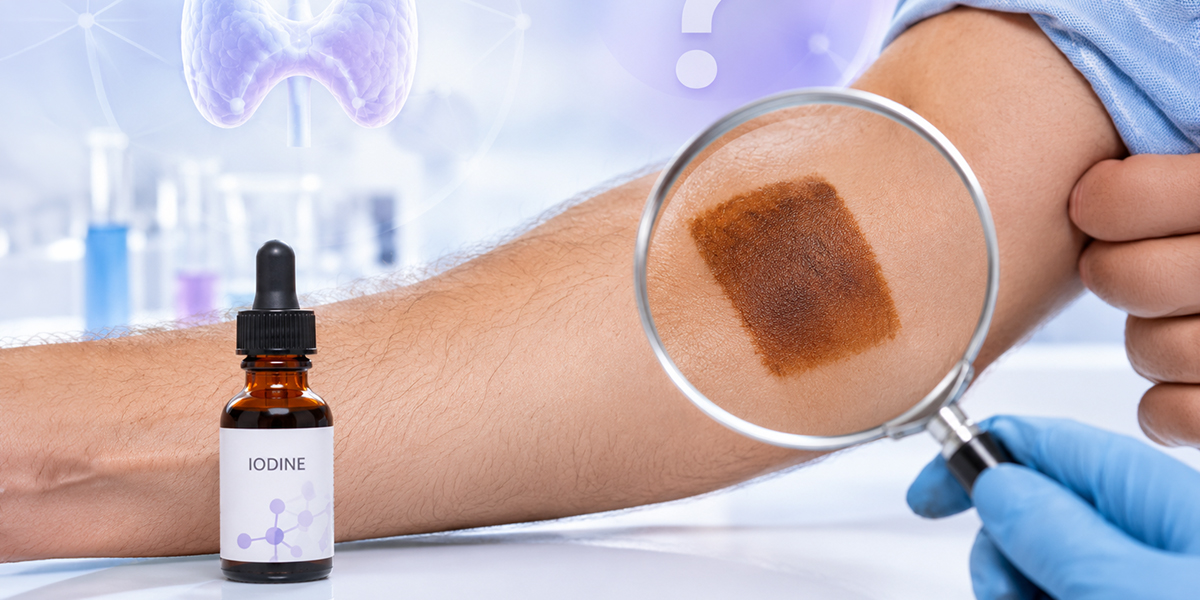


Iodine is an essential mineral required for thyroid hormone production and the regulation of metabolism throughout the body. Because iodine plays such an important role in health, many people look for simple ways to assess their iodine status at home.
One of the most commonly discussed methods is the “iodine patch” skin test. Although this test is widely shared online, questions remain regarding its scientific accuracy and reliability for detecting iodine deficiency.
Table of Contents
What Is the Iodine Patch Test?
The iodine patch test involves applying a small amount of iodine solution to the skin and observing how quickly the color fades over several hours.
Supporters of the test claim that people with low iodine levels absorb iodine through the skin more rapidly, causing the patch to disappear faster than it would in individuals with adequate iodine status.
Because the test is simple and inexpensive, it has gained popularity as a home-based assessment method.
How the Test Is Supposed to Work
The theory behind the iodine patch test is based on the belief that the body absorbs iodine directly through the skin when stores are low.
According to this idea, a rapidly fading iodine patch indicates deficiency, while a patch that remains visible for a longer period suggests sufficient iodine levels.
However, this theory has not been consistently supported by scientific research, and color disappearance may be influenced by factors unrelated to iodine status.
Limitations of the Iodine Patch Test
Although the test appears straightforward, several factors can affect the results and make them unreliable.
- Differences in skin thickness.
- Skin hydration levels.
- Environmental temperature and humidity.
- Evaporation of the iodine solution.
- The amount of iodine applied.
- Individual skin characteristics.
Because of these variables, the rate at which the patch disappears cannot accurately indicate whether a person is deficient in iodine.
For this reason, the iodine patch test is not recognized as a medically approved diagnostic tool.
Reliable Ways to Measure Iodine Levels
Healthcare professionals rely on laboratory testing rather than skin tests to assess iodine status.
| Method | Purpose |
|---|---|
| Urinary Iodine Test | Measures recent iodine intake and iodine status |
| Blood Testing | Provides additional information about nutritional status |
| Thyroid Function Tests | Evaluates the impact of iodine status on thyroid hormones |
These methods provide objective and scientifically validated information that can help determine whether dietary changes or supplementation are necessary.
Risks of Relying on the Skin Test
Depending solely on the iodine patch test may lead to incorrect assumptions about iodine status.
Some individuals may mistakenly believe they have a deficiency and begin taking unnecessary iodine supplements. Excessive iodine intake can negatively affect thyroid function in certain individuals.
Conversely, someone with a genuine deficiency may incorrectly assume that their iodine status is adequate and delay proper medical evaluation.
Recommendations for Monitoring Iodine Status
The best approach is to focus on a balanced diet that includes natural iodine sources and seek professional evaluation when deficiency is suspected.
Good dietary sources of iodine include:
- Iodized salt.
- Seafood and fish.
- Dairy products.
- Eggs.
- Seaweed in appropriate amounts.
When concerns about iodine levels arise, laboratory testing provides the most reliable information for making dietary and supplementation decisions.
Frequently Asked Questions
Is the iodine patch test scientifically accurate?
No. It is not considered a scientifically validated or medically approved method for diagnosing iodine deficiency.
Why does the iodine patch disappear?
The color may fade because of evaporation, skin characteristics, environmental conditions, and other factors unrelated to iodine status.
What is the best way to check iodine levels?
Urinary iodine testing, blood tests, and thyroid function tests are the most reliable methods.
Can taking extra iodine be harmful?
Yes. Excessive iodine intake may affect thyroid function and should only be used when appropriate.
Should everyone take iodine supplements?
No. Supplementation should be based on individual needs, dietary intake, and professional assessment.
Conclusion
The iodine patch skin test is a popular home method, but it is not a reliable way to determine iodine deficiency. Multiple factors affect the disappearance of the iodine patch, making the results inconsistent and difficult to interpret.
Laboratory testing remains the most accurate approach for evaluating iodine status and supporting thyroid health. Combining proper assessment with a balanced diet helps ensure adequate iodine intake while avoiding unnecessary supplementation.