
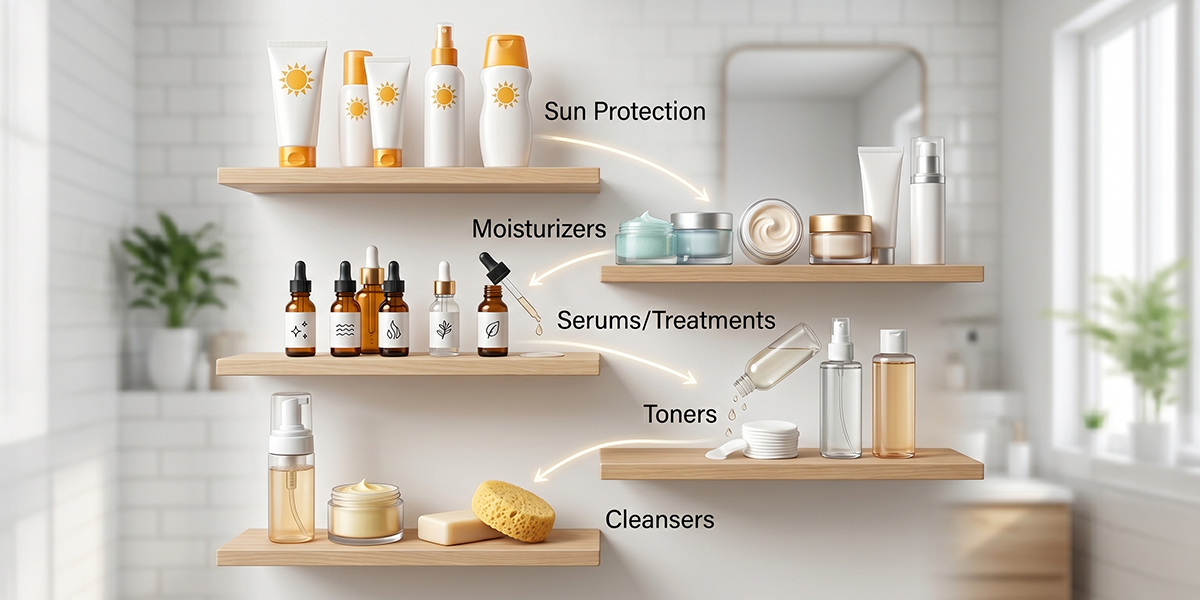


You can invest in the best skincare products on the market, but if you apply them in the wrong order, you may not be getting the results you expect. Skincare layering is not just a trend. It is a practical approach that helps each product absorb properly and perform as intended.
Each skincare formula has a specific texture, molecular size, and function. Applying products in the correct sequence helps maximize effectiveness, supports the skin barrier, and reduces the chance of irritation. Whether your goal is hydration, acne control, or anti-aging, understanding how to layer products from categories such as cleanser, serum, moisturizer, sun screen, and face care can make a noticeable difference in your results.
Why Skincare Layering Matters
Layering skincare correctly directly affects how well your products perform. Lightweight, water-based formulas absorb more easily and should usually go on first, while richer textures help seal everything in and support the skin barrier.
- Improves absorption efficiency
- Supports barrier protection
- Helps active ingredients perform better
- Reduces the chance of clogged pores, dehydration, or irritation
In simple terms, correct layering helps every product work with your skin instead of against it. This is especially important when combining targeted serums, hydrating moisturizers, and protective sun screen formulas.
The Basic Rule: Thinnest to Thickest
The most important principle in skincare layering is simple: start with the lightest textures and finish with the heaviest. This allows each product to absorb properly without being blocked by richer layers.
General order:
- Cleanser
- Toner
- Essence, if used
- Serum
- Treatment products such as retinol or exfoliating acids
- Moisturizer
- Face oil, if used
- Sunscreen in the morning only
Morning Skincare Routine Order
The morning routine should focus on hydration, skin barrier support, and daily protection from environmental stress and UV exposure.
1. Cleanser
Use a gentle cleanser to remove oil and impurities that build up overnight. In the morning, a mild formula is often enough.
2. Toner
Toner is optional, but it can help refresh the skin and prepare it for better absorption of the next steps.
3. Serum
Choose a serum based on your goal. Vitamin C can help brighten the skin and protect against environmental damage, while hydrating serums can support plumper, smoother-looking skin.
4. Moisturizer
A suitable moisturizer helps lock in hydration and support the skin barrier throughout the day.
5. Sunscreen
Sunscreen is the most important step in the morning. It helps protect against UV damage, premature aging, and hyperpigmentation.
Even the best face care routine can fall short without daily sunscreen use.
Night Skincare Routine Order
The evening routine is more treatment-focused. At night, the goal is to cleanse thoroughly, support renewal, and use targeted products that may be too strong for daytime use.
1. Cleanser
Use a cleanser to remove makeup, sunscreen, dirt, and pollution. If you wear heavy makeup or high-SPF products, double cleansing may help.
2. Toner
This step can help rebalance the skin after cleansing and prepare it for treatment products.
3. Serum
Pick a serum based on your skin concern, such as hydration, oil control, or calming support.
4. Treatment
This is the step for targeted correction. Retinol helps improve texture, fine lines, and acne, while exfoliating acids help clear pores and smooth the skin surface.
5. Moisturizer
After active ingredients, a moisturizer is essential to reduce irritation and maintain hydration.
6. Face Oil
If your skin is dry, a face oil can be used as the final step to seal in moisture and add nourishment. Face oils are often found within broader face care and beauty care routines.
How to Layer Active Ingredients Without Irritation
Active ingredients can improve your skin significantly, but combining them incorrectly may lead to redness, dryness, or damage to the skin barrier.
Avoid combining in the same routine:
- Retinol with strong exfoliating acids
- Multiple strong actives layered heavily at once
Safer combinations include:
- Hydrating products with nearly any active ingredient
- Niacinamide with most actives
- Moisturizer after retinol to reduce dryness
Introduce active ingredients gradually and monitor how your skin responds. Many people see better results with fewer, well-chosen products than with over-layering too many treatment steps.
Common Skincare Layering Mistakes
Even a good routine can fail if products are applied in the wrong order or if the routine is overloaded. Common mistakes include:
- Applying oils before serums, which can interfere with absorption
- Skipping moisturizer after active ingredients
- Using too many products at once
- Not allowing short gaps between layers when needed
- Ignoring sunscreen in the morning
- Mixing incompatible actives
Consistency and simplicity are often far more effective than an overly complicated routine filled with too many products from multiple beauty care categories.
Pro Tips for Better Results
- Apply hydrating products on slightly damp skin when appropriate
- Wait 30 to 60 seconds between layers if needed
- Use small amounts because more product does not always mean better results
- Introduce new products one at a time
- Stay consistent because visible results often take time
Building a routine with well-chosen products from cleanser, serum, moisturizer, and sun screen categories is often more effective than constantly switching products.
FAQ
How long should I wait between each step?
Generally, 30 to 60 seconds is enough. For stronger actives like retinol or acids, waiting slightly longer may help reduce irritation.
Is toner necessary?
Toner is not essential for everyone, but it can be helpful depending on your skin type and routine goals.
Can I skip moisturizer if I have oily skin?
No. Even oily skin needs hydration. A lightweight moisturizer can help maintain balance and reduce dehydration.
Should face oil be used before or after moisturizer?
Face oil is usually applied after moisturizer to help seal in hydration, especially in evening routines.
References
- American Academy of Dermatology
- Mayo Clinic
- Cleveland Clinic
This article is for informational purposes only and does not replace professional medical advice. Always consult a dermatologist before using strong active ingredients, especially if you have sensitive or reactive skin.