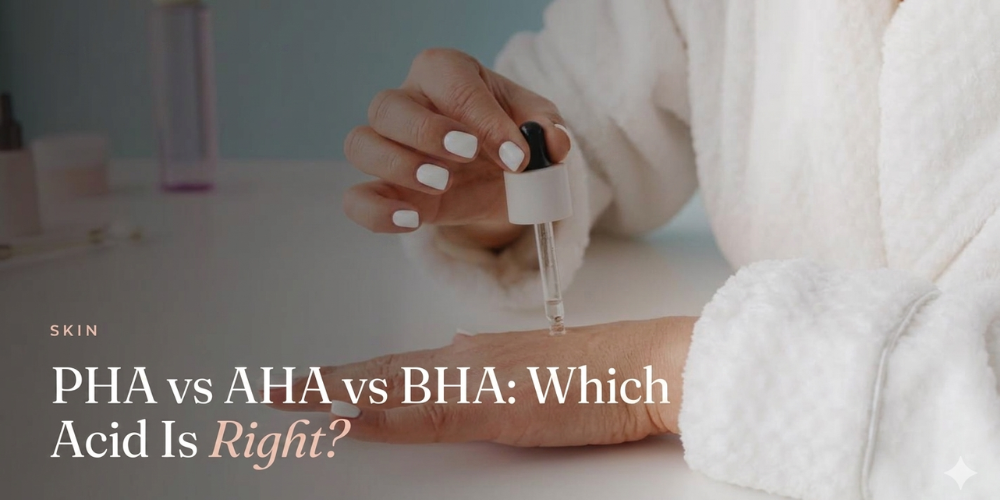


AHAs, BHAs, PHAs, and LHAs are among the most popular exfoliating ingredients in modern skincare, yet many people are unsure about the differences between them. While these acids all help remove dead skin cells, each one works in a unique way and is formulated to address specific skin concerns such as dullness, clogged pores, acne-prone skin, uneven texture, fine lines, or sensitive skin.
Unlike physical scrubs that exfoliate through friction, these chemical exfoliants dissolve the bonds between dead skin cells, allowing the skin's natural renewal process to reveal a smoother, brighter, and healthier-looking complexion. When used correctly, they can become valuable additions to a balanced skincare routine.
This guide explains how AHAs, BHAs, PHAs, and LHAs work, their individual skincare benefits, how they differ, which skin types they suit best, and how to use them safely for the best results.
Table of Contents
What Are Chemical Exfoliants?
Chemical exfoliants are skincare ingredients that gently remove dead skin cells by breaking down the bonds that hold them together. This process encourages natural skin renewal without the need for harsh scrubbing, helping improve skin texture and reveal fresher-looking skin.
Regular exfoliation may help reduce the appearance of dullness, rough texture, clogged pores, and uneven skin tone. The four main groups used in skincare are AHAs, BHAs, PHAs, and LHAs. Although they all exfoliate the skin, they differ in molecular size, depth of action, and the skin concerns they target.
What Are AHAs?
Alpha Hydroxy Acids (AHAs) are water-soluble exfoliating acids commonly derived from fruits, milk, or sugar cane. They work mainly on the skin's surface, helping remove dead cells to improve brightness and texture. Popular AHAs include glycolic acid, lactic acid, and mandelic acid.
AHAs are best known for helping support:
- Smoother-looking skin texture.
- A brighter, more radiant complexion.
- The appearance of uneven skin tone.
- Healthy skin renewal.
Best suited for: Normal, dry, and mature-looking skin seeking improved radiance and smoother texture.
What Are BHAs?
Beta Hydroxy Acids (BHAs) are oil-soluble exfoliating acids that can penetrate into pores, making them particularly suitable for oily and acne-prone skin. The most well-known BHA is salicylic acid, an ingredient widely used in cleansers, toners, serums, and spot treatments.
Because BHAs work both on the skin's surface and inside the pores, they help remove excess oil, dead skin cells, and impurities that may contribute to clogged pores and blemishes. Regular use can also improve overall skin texture and leave the complexion looking clearer.
BHAs may help support:
- Cleaner-looking pores.
- Balanced oil production.
- Smoother skin texture.
- The appearance of blemish-prone skin.
Best suited for: Oily, combination, and acne-prone skin.
What Are PHAs?
Polyhydroxy Acids (PHAs) are the gentlest group of chemical exfoliants. Their larger molecular size means they penetrate the skin more slowly than AHAs and BHAs, providing mild exfoliation while helping maintain skin hydration.
Common PHAs include gluconolactone and lactobionic acid. These ingredients are often found in products designed for dry, sensitive, or easily irritated skin because they combine gentle exfoliation with moisturising properties.
PHAs may help support:
- Gentle removal of dead skin cells.
- Skin hydration and comfort.
- A smoother, softer complexion.
- A healthy-looking skin barrier.
Best suited for: Sensitive, dry, mature, and first-time users of exfoliating acids.
What Are LHAs?
Lipo Hydroxy Acids (LHAs) are lipid-based derivatives of salicylic acid that provide precise, gentle exfoliation. Because they work gradually, LHAs are often included in skincare products developed for combination and blemish-prone skin that also requires a gentler approach.
LHAs help remove dead skin cells from the surface while supporting smoother skin texture and helping keep pores looking clear. Their slow penetration makes them suitable for people who find traditional exfoliating acids too strong.
LHAs may help support:
- Gentle skin renewal.
- Smoother-looking skin texture.
- Clearer-looking pores.
- Balanced care for combination skin.
Best suited for: Combination, oily, sensitive, and blemish-prone skin looking for mild daily exfoliation.
AHAs vs BHAs vs PHAs vs LHAs: What's the Difference?
Although all four types of exfoliating acids help remove dead skin cells, each one works differently depending on its molecular structure and how deeply it interacts with the skin. Choosing the right acid depends on your skin type, concerns, and tolerance.
| Acid | Main Benefit | Best For |
|---|---|---|
| AHAs | Surface exfoliation and brighter-looking skin. | Dry, normal and sun-damaged skin. |
| BHAs | Deep pore cleansing and oil control. | Oily and acne-prone skin. |
| PHAs | Gentle exfoliation with added hydration. | Sensitive and mature skin. |
| LHAs | Mild pore-refining exfoliation. | Combination and blemish-prone skin. |
How to Choose the Right Acid for Your Skin Type
Selecting the right exfoliating acid starts with understanding your skin's individual needs. Using the appropriate ingredient can help improve your skincare results while reducing the risk of irritation.
General recommendations include:
- Dry or dull skin: AHAs help improve skin texture and promote a brighter-looking complexion.
- Oily or acne-prone skin: BHAs help remove excess oil and keep pores looking clearer.
- Sensitive skin: PHAs provide gentle exfoliation while helping maintain skin hydration.
- Combination skin: LHAs offer balanced exfoliation with a lower likelihood of irritation.
- Mature skin: AHAs or PHAs may help improve the appearance of uneven skin texture while supporting smoother-looking skin.
If you're new to chemical exfoliation, begin with a lower-strength product one or two evenings per week. Gradually increase usage only if your skin tolerates it well.
How to Use Exfoliating Acids Safely
Even gentle exfoliating acids should be introduced gradually. Overusing active ingredients can weaken the skin barrier and lead to dryness, redness, or sensitivity.
Best practices include:
- Start with 1–2 applications per week.
- Apply on clean, dry skin according to product instructions.
- Follow with a moisturiser to support the skin barrier.
- Use broad-spectrum sunscreen every morning.
- Avoid combining multiple strong exfoliating acids during the same routine unless advised by a skincare professional.
- Perform a patch test before using a new exfoliating product.
Consistency is more important than frequent application. Gentle, regular exfoliation often provides better long-term results than excessive use.
Recommended Skincare Products
Choosing the right exfoliating product is just as important as selecting the right acid. A well-formulated skincare routine combines gentle exfoliation with hydration, barrier-supporting ingredients, and daily sun protection to help maintain smooth, healthy-looking skin.
Dr Nutrition offers a wide selection of skincare products designed to complement every skin type and concern. Whether you're looking for exfoliating cleansers, serums, moisturizers, or soothing skincare essentials, selecting products that match your skin's needs can help you achieve better long-term results.
- Explore Skincare Products
Ideal for: Individuals looking to support smoother skin texture, improve the appearance of pores, maintain healthy skin renewal, and build an effective daily skincare routine.
FAQ
1. What is the difference between AHAs, BHAs, PHAs, and LHAs?
AHAs exfoliate the skin's surface to improve texture and brightness. BHAs penetrate oil to help clear pores, making them suitable for oily and acne-prone skin. PHAs provide gentle exfoliation with added hydration, while LHAs offer targeted exfoliation with a slower, milder action for blemish-prone skin.
2. Which exfoliating acid is best for sensitive skin?
PHAs are generally considered the gentlest exfoliating acids because of their larger molecular size, which allows them to exfoliate more slowly while helping maintain skin hydration. People with sensitive skin should still introduce any new product gradually.
3. Can I use exfoliating acids every day?
It depends on the product, acid type, concentration, and your skin's tolerance. Many beginners benefit from using exfoliating acids only two or three times per week before increasing frequency if their skin responds well.
4. Should I use sunscreen when using AHAs or BHAs?
Yes. Daily broad-spectrum sunscreen is strongly recommended because exfoliating acids may increase the skin's sensitivity to ultraviolet (UV) exposure. Consistent sun protection also helps maintain an even-looking complexion.
5. Can different exfoliating acids be combined?
Some skincare products are formulated with multiple acids to provide complementary benefits. However, combining several strong exfoliating products without guidance may increase irritation. Introduce products gradually and follow the manufacturer's instructions.
Conclusion
AHAs, BHAs, PHAs, and LHAs each play a unique role in modern skincare, offering different approaches to exfoliation based on individual skin concerns. From improving skin texture and radiance to helping keep pores clear and supporting a healthy skin barrier, these ingredients have become essential components of many effective skincare routines.
The best exfoliating acid depends on your skin type and goals. AHAs are ideal for dull or dry skin, BHAs are well suited for oily and blemish-prone complexions, PHAs provide gentle exfoliation for sensitive skin, and LHAs offer targeted care for skin that benefits from mild, controlled exfoliation.
For the best long-term results, introduce exfoliating acids gradually, maintain a consistent moisturizing routine, and wear broad-spectrum sunscreen every day. When used correctly, these ingredients can help promote smoother, brighter, healthier-looking skin while supporting your overall skincare journey.