
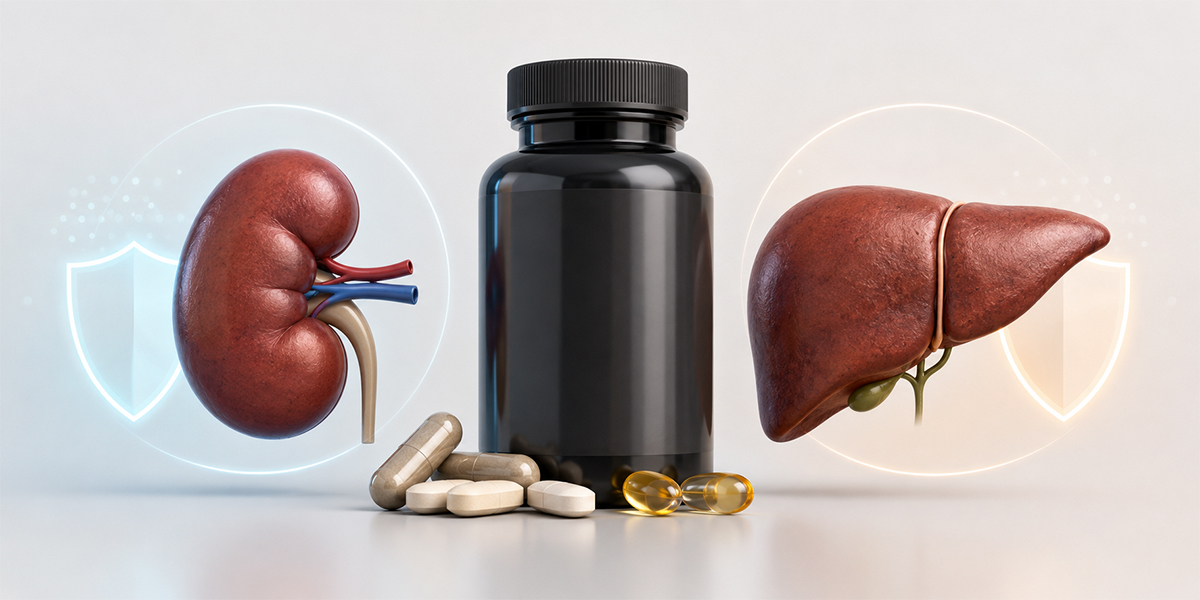


Dietary supplements have become a common part of many people’s lifestyles, especially among athletes, active individuals, and those seeking better health, energy, or performance.
Although supplements can be useful when chosen and used correctly, improper use, excessive doses, or combining multiple products may place extra stress on the liver and kidneys, the two major organs involved in nutrient processing, filtration, and waste elimination.
Table of Contents
The Role of the Kidneys and Liver in the Body
The liver is responsible for metabolizing nutrients, processing substances absorbed from food and supplements, producing bile, and helping the body eliminate certain toxins and waste products.
The kidneys filter the blood, remove waste through urine, regulate fluid balance, support blood pressure control, and help maintain the balance of minerals such as sodium, potassium, calcium, and phosphorus.
When either organ is exposed to excessive strain, underlying disease, dehydration, or inappropriate supplement use, overall health may be negatively affected.
| Organ | Main Function | Why Supplement Use Matters |
|---|---|---|
| Liver | Metabolizes nutrients, drugs, herbs, and other compounds | High doses or strong herbal extracts may increase workload |
| Kidneys | Filter blood and regulate fluids and minerals | Excess minerals, dehydration, or kidney disease may increase risk |
Supplements and Liver Function
Some supplements may place stress on the liver when used in excessive amounts, for long periods, or when combined with other products or medications.
Products that contain strong herbal extracts, high-dose fat-soluble vitamins, or multiple active ingredients may require more careful use, especially in people with liver conditions or those taking regular medication.
The risk is higher when supplement labels are unclear, doses exceed recommended levels, or the product comes from unreliable sources.
| Possible Liver Concern | Why It May Happen | Safer Approach |
|---|---|---|
| High-Dose Vitamins | Some vitamins can accumulate when taken excessively | Avoid long-term megadoses unless medically advised |
| Strong Herbal Extracts | Certain plant compounds are metabolized by the liver | Use trusted products and avoid unnecessary combinations |
| Multiple Supplements | Overlapping ingredients can increase total dose | Check labels for duplicate vitamins, herbs, or stimulants |
| Medication Interactions | Some supplements may affect drug metabolism | Consult a healthcare professional if using medication |
Supplements and Kidney Function
The kidneys help remove waste products from the blood and regulate fluid and mineral balance. Certain supplements may increase kidney workload when used excessively or without considering individual health status.
High intakes of some minerals, dehydration, stimulant-heavy products, or excessive supplement stacking may be more concerning for people with existing kidney disease or reduced kidney function.
For healthy individuals, many supplements can be used safely within recommended amounts, but people with kidney problems should be more cautious and seek professional guidance.
Is Protein a Risk?
Protein supplements are commonly used by athletes and people who want to support muscle growth, recovery, and daily protein intake.
In healthy individuals, consuming protein within recommended limits is not generally considered harmful to the kidneys. Problems are more likely to arise when intake is excessive, hydration is poor, or kidney disease is already present but undiagnosed.
The key is to match protein intake with body weight, training level, health status, and total dietary needs rather than consuming very high amounts without a clear reason.
| Protein Use Situation | Risk Level | Recommendation |
|---|---|---|
| Healthy adult using moderate protein | Usually low | Use according to daily protein goals |
| Very high protein intake without need | May increase strain | Avoid excessive intake and monitor hydration |
| Existing kidney disease | Higher concern | Use only with medical or dietitian guidance |
| Athletes with high training volume | Depends on total intake and health status | Personalize intake based on goals and body weight |
Vitamins and Minerals
Vitamins and minerals are essential for health, but more is not always better.
Fat-soluble vitamins such as vitamins A, D, E, and K can accumulate in the body when taken in high doses for long periods. Some minerals may also build up or disrupt the balance of other nutrients.
This is why long-term high-dose supplementation should be based on actual needs, dietary intake, blood tests when appropriate, and professional advice.
| Supplement Type | Possible Concern with Excessive Use | Safe Use Tip |
|---|---|---|
| Fat-Soluble Vitamins | May accumulate in body tissues | Avoid megadoses without testing or advice |
| Minerals | May affect kidney workload or mineral balance | Do not combine multiple mineral formulas unnecessarily |
| Herbal Supplements | May interact with liver metabolism or medications | Use trusted brands and avoid excessive stacking |
| Sports Supplements | May contain stimulants, minerals, or multiple actives | Read labels carefully and avoid overlapping ingredients |
How to Use Supplements Safely
Safe supplement use depends on choosing the right product, using the correct dose, avoiding unnecessary combinations, and paying attention to personal health conditions.
A supplement should support the diet, not replace balanced eating, hydration, sleep, exercise, or medical care when needed.
- Follow the recommended dosage on the product label.
- Avoid combining multiple supplements unnecessarily.
- Check for repeated ingredients across different products.
- Stay well hydrated, especially when using protein or sports supplements.
- Choose reputable brands with clear labels and quality standards.
- Avoid long-term high-dose use unless advised by a professional.
- Consult a healthcare professional if you have chronic health conditions.
- Stop use and seek advice if you notice unusual symptoms such as dark urine, severe fatigue, abdominal pain, swelling, or persistent nausea.
Frequently Asked Questions
Can supplements damage the liver?
Some supplements may affect the liver if taken in excessive doses, combined with similar products, used for long periods, or mixed with certain medications. Product quality and individual health status also matter.
Can protein powder harm the kidneys?
For healthy individuals, protein powder used within appropriate daily protein needs is generally not a concern. People with kidney disease should seek professional guidance before increasing protein intake.
Which supplements need extra caution?
High-dose vitamins, mineral formulas, strong herbal extracts, fat burners, stimulant products, and products with multiple active ingredients should be used carefully, especially by people with medical conditions.
How can I know if a supplement is too much?
Check the dose, compare it with other supplements you use, avoid duplicate ingredients, and consult a professional when using high-dose products or when you have chronic health conditions.
Should I do blood tests before taking supplements?
Blood tests may be useful before taking long-term or high-dose supplements, especially vitamins, minerals, iron, vitamin D, or products used to correct a deficiency.
Conclusion
Dietary supplements can be safe and effective when used correctly, but excessive or improper use may pose risks to kidney and liver health.
The safest approach is to use supplements with moderation, follow recommended dosages, avoid unnecessary combinations, stay hydrated, and seek professional advice when chronic conditions or medications are involved.