

Introduction
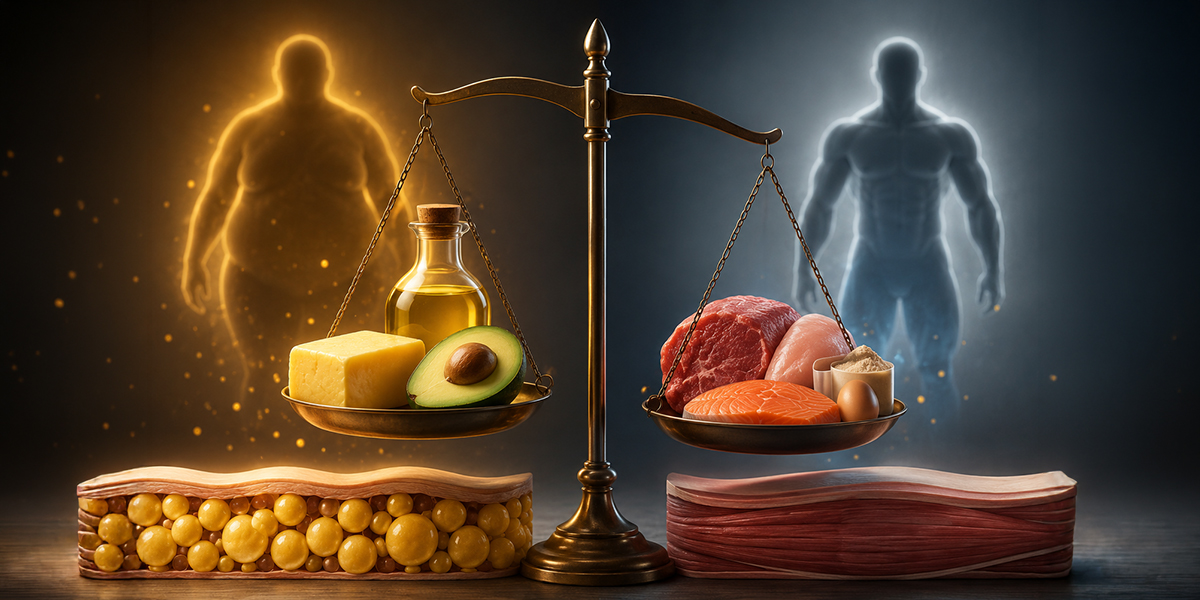
Although calories are measured using the same unit, their food source can make a difference in how the body processes and uses them. Fat and protein differ in their effects on satiety, metabolism, and body composition.
Calories from a Scientific Perspective
A calorie is a measure of energy, whether it comes from fat, protein, or carbohydrates. However, the way the body digests and utilizes calories differs depending on the type of nutrient.
The Thermic Effect of Protein
Protein has a higher thermic effect, meaning the body uses more energy to digest and process it. This means that part of the calories from protein is burned during digestion, which may support weight management.
Fat and Energy Density
Fat contains more calories per gram compared to protein. This makes it easier to consume excess calories from fats without feeling full quickly.
Satiety and Appetite Control
Protein helps promote fullness for longer periods and may reduce cravings. Fat also contributes to satiety, but its effect may be slower and less noticeable when consumed in excess.
Impact on Muscle Mass
Protein is essential for maintaining and building muscle, especially during dieting. Fat does not directly build muscle, but it is necessary for important hormonal functions.
Balance Is the Key
Relying on only one calorie source is not healthy. A balanced intake of protein and healthy fats helps provide sufficient energy, improve satiety, and support metabolism.
Conclusion
Although calories are equal in theory, calories from protein affect the body differently than calories from fat. Choosing smart food sources and balancing them properly is essential for effective and sustainable weight and health management.
FAQ
1. Are calories from protein and fat the same?
They provide energy, but the body processes them differently. Protein has a higher thermic effect, while fat is more calorie-dense.
2. Which is better for weight loss: protein or fat?
Protein is usually more helpful for weight loss because it supports fullness, muscle maintenance, and burns more energy during digestion.
3. Should I avoid fat when trying to lose weight?
No. Healthy fats are important for hormones, brain health, and nutrient absorption. The key is controlling portions.
4. Can eating more protein help preserve muscle?
Yes. Adequate protein intake helps maintain and build muscle, especially during dieting or calorie restriction.