

Vitamins and minerals are essential for maintaining overall health and supporting vital bodily functions. However, how and when these nutrients are taken can significantly impact their effectiveness. Some vitamins and minerals may interfere with each other’s absorption when consumed together, a phenomenon known as inhibitory interactions. With the widespread use of dietary supplements, understanding these interactions is crucial to maximizing nutritional benefits. This article explores key vitamin and mineral combinations that are best taken separately and how to manage supplementation wisely.
What Are Inhibitory Nutrient Interactions?
Inhibitory interactions occur when one nutrient reduces the absorption or utilization of another within the body. This often happens because nutrients compete for the same absorption pathways or receptors in the digestive system. These interactions do not mean the nutrients are harmful, but rather that improper timing or combinations may reduce their effectiveness. Awareness of these interactions helps optimize supplementation and maintain nutritional balance.
Iron and Calcium: A Common Conflict
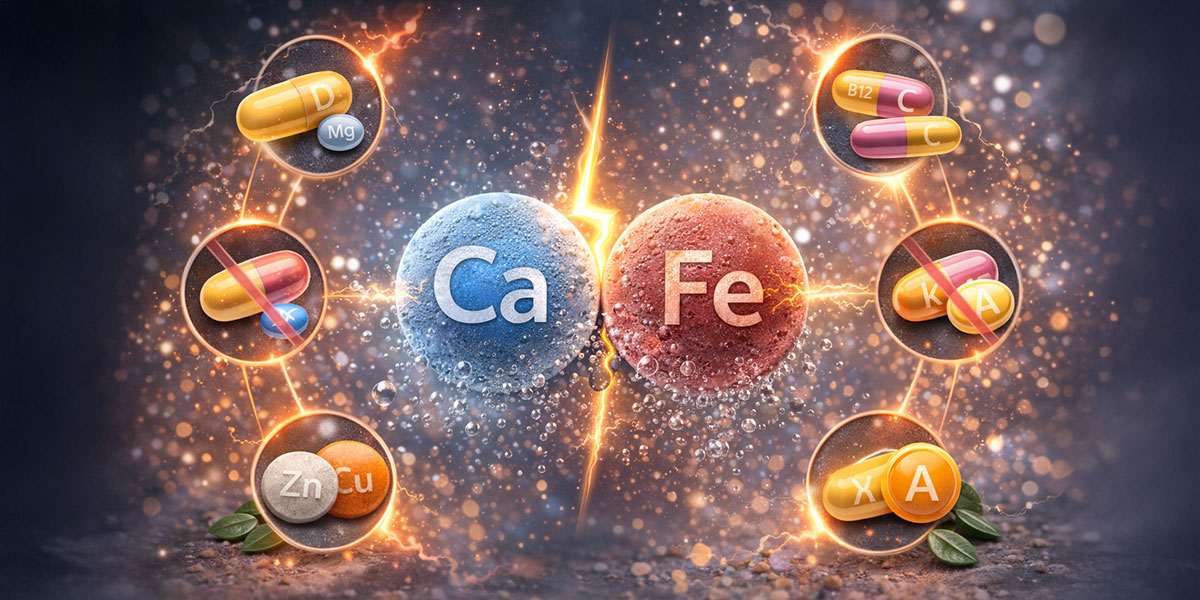
Iron and calcium are among the most well-known examples of inhibitory interactions. Calcium can interfere with iron absorption when taken together, which is particularly important for individuals with iron deficiency or anemia. To enhance iron absorption, it is recommended to take iron supplements separately from calcium or dairy products, allowing sufficient time between doses.
Zinc and Copper: A Delicate Balance
Zinc and copper are essential trace minerals that must remain in balance. High zinc intake can reduce copper absorption, potentially leading to mineral imbalance over time. For this reason, many balanced supplements include both minerals in appropriate ratios. When taken separately, spacing them out helps maintain healthy mineral balance and supports optimal absorption.
Magnesium and Calcium at High Doses
Although magnesium and calcium work together to support bone and muscle health, taking high doses simultaneously may reduce absorption efficiency. This occurs because they compete for absorption in the digestive tract. Splitting doses throughout the day is an effective way to benefit from both minerals without compromising absorption.
Fat-Soluble Vitamins and High Fiber Intake
Fat-soluble vitamins such as vitamins A, D, E, and K require dietary fat for proper absorption. Consuming them alongside very high-fiber meals or fiber supplements may reduce their absorption. To maximize benefits, these vitamins should be taken with balanced meals that include healthy fats and away from fiber supplements.
How to Organize Supplement Intake
To minimize inhibitory interactions, supplements should be spaced throughout the day rather than taken all at once. Choosing well-formulated products with carefully balanced ingredients can also reduce the risk of nutrient interference. Consulting a healthcare or nutrition professional is especially beneficial for individuals taking multiple supplements daily. This structured approach supports optimal absorption and effectiveness.