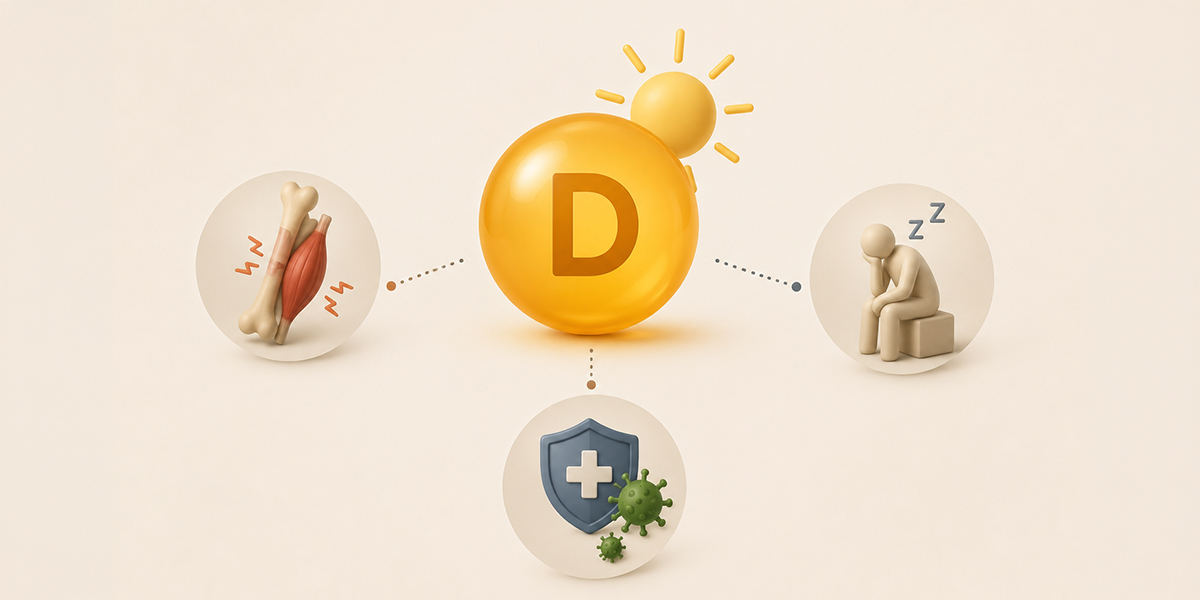


Vitamin D is an essential nutrient for bone health, immune support, muscle function, and overall wellness. A deficiency can lead to several health problems that may affect daily life, including fatigue, low immunity, bone discomfort, and mood changes.
The body obtains vitamin D through sunlight, food, and vitamin supplements. When deficiency occurs, trusted supplements may help restore vitamin D levels safely and effectively when used under professional guidance.
1. Symptoms of Vitamin D Deficiency
Vitamin D deficiency may cause several symptoms. Some people experience mild signs, while others may develop more noticeable effects related to bones, muscles, immunity, and mood.
- Bone pain and muscle weakness
- Constant fatigue and low energy
- Weakened immunity and frequent infections
- Hair loss
- Mood changes and depression
- Delayed wound healing
2. Causes of Vitamin D Deficiency
Vitamin D deficiency may occur when the body does not get enough vitamin D or cannot use it effectively. Several lifestyle and health factors can increase the risk.
- Limited exposure to sunlight
- Poor diet or low intake of vitamin D-rich foods
- Obesity, which may reduce the body’s ability to use vitamin D effectively
- Malabsorption conditions such as inflammatory bowel disease or digestive disorders
- Aging
A balanced diet that includes vitamin D sources, healthy fats, and key minerals may support overall nutrient status and bone health.
3. Complications of Vitamin D Deficiency
If left untreated, vitamin D deficiency may affect bone strength, immunity, and general well-being.
- Osteoporosis in adults or rickets in children
- Noticeably weakened immunity
- Chronic body aches
- Increased risk of depression
4. Treatment of Vitamin D Deficiency
Treatment depends on the severity of deficiency, lifestyle, diet, and medical history. A healthcare professional may recommend testing and an appropriate dosage plan.
Treatment may include:
- Getting 15-30 minutes of sunlight exposure daily when appropriate
- Eating vitamin D-rich foods such as fatty fish, eggs, and fortified milk
- Taking vitamin D supplements at a dosage recommended by a healthcare professional
- Choosing high-quality supplements when needed to support safe and effective correction of deficiency
When supplementation is needed, reliable vitamin supplements can help restore levels safely when used correctly.
5. Prevention and Maintaining Healthy Levels
Preventing vitamin D deficiency requires consistent attention to sunlight exposure, diet, physical activity, and regular monitoring for those at higher risk.
- Get moderate sunlight exposure
- Follow a balanced diet that includes vitamin D sources
- Exercise regularly
- Monitor vitamin D levels periodically, especially for high-risk individuals
- Use suitable supplements when needed
A complete wellness plan may also include adequate protein, bone-supporting minerals, and healthy fats such as omega-3.
FAQ
1. Is vitamin D deficiency common?
Yes, vitamin D deficiency is common, especially in people with limited sun exposure, darker skin tone, obesity, older age, or malabsorption issues.
2. What foods are high in vitamin D?
Fatty fish, egg yolks, fortified milk, fortified cereals, and some mushrooms are common dietary sources of vitamin D.
3. Can vitamin D deficiency cause fatigue?
Yes, low vitamin D levels may contribute to fatigue, low energy, muscle weakness, and general body aches in some individuals.
4. Should I take vitamin D supplements daily?
Daily supplementation depends on your blood levels, diet, sun exposure, and medical advice. Avoid high doses unless recommended by a healthcare professional.
Conclusion
Vitamin D deficiency is common but treatable when properly diagnosed. Sun exposure, improved nutrition, regular activity, and trusted supplementation can help restore vitamin D levels and support overall health.
Maintaining healthy vitamin D levels supports bones, immunity, muscles, and daily energy. When supplements are needed, choosing reliable vitamin supplements can help ensure safe and effective results under professional guidance.