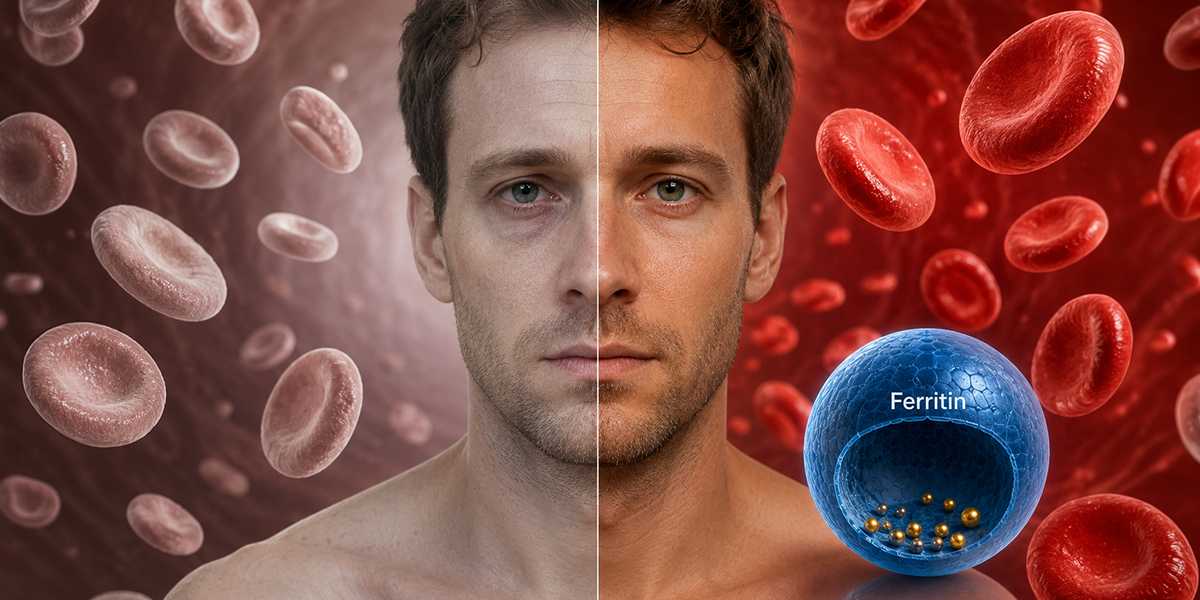


Iron is an essential mineral needed for hemoglobin production, oxygen transport, energy metabolism, and normal cellular function.
The body stores iron mainly in the form of ferritin. Iron deficiency can appear in different stages, starting with low iron stores and potentially progressing to iron-deficiency anemia when hemoglobin production becomes affected. Understanding this difference is important for proper diagnosis, prevention, and treatment.
Table of Contents
Why Iron and Ferritin Matter
Iron is required to produce hemoglobin, the protein in red blood cells responsible for carrying oxygen throughout the body.
Ferritin is a storage form of iron and is often used as an important marker to estimate the body’s iron reserves.
A person may have low ferritin before anemia develops. This means iron stores are declining, but hemoglobin may still remain within the normal range for a period of time.
What Are Low Iron Stores?
Low iron stores refer to reduced ferritin levels in the blood, often before hemoglobin becomes low.
At this stage, the body may still be able to produce enough hemoglobin, so classic anemia symptoms may be absent or mild.
However, low iron stores can still affect energy, immunity, exercise tolerance, hair health, and overall well-being if the deficiency continues.
- Low ferritin level with normal hemoglobin in many cases.
- May cause mild fatigue or reduced stamina.
- May affect hair shedding, concentration, or immune resilience.
- Can progress to anemia if not corrected.
- Often detected through ferritin testing before anemia appears.
What Is Iron-Deficiency Anemia?
Iron-deficiency anemia occurs when iron stores become so depleted that the body cannot produce enough healthy hemoglobin.
As hemoglobin decreases, oxygen delivery to tissues becomes less efficient, leading to clearer and more noticeable symptoms.
Common symptoms may include fatigue, pale skin, dizziness, shortness of breath during exertion, fast heartbeat, weakness, headaches, cold hands and feet, and reduced physical performance.
| Comparison Point | Low Iron Stores | Iron-Deficiency Anemia |
|---|---|---|
| Main Marker | Low ferritin | Low hemoglobin with depleted iron stores |
| Hemoglobin | May still be normal | Usually reduced |
| Symptoms | May be mild, gradual, or absent | Often clearer: fatigue, pallor, dizziness, shortness of breath |
| Severity | Early stage of iron depletion | More advanced deficiency affecting blood oxygen transport |
| Treatment Focus | Replenish iron stores and prevent progression | Restore hemoglobin and rebuild iron stores |
Differences in Diagnosis
Low iron stores are usually identified through ferritin testing, which reflects the body’s iron reserves.
Iron-deficiency anemia is usually confirmed through a complete blood count showing low hemoglobin and hematocrit, often alongside additional iron studies.
Doctors may also evaluate serum iron, transferrin saturation, total iron-binding capacity, red blood cell size, and other markers to understand the stage and cause of deficiency.
Treatment and Strategies
Treatment depends on the stage of deficiency, symptoms, diet, cause of iron loss, and test results.
For low iron stores, dietary adjustments and mild supplementation may be enough in many cases, especially when hemoglobin is still normal.
For iron-deficiency anemia, higher iron doses and periodic monitoring may be needed to restore hemoglobin and refill iron stores.
- Increase iron-rich foods such as red meat, poultry, fish, legumes, lentils, spinach, and fortified grains.
- Support non-heme iron absorption with vitamin C-rich foods such as citrus fruits, berries, kiwi, or bell peppers.
- Avoid taking tea or coffee directly with iron-rich meals if iron status is low.
- Use iron supplements only when appropriate and based on individual need.
- Investigate causes such as heavy menstrual bleeding, digestive blood loss, poor intake, or malabsorption.
Importance of Prevention and Monitoring
Regular monitoring of ferritin and iron status can help prevent low iron stores from progressing to iron-deficiency anemia.
This is especially important for higher-risk groups, including women of reproductive age, pregnant women, endurance athletes, people with restricted diets, older adults, and individuals with digestive disorders.
Prevention depends on proper nutrition, identifying ongoing iron losses, choosing the right supplement strategy when needed, and following up with testing to confirm improvement.
Frequently Asked Questions
Can ferritin be low without anemia?
Yes. Ferritin can be low while hemoglobin remains normal. This means iron stores are reduced, but anemia has not developed yet.
What is the main difference between low iron stores and iron-deficiency anemia?
Low iron stores mainly refer to low ferritin, while iron-deficiency anemia occurs when iron depletion reduces hemoglobin production.
What symptoms can low ferritin cause?
Low ferritin may cause fatigue, reduced stamina, poor concentration, hair shedding, and weakened immunity, although symptoms may be mild or gradual.
What symptoms suggest iron-deficiency anemia?
Common symptoms include fatigue, pale skin, dizziness, shortness of breath during exertion, weakness, headaches, and faster heartbeat.
Should iron supplements be used without testing?
Iron supplements should be used carefully. Testing helps confirm the need, choose the right dose, and avoid unnecessary iron intake.
Conclusion
The difference between low iron stores and iron-deficiency anemia lies in the severity of deficiency and its effect on hemoglobin production.
Low ferritin can be an early warning sign before anemia develops, while iron-deficiency anemia indicates a more advanced stage that affects oxygen transport. Early diagnosis, regular monitoring, proper nutrition, and appropriate supplementation when needed can help restore iron balance and prevent complications.