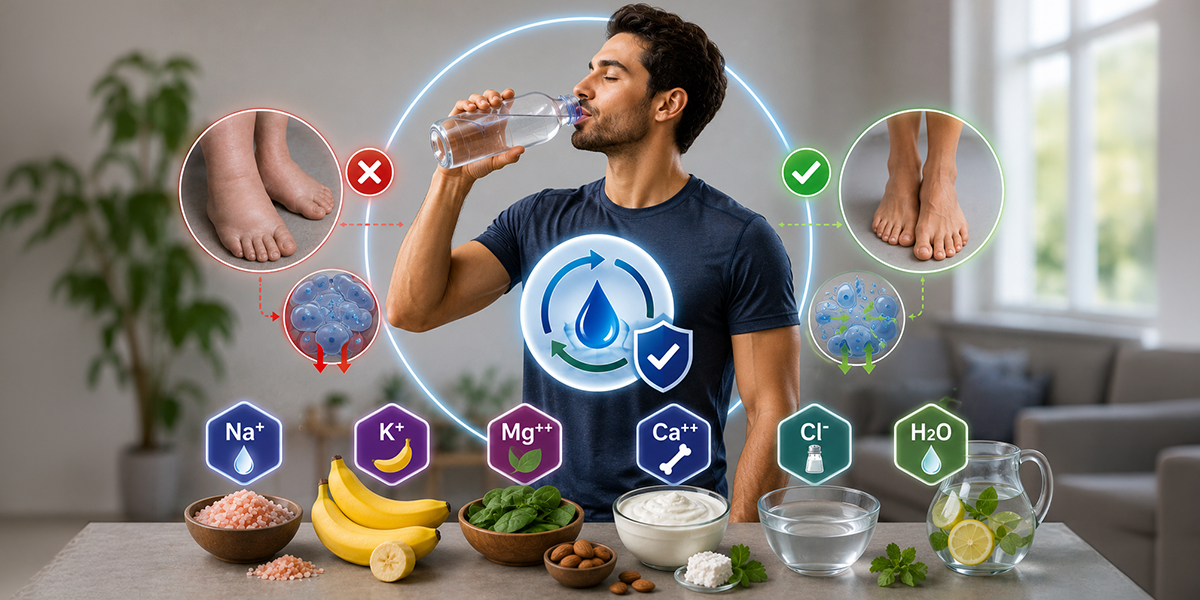


Many people struggle with water retention, often referred to as excess body water, which can cause bloating, heaviness, puffiness, and temporary weight gain. A common mistake is assuming that the solution is to drink less water or completely avoid salt.
In reality, the body needs a healthy balance of fluids and minerals to function properly. In many cases, the issue is not the presence of salt itself, but an imbalance between key electrolytes, especially sodium and potassium.
Table of Contents
Why Does the Body Retain Water?
The body may hold onto water when it senses an imbalance in fluids, minerals, or daily habits. Water retention can happen for several reasons, including high sodium intake, low potassium intake, dehydration, lack of movement, poor sleep, stress, hormonal changes, or frequent consumption of processed foods.
When the body does not receive enough fluids or electrolytes in the right balance, it may retain water as a protective mechanism to maintain internal stability.
The Role of Sodium in Fluid Balance
Sodium is an essential electrolyte that helps regulate fluid balance, blood pressure, nerve signals, and muscle contractions. The body needs sodium to function normally.
However, excessive sodium intake, especially from processed foods, fast food, packaged snacks, sauces, and ready-made meals, may increase water retention and contribute to bloating.
The goal is not to eliminate sodium completely, but to control excessive intake and balance it with other electrolytes, especially potassium.
The Importance of Potassium in Removing Excess Water
Potassium is another important electrolyte that helps balance the effects of sodium. It supports healthy fluid movement between cells and helps the kidneys remove excess fluids through urine.
Increasing potassium-rich foods may help reduce bloating naturally and support better fluid balance.
Common potassium-rich foods include:
- Bananas.
- Avocados.
- Potatoes and sweet potatoes.
- Spinach and leafy greens.
- Beans and lentils.
- Tomatoes.
- Melon and oranges.
Why You Should Not Completely Eliminate Salt
Completely avoiding salt may disrupt hydration, energy levels, blood pressure balance, and muscle function. Sodium is necessary for nerve transmission, muscle contraction, and maintaining fluid balance.
For active individuals, athletes, or people who sweat heavily, very low sodium intake may lead to fatigue, dizziness, cramps, or reduced performance.
| Electrolyte | Main Role | Imbalance Effect |
|---|---|---|
| Sodium | Regulates fluid balance and nerve function | Excess may increase water retention |
| Potassium | Supports fluid balance and kidney function | Low intake may worsen bloating |
| Water | Maintains hydration and circulation | Low intake may trigger fluid retention |
The Best Natural Ways to Reduce Water Retention
Reducing excess body water should focus on improving fluid balance rather than restricting water or completely removing salt.
Practical strategies include:
- Drink enough water consistently throughout the day.
- Reduce processed and high-sodium foods.
- Increase potassium-rich fruits and vegetables.
- Stay physically active and avoid sitting for long periods.
- Improve sleep quality and manage stress.
- Limit excessive alcohol and very salty meals.
- Support regular sweating through exercise when appropriate.
These habits help the body regulate fluids naturally and reduce bloating without extreme restriction.
Frequently Asked Questions
Should I drink less water to reduce water retention?
No. Drinking too little water may actually encourage the body to retain more fluid. Consistent hydration supports healthy fluid balance.
Does salt always cause bloating?
Not always. Sodium is essential, but excessive intake from processed foods may contribute to water retention and bloating.
Can potassium help reduce excess water?
Yes, potassium helps balance sodium and supports the kidneys in removing excess fluids through urine.
What foods help with fluid balance?
Potassium-rich foods such as bananas, avocados, leafy greens, potatoes, beans, tomatoes, and oranges can support fluid balance.
Is water retention always caused by diet?
No. It can also be related to hormones, inactivity, poor sleep, stress, medications, or underlying medical conditions.
Conclusion
Getting rid of excess body water does not depend on eliminating salt or reducing water intake. The healthier approach is to maintain a proper balance between sodium, potassium, and fluids.
A balanced diet, regular hydration, physical activity, better sleep, and reduced processed food intake can help the body regulate water naturally, reduce bloating, and support overall health in a sustainable way.