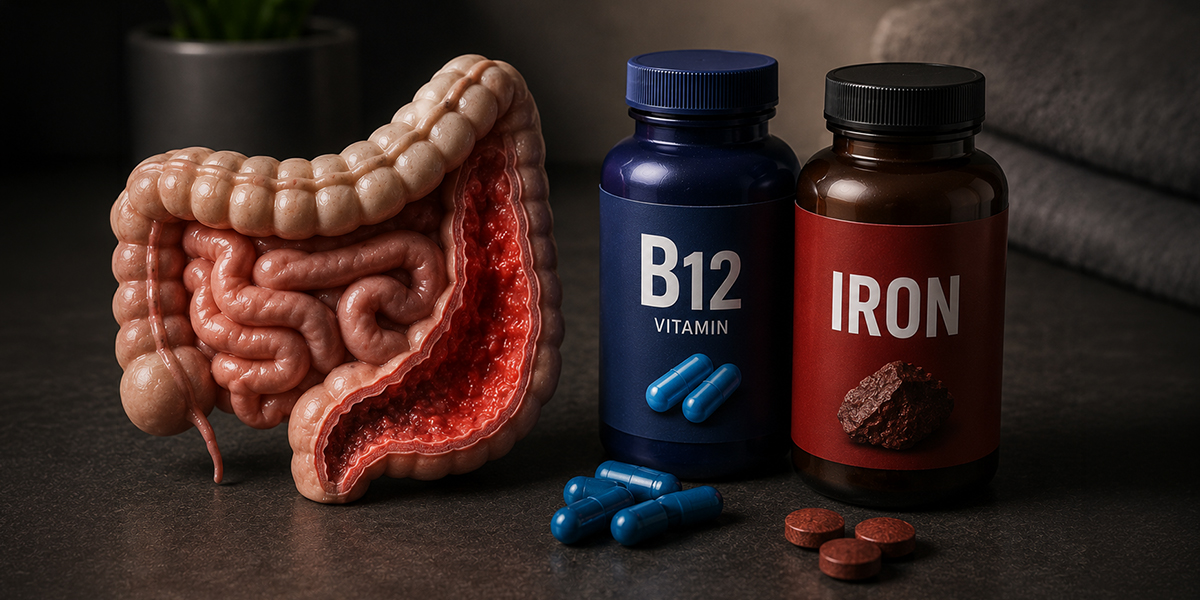


Gut health plays a fundamental role in nutrient absorption, not just digestion. When inflammation occurs in the intestines, whether chronic or recurrent, the body’s ability to absorb important vitamins and minerals can become significantly impaired.
Vitamin B12 and iron are among the most affected nutrients because their absorption depends heavily on the health and function of the digestive tract. This means deficiency symptoms may appear even when a person consumes adequate amounts through food or supplements.
Table of Contents
How Inflammation Affects the Intestinal Lining
The lining of the small intestine is responsible for absorbing most nutrients from food and supplements. When this lining becomes inflamed or damaged, its ability to transport vitamins and minerals into the bloodstream may decrease.
Inflammation may also affect the intestinal villi, which are small structures that increase the surface area available for nutrient absorption. When these structures are compromised, overall absorption efficiency can be reduced.
Effect on Vitamin B12 Absorption
Vitamin B12 absorption is a complex process that begins in the stomach and continues in the small intestine. It requires proper stomach function, intrinsic factor, and a healthy intestinal absorption site.
When intestinal inflammation is present, it may interfere with the cells responsible for absorbing vitamin B12 or reduce the effectiveness of the factors required for proper uptake.
As a result, some individuals may develop vitamin B12 deficiency even if they consume enough B12 from food or supplements.
Effect on Iron Absorption
Iron absorption is also strongly influenced by gut health, especially in the upper part of the small intestine where much of iron absorption takes place.
Inflammation can reduce the intestine’s ability to absorb iron efficiently and may also interfere with the conversion of iron into forms that are easier for the body to use.
In addition, chronic inflammation may increase certain regulatory proteins that reduce iron availability in the bloodstream, which can contribute to anemia or persistent low iron status.
| Nutrient | Main Absorption Area | Impact of Inflammation |
|---|---|---|
| Vitamin B12 | Terminal ileum of the small intestine | Reduced uptake and higher risk of deficiency |
| Iron | Duodenum and upper small intestine | Lower absorption and increased anemia risk |
Why Do Deficiency Symptoms Occur Despite Supplementation?
When inflammation is present, the issue may not be the amount of nutrient consumed, but the body’s ability to absorb and utilize it.
This is why symptoms such as fatigue, weakness, pale skin, anemia, poor concentration, or numbness may persist even when a person regularly takes vitamin B12 or iron supplements.
Do All Inflammations Have the Same Effect?
Not all intestinal inflammations affect absorption in the same way. The impact depends on several factors, including the severity, duration, and location of inflammation.
Factors that influence absorption problems may include:
- How long the inflammation has been present.
- Whether the inflammation is mild, moderate, or severe.
- Which part of the intestine is affected.
- The presence of chronic digestive conditions.
- The extent of damage to the intestinal lining or villi.
The more chronic or severe the inflammation is, the higher the likelihood of noticeable nutrient absorption problems.
Importance of Treating the Underlying Cause
Improving nutrient absorption does not rely only on taking more supplements. It also requires identifying and addressing the underlying cause of intestinal inflammation.
Once gut health improves and inflammation becomes better controlled, the intestinal lining may gradually recover its ability to absorb nutrients more effectively.
This is why treating digestive inflammation is often an important step in correcting persistent vitamin B12 or iron deficiency.
Frequently Asked Questions
Can intestinal inflammation cause vitamin B12 deficiency?
Yes, intestinal inflammation may interfere with the cells and mechanisms needed for proper vitamin B12 absorption.
How does inflammation affect iron absorption?
Inflammation can reduce intestinal iron uptake and may also lower iron availability in the body through inflammatory regulation.
Why do deficiency symptoms continue despite taking supplements?
The problem may be poor absorption rather than low intake, especially if inflammation is affecting the intestinal lining.
What symptoms may appear with B12 or iron deficiency?
Common symptoms may include fatigue, weakness, anemia, poor concentration, pale skin, and sometimes numbness or tingling.
Can absorption improve after inflammation is treated?
In many cases, absorption may gradually improve once inflammation is controlled and gut health begins to recover.
Conclusion
Intestinal inflammation can significantly reduce the absorption of vitamin B12 and iron by damaging the intestinal lining and impairing normal nutrient uptake. This can explain why some people continue to experience deficiency symptoms despite adequate intake or regular supplementation.
Understanding this connection highlights the importance of addressing the underlying inflammation, supporting digestive health, and using appropriate nutrition or supplementation strategies to restore proper nutrient absorption and overall wellness.