


Introduction
Calcium is an essential mineral for bone health, teeth, muscle function, and normal nerve signaling. Calcium supplements are available in several forms, with calcium carbonate and calcium citrate being two of the most common options.
Choosing the right form depends not only on calcium content, but also on stomach health, digestion, medication use, and overall tolerance.
Table of Contents
What Is Calcium Carbonate?
Calcium carbonate is one of the most commonly used calcium supplement forms because it contains a high amount of elemental calcium per serving.
However, it requires adequate stomach acid for proper absorption. For this reason, calcium carbonate is usually recommended to be taken with meals.
Some individuals may experience bloating, gas, constipation, or general digestive discomfort when using calcium carbonate, especially if they have a sensitive stomach.
What Is Calcium Citrate?
Calcium citrate is a more soluble form of calcium that does not rely heavily on stomach acid for absorption.
It can be taken with or without food, which makes it more convenient for some individuals. It is often preferred for people with low stomach acid, digestive sensitivity, or those using acid-reducing medications.
Effects on the Stomach and Digestive System
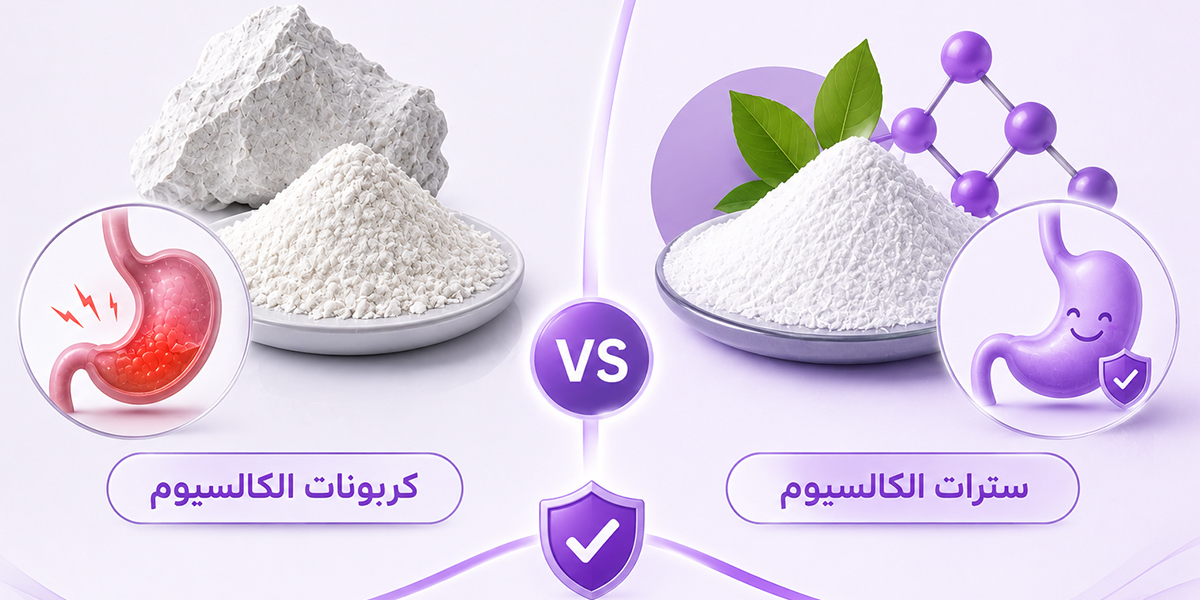
Calcium carbonate may cause gas, bloating, or constipation in some people, particularly those with sensitive digestion or reduced stomach acid.
Calcium citrate is generally considered gentler on the digestive system and is often associated with fewer gastrointestinal side effects.
Who Is Each Form Best Suited For?
Calcium Carbonate May Be Suitable For:
- Healthy adults without digestive issues.
- People who prefer fewer tablets due to higher elemental calcium content.
- Individuals who can take calcium with meals regularly.
Calcium Citrate May Be Better For:
- Older adults.
- People with low stomach acid.
- Individuals taking acid-reducing medications.
- People with digestive sensitivity.
- Individuals who experience constipation or bloating from calcium carbonate.
Absorption and Effectiveness
Although calcium carbonate provides more elemental calcium per tablet, calcium citrate may offer more consistent absorption under different digestive conditions.
Actual absorption depends on several factors, including stomach acid, timing with meals, total calcium dose, vitamin D status, and individual digestive function.
For many people, the best calcium supplement is not simply the one with the highest calcium amount on the label, but the one that is absorbed well and tolerated comfortably.
Practical Tips for Choosing Calcium
- Take calcium carbonate with meals for better absorption.
- Consider calcium citrate if you have sensitive digestion or low stomach acid.
- Avoid taking very large calcium doses at once.
- Check vitamin D intake, as it supports calcium absorption.
- Consult a healthcare professional if you have kidney disease, heart disease, or take regular medications.
FAQ
1. Which calcium form is gentler on the stomach?
Calcium citrate is generally gentler on the stomach and may cause fewer digestive side effects than calcium carbonate.
2. Should calcium carbonate be taken with food?
Yes. Calcium carbonate is best taken with meals because stomach acid helps improve its absorption.
3. Can calcium citrate be taken without food?
Yes. Calcium citrate can usually be taken with or without food because it does not depend strongly on stomach acid.
4. Which form is better for older adults?
Calcium citrate is often preferred for older adults because stomach acid levels may decline with age.
5. Does more elemental calcium mean better absorption?
Not always. A supplement with more elemental calcium may not be better if it is not well absorbed or causes digestive discomfort.
Conclusion
The choice between calcium carbonate and calcium citrate should be based on digestive comfort, stomach acid levels, medication use, and personal tolerance rather than calcium concentration alone.
For individuals with sensitive digestion, low stomach acid, or difficulty tolerating calcium carbonate, calcium citrate is often the gentler and more comfortable option.