


Healthy vision is essential for learning, working, driving, and enjoying everyday life. However, our eyes are constantly exposed to factors that can affect long-term eye health, including aging, prolonged screen time, ultraviolet (UV) radiation, environmental pollutants, and oxidative stress. While regular eye examinations and a balanced diet remain the foundation of healthy vision, certain nutritional supplements may help provide additional support for maintaining normal eye function.
The eyes require a continuous supply of vitamins, minerals, carotenoids, and healthy fats to support the retina, lens, cornea, and other delicate structures involved in vision. Scientific research has identified several nutrients that play particularly important roles in protecting eye tissues from oxidative damage, supporting macular health, maintaining night vision, and promoting overall visual performance. Although dietary supplements cannot prevent or cure eye diseases, they may help fill nutritional gaps and contribute to long-term eye wellness when combined with healthy lifestyle habits.
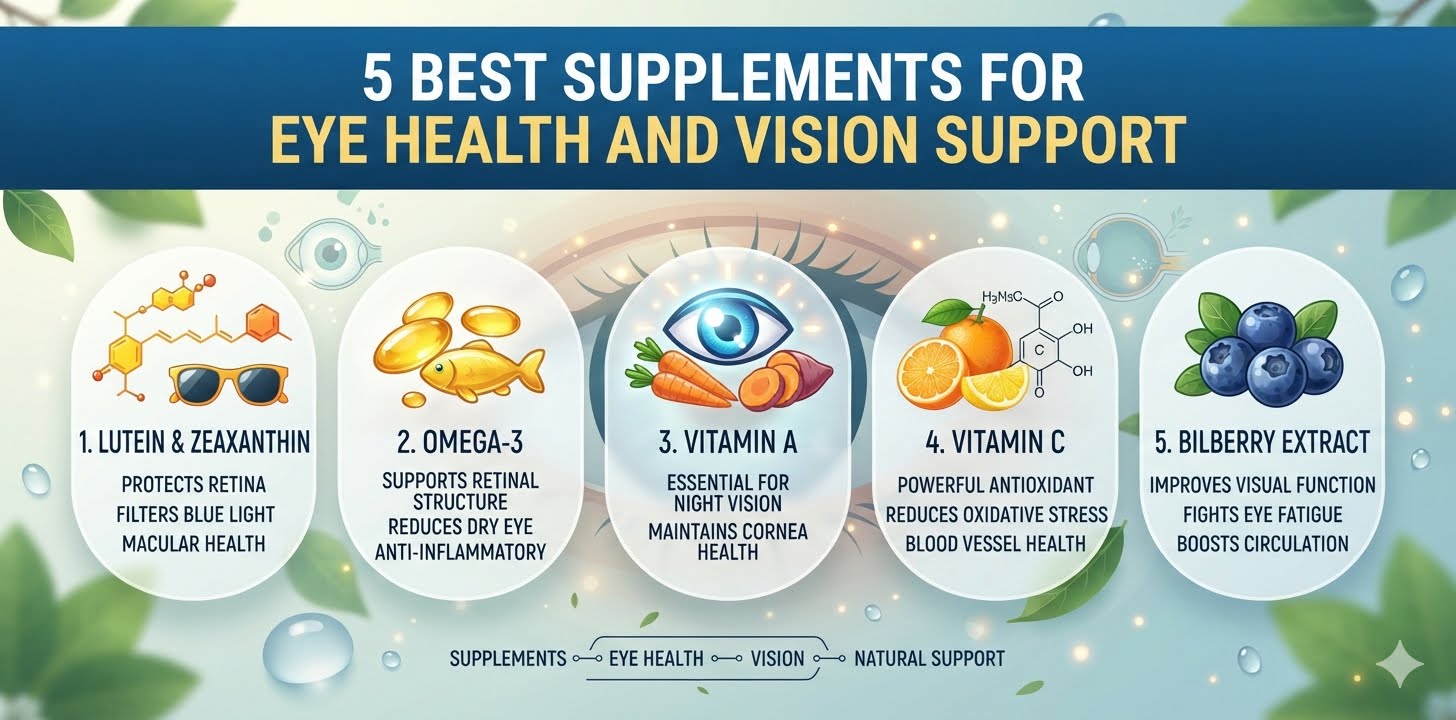
Among the many products available today, a handful of supplements stand out because they have been extensively studied for their role in supporting healthy eyesight. Ingredients such as lutein, zeaxanthin, omega-3 fatty acids, vitamin A, and bilberry extract are commonly included in vision-support formulas due to their potential to help protect the eyes and maintain normal visual function.
Table of Contents
What Nutrients Are Important for Eye Health?
The eyes depend on a variety of nutrients to function properly throughout life. Vitamins, antioxidants, carotenoids, and essential fatty acids each play unique roles in maintaining healthy eye tissues and protecting them from everyday oxidative stress.
Some nutrients help maintain the retina and support normal vision, while others contribute to tear production, protect the macula from blue light exposure, or help preserve healthy cells throughout the eye. Because many of these nutrients cannot be produced by the body in sufficient amounts, obtaining them through a balanced diet—or supplementation when appropriate—can help support overall eye health.
The following five supplements are among the most researched ingredients for promoting healthy vision and supporting long-term eye wellness.
The Top 5 Supplements for Vision Support
1. Lutein & Zeaxanthin
Lutein and zeaxanthin are naturally occurring carotenoids that are highly concentrated in the macula, the central part of the retina responsible for sharp, detailed vision. They act as natural antioxidants and help filter high-energy blue light before it reaches sensitive eye tissues, reducing oxidative stress caused by sunlight and prolonged exposure to digital screens.
These carotenoids cannot be produced by the body, making dietary intake or supplementation important for maintaining healthy eye tissues. Research, including studies from the Age-Related Eye Disease Study 2 (AREDS2), has shown that adequate intake of lutein and zeaxanthin supports long-term macular health and healthy visual function.
Potential benefits include:
- Supports healthy macular function.
- Helps filter harmful blue light.
- Provides antioxidant protection for the eyes.
- Supports long-term visual health.
Best for: Adults seeking everyday nutritional support for healthy vision, particularly those with high screen exposure or increasing age.
2. Omega-3 Fatty Acids
Omega-3 fatty acids, particularly DHA (docosahexaenoic acid), are major structural components of the retina. DHA helps maintain the integrity of retinal cells and supports normal communication between the eyes and the brain. Omega-3s are also widely studied for their role in supporting tear production and maintaining comfortable, well-lubricated eyes.
People who spend long hours using computers or digital devices often include omega-3 supplements as part of their eye wellness routine. While supplements are not intended to treat eye conditions, adequate omega-3 intake may help support overall eye comfort and healthy visual function.
Potential benefits include:
- Supports healthy retinal structure.
- Helps maintain normal tear production.
- Supports overall eye comfort.
- Contributes to long-term eye health.
Best for: Individuals looking to support retinal health and maintain comfortable eyes as part of a balanced lifestyle.
3. Vitamin A
Vitamin A is one of the most essential nutrients for maintaining healthy vision. It supports the production of rhodopsin, a light-sensitive pigment in the retina that enables the eyes to adapt to dim lighting and maintain normal night vision. Vitamin A also helps preserve the health of the cornea and supports the natural protective barrier on the surface of the eye.
Although vitamin A deficiency is uncommon in people who consume a balanced diet, inadequate intake can affect normal visual function. Supplementation may help individuals who are unable to meet their nutritional needs through food alone, but excessive intake should be avoided unless recommended by a healthcare professional.
Potential benefits include:
- Supports normal vision, especially in low light.
- Helps maintain a healthy cornea.
- Supports the eye's protective surface.
- Contributes to overall eye health.
Best for: Individuals looking to maintain healthy vision and support normal eye function through adequate vitamin intake.
4. Bilberry Extract
Bilberry (Vaccinium myrtillus) is a fruit rich in naturally occurring anthocyanins, powerful antioxidant compounds that help protect cells from oxidative stress. It has been traditionally used to support eye health and continues to be studied for its potential role in maintaining healthy circulation within the eyes and protecting retinal tissues.
Although more large-scale research is needed to confirm some traditional claims, bilberry remains a popular ingredient in vision-support supplements because of its antioxidant properties and its ability to complement other eye-health nutrients such as lutein and vitamin A.
Potential benefits include:
- Provides antioxidant protection for eye tissues.
- Supports healthy retinal function.
- Helps protect cells from oxidative stress.
- Complements comprehensive eye health formulas.
Best for: Adults seeking additional antioxidant support to help maintain long-term eye health.
5. Vitamin C
Vitamin C is a powerful antioxidant that helps protect the eyes from oxidative stress caused by free radicals, UV exposure, and environmental factors. It is naturally concentrated in the lens of the eye, where it supports healthy tissues and contributes to the production of collagen, an important structural protein found in the cornea and blood vessels.
Research suggests that maintaining adequate vitamin C intake may help support overall eye health as part of a balanced diet. Since the body cannot produce vitamin C, obtaining sufficient amounts through food or supplements is important for maintaining healthy tissues throughout the body, including the eyes.
Potential benefits include:
- Provides antioxidant protection.
- Supports collagen production for eye tissues.
- Helps maintain healthy blood vessels in the eyes.
- Contributes to long-term eye wellness.
Best for: Individuals looking to support overall eye health and antioxidant defense.
How to Choose the Right Eye Health Supplement
Not all vision supplements contain the same ingredients or quality standards. Choosing a well-formulated product can help ensure you receive nutrients that have been researched for eye health while avoiding unnecessary additives.
When selecting an eye health supplement, look for:
- Science-backed ingredients such as lutein, zeaxanthin, omega-3 fatty acids, vitamin A, and vitamin C.
- Clearly labeled ingredient amounts and serving sizes.
- Products from reputable manufacturers with transparent labeling.
- Third-party quality testing or Good Manufacturing Practice (GMP) certification when available.
- Formulas that match your individual nutritional needs and health goals.
A high-quality supplement should complement—not replace—a healthy diet rich in colorful fruits, vegetables, fish, nuts, and other nutrient-dense foods that naturally support healthy vision.
Lifestyle Tips to Support Healthy Vision
Supplements work best when combined with healthy daily habits. Protecting your eyes from excessive UV exposure, limiting prolonged screen time, eating a nutrient-rich diet, staying physically active, avoiding smoking, and scheduling regular comprehensive eye examinations all play important roles in maintaining healthy vision throughout life.
Recommended Vision Support Supplements
Supporting long-term eye health starts with the right nutrition. Dr. Nutrition offers a wide range of premium supplements formulated with science-backed ingredients that help maintain healthy vision, protect eye tissues from oxidative stress, and support everyday visual performance.
- Explore Lutein Supplements
Ideal for: Supporting macular health, filtering blue light, and protecting the eyes with powerful antioxidant carotenoids. - Explore Zeaxanthin Supplements
Ideal for: Maintaining healthy central vision, supporting retinal function, and complementing lutein for comprehensive eye protection. - Explore Omega-3 Supplements
Ideal for: Supporting retinal health, eye moisture, tear production, and overall visual comfort. - Explore Vitamin A Supplements
Ideal for: Maintaining normal vision, supporting night vision, and promoting healthy corneal function. - Explore Bilberry Extract Supplements
Ideal for: Providing antioxidant support, protecting retinal cells, and promoting long-term eye health. - Explore Vitamin C Supplements
Ideal for: Supporting collagen production, protecting eye tissues from oxidative stress, and maintaining healthy blood vessels within the eyes.
FAQ
1. What is the best supplement for eye health?
There is no single best supplement for everyone. Lutein, zeaxanthin, omega-3 fatty acids, vitamin A, and vitamin C are among the most researched nutrients for supporting healthy vision.
2. Can supplements improve eyesight?
Vision supplements help support normal eye function and overall eye health, but they are not designed to correct vision problems or replace prescription glasses, contact lenses, or medical treatment.
3. How long does it take for eye supplements to work?
Results vary depending on the individual, nutritional status, and the supplement used. Consistent daily use alongside a healthy lifestyle generally provides the greatest long-term benefits.
4. Can I take eye supplements every day?
Most eye health supplements are intended for daily use according to the manufacturer's recommended serving size. Always follow product directions or consult a healthcare professional if you have medical conditions or take prescription medications.
5. Are eye supplements a substitute for regular eye exams?
No. Nutritional supplements support overall eye health but do not replace comprehensive eye examinations or professional medical care. Regular eye checkups remain essential for maintaining healthy vision.
Conclusion
Supporting healthy vision requires a combination of good nutrition, healthy lifestyle habits, and regular eye care. Nutrients such as lutein, zeaxanthin, omega-3 fatty acids, vitamin A, vitamin C, and antioxidant-rich plant compounds have been widely studied for their role in maintaining normal eye function and protecting delicate eye tissues from oxidative stress.
While supplements cannot prevent or treat eye diseases, they can help fill nutritional gaps and complement a balanced diet. Choosing high-quality products, protecting your eyes from excessive UV exposure, limiting prolonged screen time, and scheduling routine eye examinations are all important steps toward preserving healthy vision for years to come.