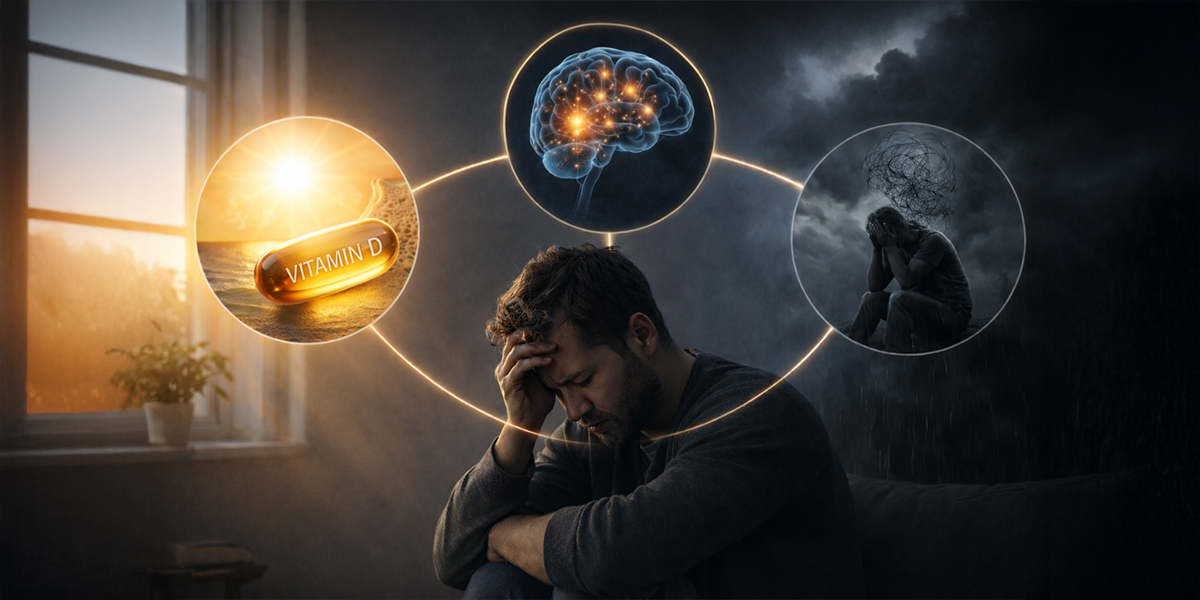


Vitamin D is not only essential for bone health, but also plays an important role in brain function and emotional well-being. Research suggests that low vitamin D levels may be associated with a higher likelihood of depressive symptoms and anxiety in some people, although the relationship is not fully settled and may vary by individual.
With modern lifestyles that often limit sun exposure, vitamin D deficiency has become increasingly common. Maintaining healthy vitamin D levels through sunlight, nutrition, and supplementation when needed may support both physical and mental health.
The Role of Vitamin D in the Brain and Mood
Vitamin D acts more like a hormone than a traditional vitamin, and many tissues in the body, including the brain, have vitamin D receptors. It is involved in processes related to inflammation, neuromuscular function, and cell regulation, which is one reason scientists continue to study its role in mood and mental health.
Researchers have also investigated whether vitamin D influences neurotransmitter-related pathways associated with mood regulation, including serotonin and dopamine systems, though this area is still evolving.
Vitamin D Deficiency and Depression
Several observational studies and some meta-analyses suggest that low vitamin D status may be linked with depressive symptoms. Some clinical trials have also found modest improvement in depression scores with vitamin D supplementation, particularly in people who are deficient. However, the overall evidence is mixed, and vitamin D should not be viewed as a standalone treatment for depression.
In other words, correcting a deficiency may help support mood in some individuals, but it is not a guaranteed solution for all types of depression.
Vitamin D Deficiency and Anxiety
The relationship between vitamin D and anxiety is also being studied. Some reviews suggest a possible association between low vitamin D levels and anxiety-related symptoms, but the evidence is less consistent than it is for depression. This means vitamin D may be one piece of the puzzle, not the only explanation for anxiety.
Potential Benefits of Vitamin D Supplements
Vitamin D supplements may be helpful for people with confirmed deficiency, especially when low levels are affecting bone health, muscle function, or overall well-being. Some evidence suggests they may also help improve depressive symptoms in certain adults, particularly when deficiency is present.
Still, supplements are best seen as part of a broader health strategy. They do not replace professional mental health care, therapy, or prescribed treatment when these are needed.
Practical Tips to Support Mood and Vitamin D Levels
- Get a blood test to check your vitamin D level before starting high-dose supplements.
- Aim for regular sunlight exposure when appropriate and safe for your skin and climate.
- Include vitamin D-rich foods such as fatty fish, egg yolks, cod liver oil, and fortified dairy or fortified foods.
- Use supplements only in suitable doses, because excessive vitamin D can be harmful and may cause high calcium levels and related complications.
- Combine nutrition, sleep, movement, and mental health support for the best overall outcome.