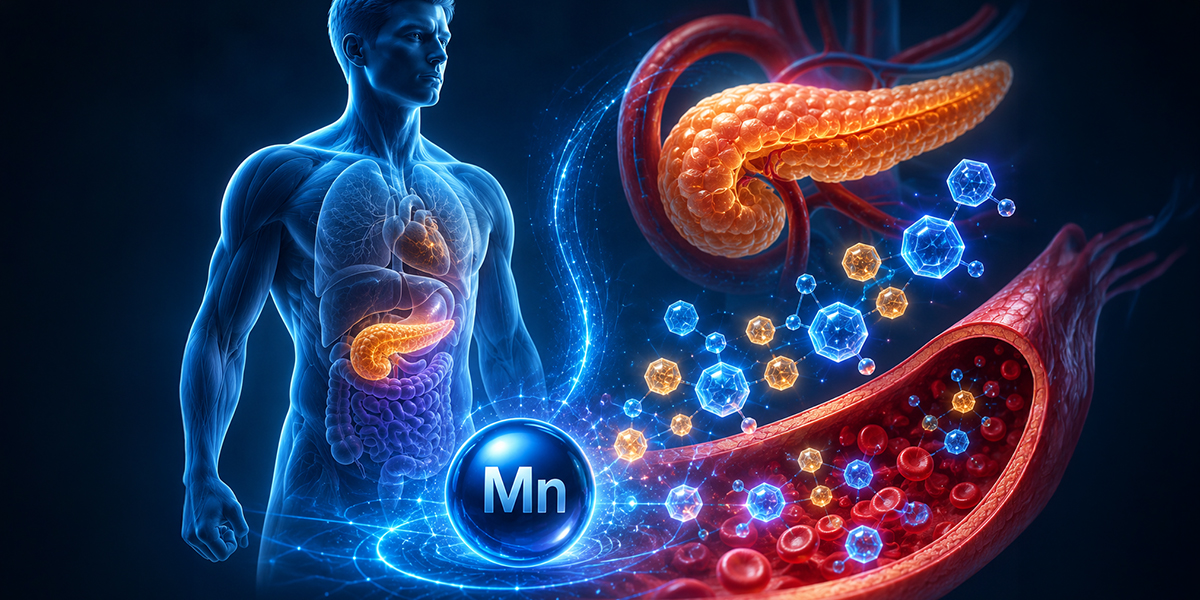


Manganese is an essential trace mineral that the body needs in small amounts, yet it plays an important role in glucose metabolism, enzyme activity, and energy production.
By supporting enzymes involved in carbohydrate breakdown and cellular energy pathways, manganese may contribute to healthier blood sugar regulation and better metabolic balance when consumed as part of a varied, nutrient-rich diet.
Table of Contents
Why Manganese Matters for Glucose Metabolism
Glucose metabolism is the process by which the body breaks down carbohydrates and converts them into usable energy.
This process depends on many enzymes, minerals, vitamins, hormones, and cellular pathways working together. Manganese supports some of these enzyme systems, helping cells process nutrients and produce energy more efficiently.
When glucose metabolism works properly, the body is better able to maintain stable energy levels and support healthy blood sugar control after meals.
Role in Activating Glucose-Related Enzymes
Manganese acts as a cofactor for several enzymes involved in carbohydrate metabolism and energy production.
These enzymes help the body break down glucose, process nutrients, and convert carbohydrates into energy that cells can use for daily function, movement, and repair.
By supporting enzyme activity, manganese may help the body use glucose more efficiently and contribute to more stable blood sugar levels after meals.
| Metabolic Process | Role of Manganese | Possible Benefit |
|---|---|---|
| Carbohydrate Breakdown | Supports enzymes involved in glucose processing | Helps convert carbohydrates into usable energy |
| Cellular Energy Production | Contributes to metabolic enzyme activity | Supports steady energy production |
| Glucose Utilization | Helps cells process nutrients efficiently | May support healthier glucose balance |
| Post-Meal Blood Sugar | Supports normal metabolic response after eating | May help reduce sharp fluctuations |
Effect on Insulin and Cellular Sensitivity
Insulin is the hormone responsible for helping glucose move from the bloodstream into cells, where it can be used for energy or stored for later use.
Adequate manganese intake may support normal insulin function by contributing to healthy enzyme activity, energy metabolism, and cellular balance.
When cells respond well to insulin, glucose can be handled more efficiently, which may support better blood sugar control and reduce the risk of long-term metabolic imbalance.
| Insulin-Related Factor | How Manganese May Support It | Metabolic Impact |
|---|---|---|
| Cellular Response | Supports normal cell metabolism | May help cells use glucose efficiently |
| Energy Pathways | Helps activate metabolic enzymes | Supports glucose-to-energy conversion |
| Insulin Sensitivity | May contribute to healthier metabolic signaling | Supports blood sugar regulation |
| Metabolic Balance | Works with diet, exercise, and other nutrients | Supports long-term glucose control |
Manganese Deficiency and Blood Sugar Regulation
Manganese deficiency is considered uncommon, especially in people who eat a balanced diet rich in whole grains, nuts, seeds, legumes, and vegetables.
However, low manganese status may affect enzymes involved in glucose metabolism and energy production, which may contribute to poor metabolic efficiency.
In theory, inadequate manganese intake may be associated with impaired glucose handling, lower insulin effectiveness, fatigue, and unstable energy levels, especially when combined with poor diet quality or low intake of other key nutrients.
| Possible Issue | How Low Manganese May Contribute | Related Concern |
|---|---|---|
| Poor Glucose Metabolism | Reduced support for glucose-related enzymes | Less efficient carbohydrate use |
| Low Energy | Weaker support for energy-producing pathways | Fatigue or unstable vitality |
| Reduced Insulin Support | May affect normal cellular metabolic response | Blood sugar fluctuations |
| Oxidative Stress | Lower support for manganese-dependent antioxidant enzymes | Metabolic and vascular stress |
Dietary Sources of Manganese
Manganese is naturally found in many plant-based foods, especially whole grains, nuts, seeds, legumes, leafy green vegetables, and tea.
A varied diet rich in whole, minimally processed foods usually provides enough manganese for most people without the need for supplementation.
Because manganese is needed only in small amounts, the best approach is to maintain a balanced intake from food rather than relying on high-dose supplements.
- Whole grains such as oats, brown rice, quinoa, and whole wheat.
- Nuts such as almonds, hazelnuts, and walnuts.
- Seeds such as pumpkin seeds, sesame seeds, and flaxseeds.
- Legumes such as lentils, chickpeas, beans, and peas.
- Leafy green vegetables such as spinach and kale.
- Tea and some plant-based beverages.
- Pineapple and other manganese-containing fruits.
Manganese Balance and Safe Use
Although manganese is important for metabolism, balance is essential because the body only needs small amounts.
Excessive manganese intake from high-dose supplements may be harmful, particularly for people with liver disease, neurological concerns, or occupational exposure to manganese.
For blood sugar support, the foundation should remain a balanced diet, regular physical activity, adequate protein and fiber intake, proper sleep, hydration, and medical monitoring when needed.
| Support Strategy | Why It Helps | Practical Action |
|---|---|---|
| Balanced Meals | Supports stable glucose response | Combine protein, fiber, healthy fats, and quality carbs |
| Whole Foods | Provide manganese and other metabolic nutrients | Choose whole grains, legumes, seeds, and vegetables |
| Physical Activity | Improves glucose use by muscles | Walk, train, or move regularly |
| Avoid Excess Supplements | Too much manganese may be unsafe | Use supplements only when advised |
Frequently Asked Questions
How does manganese support glucose metabolism?
Manganese supports enzymes involved in carbohydrate breakdown, energy production, and nutrient metabolism, which may help the body use glucose more efficiently.
Can manganese improve insulin sensitivity?
Adequate manganese intake may support normal insulin-related cellular processes, but it should not be considered a direct treatment for insulin resistance or diabetes.
Can manganese deficiency affect blood sugar?
Low manganese status may reduce support for enzymes involved in glucose metabolism, which may contribute to poorer metabolic efficiency and unstable energy levels.
What foods are rich in manganese?
Good sources include whole grains, oats, brown rice, nuts, seeds, legumes, leafy green vegetables, tea, and some fruits such as pineapple.
Should I take manganese supplements for blood sugar control?
Most people can obtain enough manganese from food. Supplements should only be used when needed and under professional guidance, because excessive manganese intake may be harmful.
Conclusion
Manganese plays an important supportive role in glucose metabolism and blood sugar regulation by helping activate enzymes involved in carbohydrate breakdown, cellular energy production, and metabolic balance.
Maintaining adequate manganese intake through a varied diet rich in whole grains, nuts, seeds, legumes, and vegetables may support healthy glucose use and long-term metabolic wellness. However, manganese should be viewed as part of an overall lifestyle approach, not as a standalone solution for blood sugar disorders.