

Exfoliation is one of the most talked-about steps in skincare because it promises smoother skin, a brighter complexion, and clearer pores. But when it is done too often or with overly harsh products, it can easily backfire and leave the skin irritated, dehydrated, and unbalanced.
Over-exfoliation can damage the skin barrier, increase sensitivity, and even trigger more breakouts instead of improving them. Understanding how exfoliation works, how to spot when your skin has had too much, and how to build a safer routine using the right cleanser, serum, moisturizer, sunscreen, and face care products can help you protect your skin while still getting the benefits of exfoliation.
What Is Over-Exfoliation?
Over-exfoliation happens when the skin’s natural protective barrier becomes disrupted because exfoliating products or methods are used too often or too aggressively. This can happen with both physical scrubs and chemical exfoliants, especially when they are layered with other strong active ingredients.
It may result from excessive use of:
- Physical scrubs
- Chemical acids such as AHAs, BHAs, or PHAs
- Strong combinations, such as retinol with acids
Even gentle exfoliants can become harmful if they are used too frequently or without enough barrier support from the rest of your beauty care routine.
Why People Over-Exfoliate
Many people do not realize they are over-exfoliating until their skin becomes reactive. This often happens because exfoliation is associated with quick results, so it is tempting to use more in hopes of faster improvement.
- Believing that more exfoliation means faster results
- Following skincare trends without considering skin type
- Confusing sensitivity or roughness with a need for more exfoliation
- Trying to scrub away dryness, congestion, or dullness too aggressively
In reality, balance matters more than intensity. A well-built routine with a supportive moisturizer and barrier-friendly face care is usually far more effective than constant scrubbing.
Signs Your Skin Is Over-Exfoliated
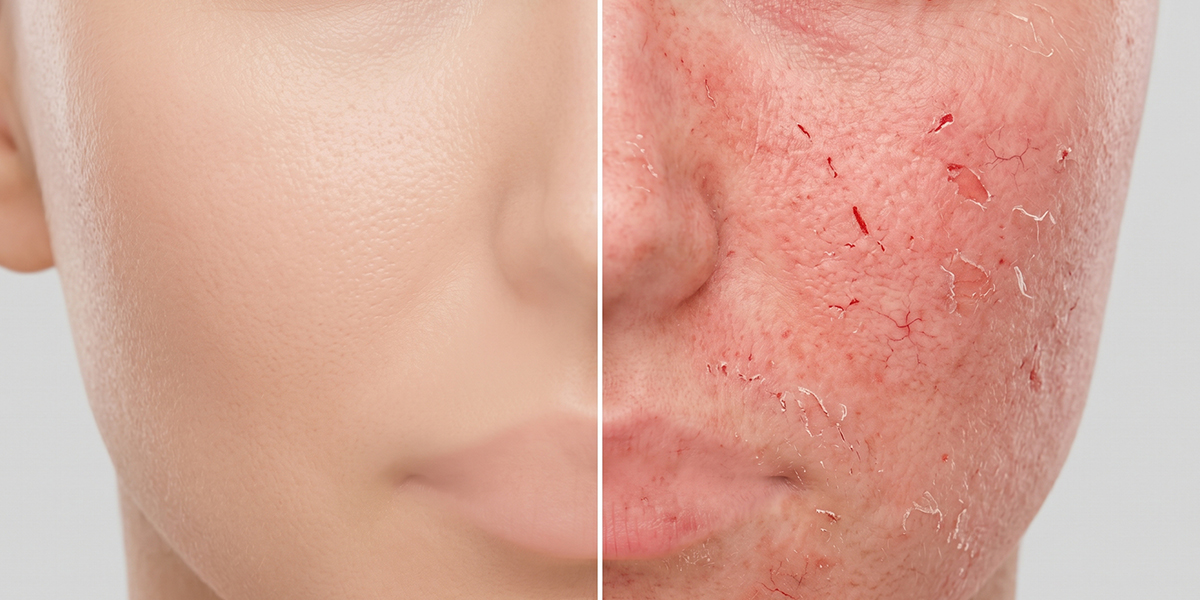
Recognizing the warning signs early can help prevent more serious barrier damage. Over-exfoliated skin often looks and feels irritated, sensitive, and less resilient than usual.
- Redness or visible irritation
- Tight, dry, or flaky skin
- Burning or stinging sensation
- Increased breakouts or clogged pores
- Sensitivity to products that previously felt fine
Early detection matters. The sooner you reduce irritation and simplify your routine, the easier it is for the skin to recover.
Common Mistakes in Exfoliation
Over-exfoliation usually comes from routine mistakes rather than a single product. The skin often reacts when multiple irritating habits happen together.
- Using chemical peels or strong acids every day
- Using scrubs with rough or sharp particles
- Layering several exfoliating products in one routine
- Ignoring hydration and barrier repair after exfoliation
These mistakes often become worse when people skip a supportive moisturizer or forget daily sunscreen while using active ingredients.
Ingredients That Can Cause Damage
Some very popular skincare ingredients are highly effective, but they can also become irritating when used too often, in high concentrations, or in the wrong combinations.
- Glycolic acid and lactic acid from the AHA family
- Salicylic acid and betaine salicylate from the BHA family
- Retinol and other retinoids
- Physical exfoliants such as sugar, walnut shell, or apricot pits
Even natural or gentle-sounding ingredients can be too much when used excessively. This is why it is important to build a routine around calming and supportive products such as a mild cleanser, hydrating serum, and barrier-supporting moisturizer.
How to Recover from Over-Exfoliation
If your skin is already over-exfoliated, the goal is to stop irritation, restore hydration, and help the barrier recover. Recovery often takes patience, simplicity, and consistency.
1. Stop Active Exfoliants
Pause exfoliating acids, scrubs, and strong actives for one to two weeks, or longer if your skin is still irritated.
2. Focus on Hydration
Use hydrating ingredients such as hyaluronic acid and glycerin, often found in serum and moisturizer products.
3. Rebuild the Barrier
Look for moisturizers that contain ceramides, fatty acids, and cholesterol to support the skin barrier.
4. Gentle Cleansing Only
Avoid harsh or overly foaming cleansers. A mild cleanser is usually the safest choice during recovery.
5. Always Use Sunscreen
Sunscreen is essential because sun exposure can slow healing and worsen irritation, redness, and post-inflammatory marks.
Building a Safe Exfoliation Routine
A safe exfoliation routine should support the skin instead of constantly challenging it. Starting slowly and adjusting based on your skin’s response is usually the best approach.
- Start with chemical exfoliants one to two times per week
- Use physical scrubs gently and no more than once per week
- Introduce strong actives slowly and one at a time
- Pair exfoliation with a hydrating serum and barrier-supporting moisturizer
Keeping the rest of your face care routine simple makes it easier to see what your skin can tolerate.
How Often Should You Exfoliate?
There is no single rule that works for everyone. The right frequency depends on your skin type, barrier strength, and the kind of exfoliant you are using.
- Oily or acne-prone skin: two to three times per week with chemical exfoliants
- Combination skin: one to two times per week
- Sensitive or dry skin: once per week or every 10 to 14 days
Consistency matters more than intensity. Gentle, regular use is usually far more effective than aggressive exfoliation followed by irritation.
FAQ
Can over-exfoliation cause permanent damage?
If it is repeated over long periods without allowing the skin to recover, it can weaken the skin barrier long term.
Can I still use retinol or acids?
Only after the skin barrier has recovered. Restart slowly and avoid combining too many strong actives at once.
Are natural scrubs safe?
Not always. Natural ingredients can still be abrasive and may damage the skin if the texture is too rough or if they are used too often.
References
- American Academy of Dermatology
- Cleveland Clinic
- Mayo Clinic
Exfoliation can be a powerful part of a skincare routine, but too much of it can damage the skin instead of improving it. The safest approach is to keep the routine balanced, support the barrier with the right moisturizer, use a gentle cleanser, add hydrating serum products when needed, and never skip sunscreen. With patience and consistency, you can achieve smoother and brighter-looking skin without compromising its long-term health.
This content is for informational purposes only and is not a substitute for professional medical advice. Consult a dermatologist if irritation persists or worsens.