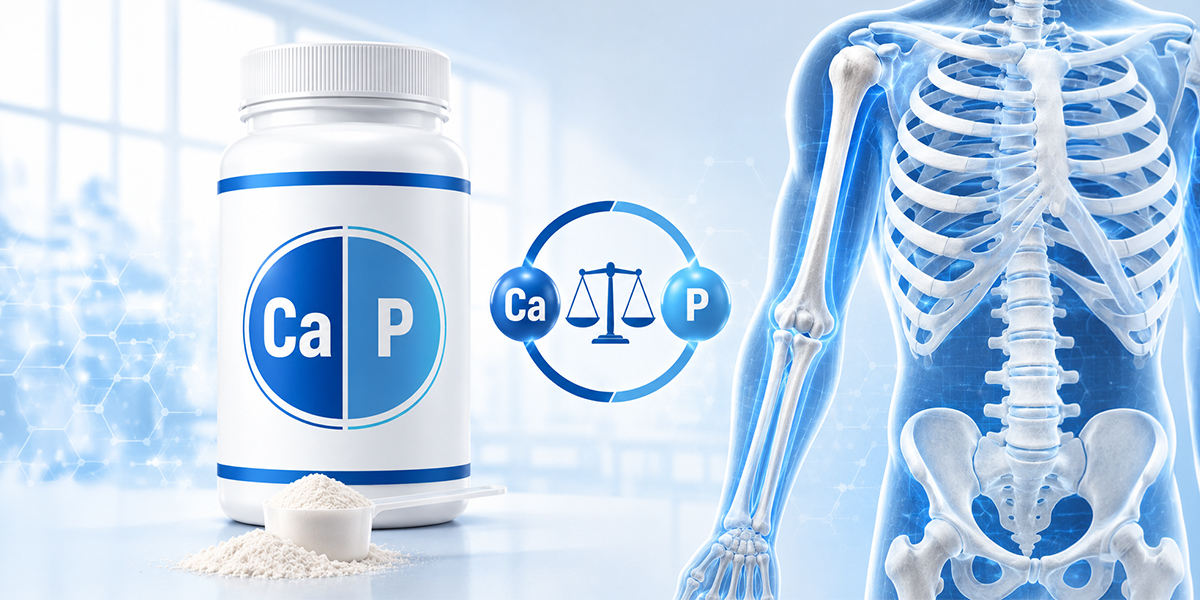


Calcium and phosphorus are two essential minerals that work together to build and maintain strong bones and teeth. While calcium often receives the most attention when discussing bone health, phosphorus is equally important. Maintaining the proper balance between these minerals is critical for preserving bone density, supporting skeletal strength, and reducing the risk of fractures over time.
Table of Contents
The Complementary Relationship Between Calcium and Phosphorus
Calcium represents the largest mineral component of bones, while phosphorus combines with calcium to form calcium phosphate, the primary compound responsible for bone hardness and structural integrity.
This partnership allows bones to maintain an optimal balance between strength and flexibility, helping reduce the risk of fractures and supporting long-term skeletal health.
Approximately 99% of the body's calcium and about 85% of its phosphorus are stored within bones and teeth, highlighting the importance of maintaining adequate levels of both minerals.
The Ideal Calcium-to-Phosphorus Ratio
Nutrition experts generally recommend a calcium-to-phosphorus ratio of approximately 1:1 to 1.5:1 in favor of calcium.
This means calcium intake should be equal to or slightly higher than phosphorus intake to support optimal bone metabolism and mineral balance.
Maintaining this ratio helps:
- Support calcium absorption.
- Maintain healthy bone mineralization.
- Reduce excessive calcium mobilization from bones.
- Support normal skeletal growth and maintenance.
- Promote long-term bone density.
Effects of Imbalance on Bone Health
Modern diets often provide excessive amounts of phosphorus, particularly through processed foods, fast foods, and carbonated soft drinks containing phosphate additives.
When phosphorus intake consistently exceeds calcium intake, several issues may develop:
- Reduced calcium absorption.
- Increased calcium loss from the body.
- Higher demand for calcium release from bone stores.
- Potential reduction in bone mineral density over time.
- Greater risk of osteoporosis, especially in vulnerable populations.
Older adults, postmenopausal women, and individuals with vitamin D deficiency may be particularly susceptible to the negative effects of long-term mineral imbalance.
Role of Vitamin D and Supporting Factors
Vitamin D plays a critical role in regulating the absorption of both calcium and phosphorus from the digestive tract.
Without adequate vitamin D, the body cannot efficiently utilize these minerals regardless of dietary intake.
Additional factors that support bone health include:
- Regular weight-bearing exercise.
- Moderate sunlight exposure.
- Adequate protein intake.
- Maintaining healthy body weight.
- A balanced diet rich in essential nutrients.
Balanced Dietary Sources
Achieving an appropriate calcium-to-phosphorus balance starts with a varied and nutrient-rich diet.
Good Sources of Calcium
- Milk and dairy products.
- Yogurt.
- Cheese.
- Fortified plant-based beverages.
- Leafy green vegetables.
Natural Sources of Phosphorus
- Legumes.
- Nuts and seeds.
- Whole grains.
- Fish and seafood.
- Lean meats and poultry.
Limiting highly processed foods and sugary soft drinks can help prevent excessive phosphorus intake from additives.
Practical Tips for Maintaining Mineral Balance
- Include calcium-rich foods daily.
- Limit excessive intake of processed foods and soft drinks.
- Ensure adequate vitamin D status.
- Stay physically active with weight-bearing exercise.
- Discuss supplementation needs with a healthcare professional if necessary.
Frequently Asked Questions
1. Why are calcium and phosphorus important for bones?
They combine to form calcium phosphate, the primary mineral structure responsible for bone strength and density.
2. What is the ideal calcium-to-phosphorus ratio?
A ratio of approximately 1:1 to 1.5:1 in favor of calcium is commonly recommended for bone health.
3. Can too much phosphorus weaken bones?
Excessive phosphorus intake combined with inadequate calcium may negatively affect bone mineral balance over time.
4. Does vitamin D affect calcium and phosphorus absorption?
Yes. Vitamin D is essential for efficient absorption and utilization of both minerals.
5. Which foods are high in phosphorus?
Legumes, nuts, whole grains, fish, poultry, and many processed foods contain phosphorus.
Conclusion
Maintaining a balanced calcium-to-phosphorus ratio is essential for supporting bone density, skeletal strength, and long-term musculoskeletal health. While both minerals are necessary, balance is key.
A varied diet rich in calcium-containing foods, moderate phosphorus intake, adequate vitamin D, and regular physical activity can help preserve healthy bones and reduce the risk of osteoporosis and fractures throughout life.