

Vitamin C is widely known for supporting immune health, antioxidant protection, and skin integrity, but its role goes far beyond immunity.
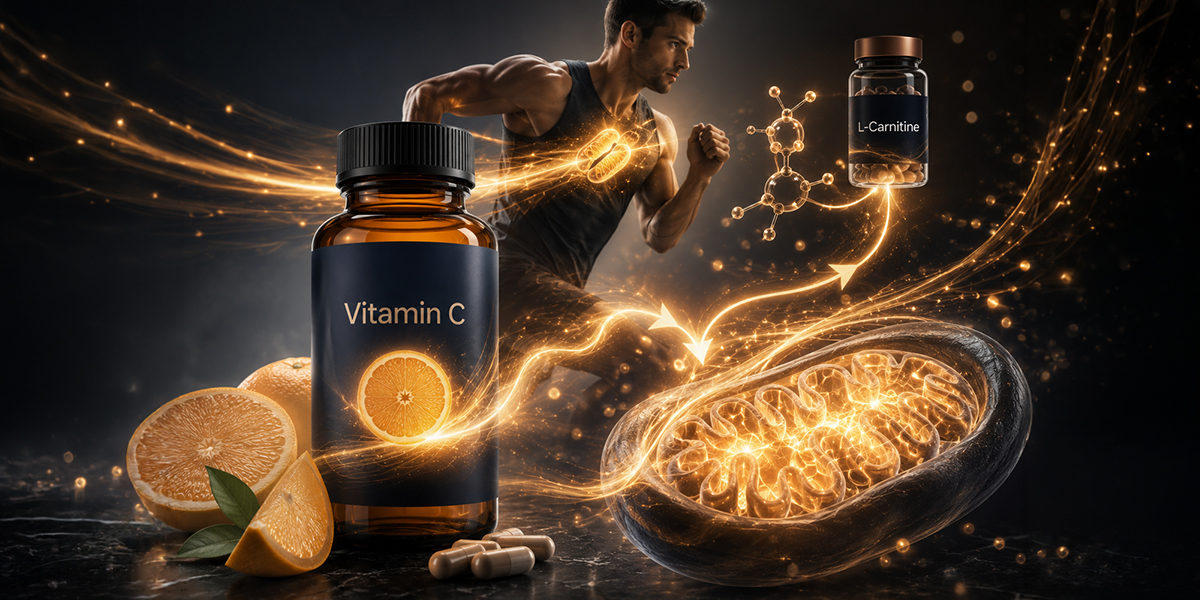
One of its important metabolic functions is supporting the synthesis of carnitine, a compound that helps transport fatty acids into the mitochondria, where they can be used to produce energy. This makes vitamin C an important nutrient for fat metabolism, exercise performance, and healthy energy production.
Table of Contents
What Is Carnitine?
Carnitine is a compound naturally produced in the body from amino acids, mainly lysine and methionine.
Its main role is to help transport long-chain fatty acids into the mitochondria, which are the energy-producing centers of the cells.
Once fatty acids enter the mitochondria, they can be broken down and converted into energy. This is why carnitine is often described as a “fat transporter” within the body.
Why Carnitine Is Important for Fat Transport
Fat cannot be used efficiently for energy unless fatty acids are transported into the mitochondria.
Carnitine plays a key role in this process by acting like a carrier that helps move fatty acids into the right place for energy production.
When carnitine availability is low, the body may become less efficient at using fat as an energy source, especially during activities that depend on aerobic metabolism such as walking, cycling, running, or endurance training.
- Carnitine supports fatty acid transport.
- It helps fats reach the mitochondria.
- It supports energy production from fat.
- It is especially relevant during aerobic exercise.
- It works best when combined with physical activity and balanced nutrition.
The Role of Vitamin C in Carnitine Synthesis
Vitamin C is required for important biochemical reactions involved in carnitine synthesis.
During this process, the body converts amino acids into carnitine through several enzymatic steps. Vitamin C acts as a necessary cofactor in this pathway, helping support normal carnitine production.
If vitamin C levels are insufficient, carnitine synthesis may become less efficient, which may affect fat transport and energy production over time.
| Nutrient or Compound | Role | Impact on Energy |
|---|---|---|
| Vitamin C | Supports biochemical steps in carnitine synthesis | Helps maintain normal carnitine production |
| Carnitine | Transports fatty acids into mitochondria | Supports fat use as an energy source |
| Mitochondria | Produce energy from nutrients | Convert fats into usable cellular energy |
Impact of Vitamin C Deficiency on Fat Burning
Low vitamin C levels may reduce the body’s ability to produce carnitine efficiently.
When carnitine production is not optimal, fat transport into the mitochondria may become less efficient, which can contribute to lower energy production and increased fatigue during physical activity.
This does not mean vitamin C directly burns fat by itself. Instead, it supports the systems that help the body use fat properly, especially when combined with exercise, calorie control, and a nutrient-rich diet.
Vitamin C and Exercise Energy
Vitamin C may support exercise performance by helping maintain normal carnitine synthesis and by contributing to antioxidant protection.
During intense training, the body produces more oxidative stress. Vitamin C helps support antioxidant defenses, which may assist recovery and protect cells from excessive oxidative damage.
By supporting both carnitine production and antioxidant balance, vitamin C can play a helpful role in endurance, recovery, and energy metabolism during regular physical activity.
| Exercise Benefit | How Vitamin C Helps | Practical Effect |
|---|---|---|
| Fat Utilization | Supports carnitine synthesis | Helps fat transport for energy production |
| Exercise Energy | Supports mitochondrial fuel use | May help reduce fatigue when levels are adequate |
| Recovery | Contributes to antioxidant defense | Supports recovery from training stress |
| Endurance Support | Supports fat metabolism during aerobic activity | May support sustained physical performance |
Sources of Vitamin C and Supplementation
Vitamin C is found naturally in many fruits and vegetables, especially citrus fruits, berries, peppers, kiwi, broccoli, and leafy greens.
A balanced diet rich in fresh produce can help maintain healthy vitamin C levels. However, supplementation may be useful when dietary intake is low, needs are increased, or consistent intake is difficult.
Vitamin C supplements may help support normal vitamin C status, carnitine synthesis, antioxidant protection, and healthy energy metabolism when used appropriately.
- Citrus fruits such as oranges, lemons, and grapefruit.
- Strawberries, kiwi, and berries.
- Bell peppers and tomatoes.
- Broccoli, Brussels sprouts, and leafy greens.
- Vitamin C supplements when intake from food is insufficient.
Frequently Asked Questions
How does vitamin C help with carnitine synthesis?
Vitamin C acts as a cofactor in biochemical reactions that help the body produce carnitine from amino acids.
Does vitamin C burn fat directly?
No. Vitamin C does not directly burn fat, but it supports carnitine synthesis, which helps transport fatty acids into mitochondria for energy production.
Can vitamin C deficiency affect exercise performance?
Low vitamin C levels may reduce carnitine production and antioxidant protection, which may contribute to fatigue and lower exercise efficiency.
What are the best food sources of vitamin C?
Citrus fruits, strawberries, kiwi, bell peppers, broccoli, tomatoes, and leafy greens are good sources of vitamin C.
Should athletes take vitamin C supplements?
Some athletes may benefit if their dietary intake is low or training demands are high, but supplements should complement a balanced diet rather than replace it.
Conclusion
Vitamin C plays an important role in carnitine synthesis, making it a supportive nutrient for fat transport, energy production, and exercise metabolism.
Maintaining adequate vitamin C levels through fruits, vegetables, or supplementation when needed may help support carnitine production, reduce fatigue related to deficiency, and promote healthy fat metabolism. For best results, vitamin C should be part of a balanced nutrition plan combined with regular physical activity and sustainable lifestyle habits.