
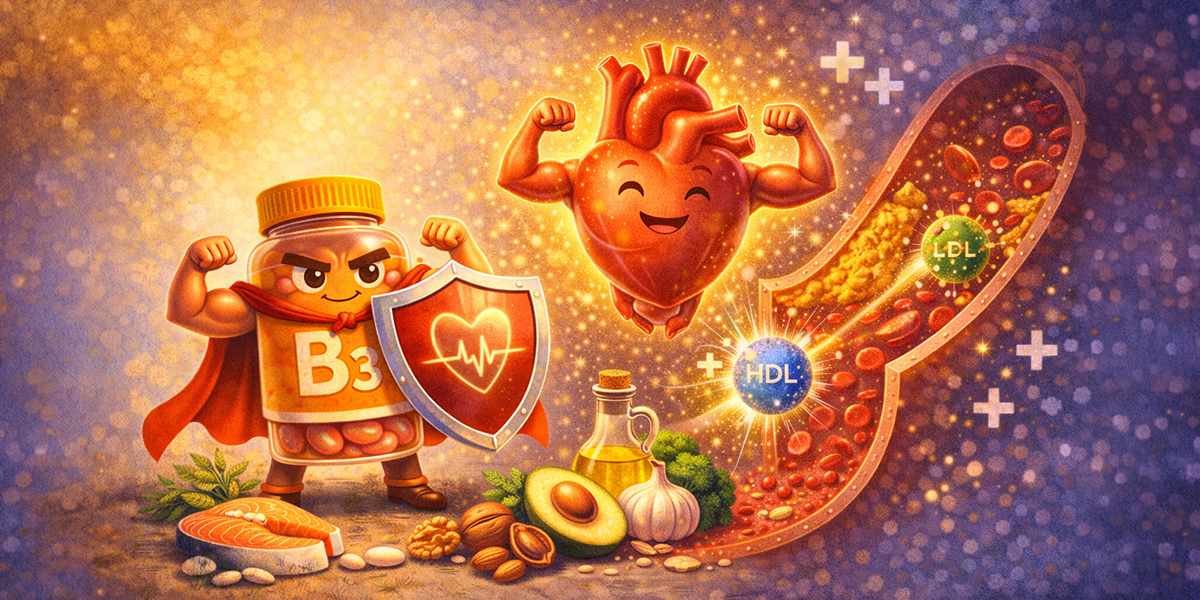


Heart health is one of the most important pillars of overall wellness, especially in today’s lifestyle, which is often marked by low physical activity and a high intake of fats and sugars. With the rising rates of heart disease and high cholesterol, paying attention to nutrients that support cardiovascular health has become essential. Among these nutrients, Vitamin B3, also known as niacin, stands out as an important B vitamin that supports heart health and regulates blood lipid levels. In this article, we explore the benefits of niacin, how it works, and when it may be a suitable dietary supplement.
What Is Vitamin B3 (Niacin)?
Vitamin B3 is a water-soluble vitamin that belongs to the B-complex family. It is available in two main forms: niacin (nicotinic acid) and niacinamide. This vitamin is involved in many vital processes in the body, most notably converting food into energy, supporting nervous system function, and maintaining healthy skin. It is also essential for the production of enzymes involved in metabolism, making it a key nutrient for overall health and proper organ function.
The Role of Niacin in Supporting Heart Health
Vitamin B3 plays an important role in promoting heart and blood vessel health. Niacin helps improve blood flow by supporting the flexibility of blood vessels, and it may also help reduce inflammation associated with cardiovascular disease. Research suggests that adequate niacin intake may contribute to lowering the risk of certain heart conditions, especially when combined with a healthy lifestyle that includes a balanced diet and regular physical activity.
Vitamin B3 and Cholesterol Balance
Niacin is well known for its role in improving blood lipid balance. It may help lower levels of low-density lipoprotein (LDL), often referred to as bad cholesterol, as well as triglycerides. At the same time, it may help raise levels of high-density lipoprotein (HDL), known as good cholesterol. This positive effect makes Vitamin B3 an important nutrient for people dealing with imbalanced blood fats. However, niacin supplements should be used under professional supervision, especially when taken in therapeutic doses.
Dietary Sources of Vitamin B3
Vitamin B3 is found in many everyday foods, making it relatively easy to obtain through a balanced diet. Good sources of niacin include lean meats, poultry, fish, whole grains, legumes, nuts, and seeds. The body can also produce limited amounts of niacin from the amino acid tryptophan. Even so, diet alone may not always be enough for some individuals to meet their daily needs.
When Are Niacin Supplements a Good Option?
Vitamin B3 supplements may be useful for individuals with a nutritional deficiency or for those looking to support heart health and cholesterol balance as part of a comprehensive wellness plan. At Dr. Nutrition, high-quality niacin supplements are available in carefully designed formulas to suit different needs, whether for cardiovascular support or energy metabolism. It is always recommended to follow the suggested dosage and consult a healthcare professional before regular use.