
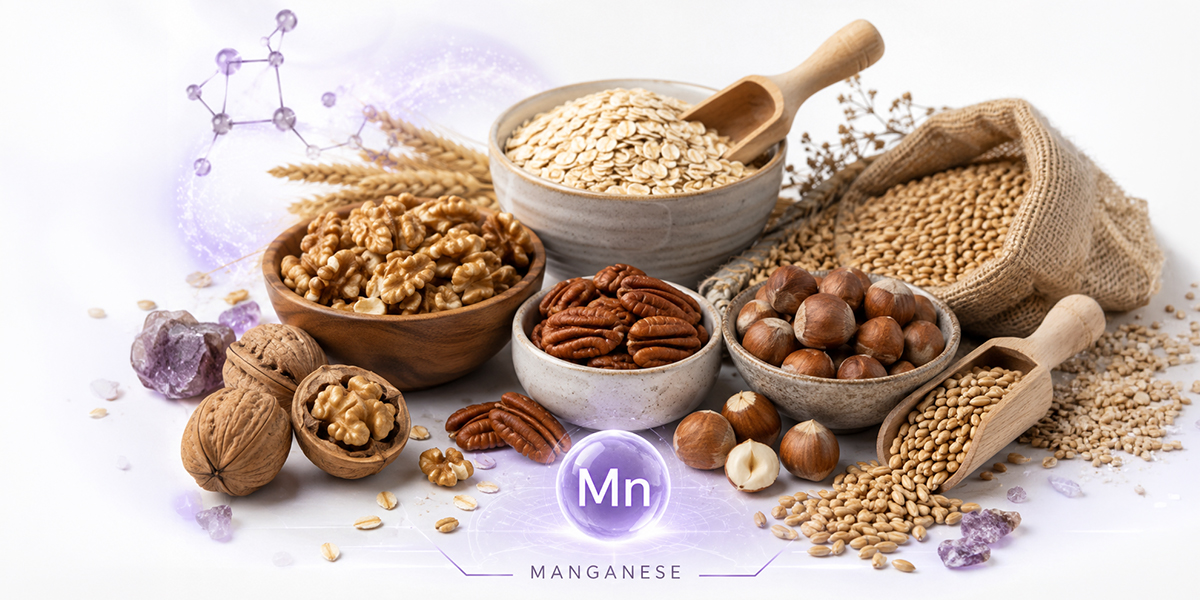


Manganese is an essential trace mineral that plays an important role in bone and joint health, glucose metabolism, enzyme activity, and protection against oxidative damage.
One of the best ways to obtain manganese naturally is through nutrient-dense foods such as nuts and whole grains. These foods provide the body with useful amounts of manganese along with fiber, healthy fats, vitamins, and other minerals that support overall health.
Table of Contents
Manganese in Nuts
Nuts such as cashews, almonds, walnuts, and hazelnuts are natural sources of manganese. Regular intake of nuts in moderate portions can help support daily manganese needs.
Manganese from nuts contributes to enzyme activity involved in bone formation, antioxidant defense, and glucose metabolism. Nuts also provide plant-based protein, fiber, and unsaturated fats that support heart and vascular health.
Because nuts are calorie-dense, portion control is important. A small daily serving can provide nutritional benefits without excessive calorie intake.
Manganese in Whole Grains
Whole grains such as oats, brown rice, whole wheat, and barley are excellent dietary sources of manganese.
These grains help support the body’s daily manganese intake while also providing complex carbohydrates, fiber, B vitamins, and minerals that contribute to energy metabolism and digestive health.
Choosing whole grains instead of refined grains can increase manganese intake and provide additional nutritional benefits that support long-term health.
| Food Source | Manganese Support | Additional Benefits |
|---|---|---|
| Cashews, Almonds, Walnuts | Help support daily manganese intake | Healthy fats, fiber, plant protein |
| Oats and Barley | Rich whole-grain sources of manganese | Fiber, steady energy, digestive support |
| Brown Rice and Whole Wheat | Provide manganese with complex carbohydrates | Energy metabolism and satiety support |
Role of Manganese in Glucose Metabolism
Manganese helps activate enzymes involved in breaking down carbohydrates and converting them into usable energy.
By supporting these metabolic pathways, manganese may contribute to normal glucose metabolism and help the body use sugar from the blood as fuel.
Adequate manganese intake from foods such as nuts and whole grains may support balanced energy levels and healthy metabolic function as part of a balanced diet.
Supporting Bone and Joint Health
Manganese contributes to bone and joint health by supporting the formation of bone matrix and cartilage.
It also plays a role in connective tissue support, helping maintain joint flexibility and structural integrity.
Including manganese-rich foods such as nuts and whole grains may help support the skeletal system and reduce nutritional gaps that can affect long-term joint and bone wellness.
- Supports bone matrix formation.
- Contributes to cartilage and connective tissue health.
- Helps maintain joint flexibility.
- Supports antioxidant defenses against oxidative stress.
- Contributes to normal energy and glucose metabolism.
Tips for Obtaining Manganese from Nuts and Whole Grains
To support healthy manganese intake, it is useful to include a variety of nuts and whole grains in your daily meals.
- Add oats or whole-grain cereal to breakfast.
- Use brown rice, quinoa, barley, or whole wheat as part of main meals.
- Add a small serving of nuts to snacks or salads.
- Choose whole-grain bread or pasta instead of refined versions.
- Combine nuts and whole grains with vegetables and protein for balanced meals.
This approach helps ensure a consistent supply of manganese while also supporting digestion, energy, satiety, and overall nutritional balance.
Frequently Asked Questions
What foods are rich in manganese?
Nuts, seeds, whole grains, legumes, leafy greens, and tea are common natural sources of manganese.
Are nuts a good source of manganese?
Yes. Nuts such as cashews, almonds, walnuts, and hazelnuts can help support manganese intake when eaten in moderate amounts.
Why are whole grains better than refined grains?
Whole grains retain more fiber, vitamins, minerals, and manganese compared to refined grains, making them more nutritious overall.
How does manganese support blood sugar metabolism?
Manganese supports enzymes involved in carbohydrate metabolism, helping the body convert carbohydrates into energy.
Do I need manganese supplements?
Most people can get enough manganese from a balanced diet. Supplements should be considered only when needed and preferably with professional advice.
Conclusion
Nuts and whole grains are excellent natural sources of manganese, a mineral that supports bone and joint health, glucose metabolism, and antioxidant protection.
Regularly including these foods in a balanced diet can help ensure adequate manganese intake and promote long-term health, energy balance, and cellular protection.