

Chelated minerals have become increasingly popular because they are often easier to absorb and gentler on the digestive system compared to some traditional mineral supplements. These minerals are bound to amino acids, which may improve their stability and biological availability. However, despite their potential benefits, chelated minerals can still interact with certain medications, affecting either the absorption of the mineral itself or the effectiveness of the medication.
Table of Contents
- How Can Chelated Minerals Interact with Medications?
- Common Medications Affected by Mineral Supplements
- Does Chelation Prevent These Interactions?
- Why Timing Matters
- Individual Factors That Influence Interactions
- The Importance of Reading Labels and Guidance
- Practical Tips for Safe Use
- Frequently Asked Questions
- Conclusion
How Can Chelated Minerals Interact with Medications?
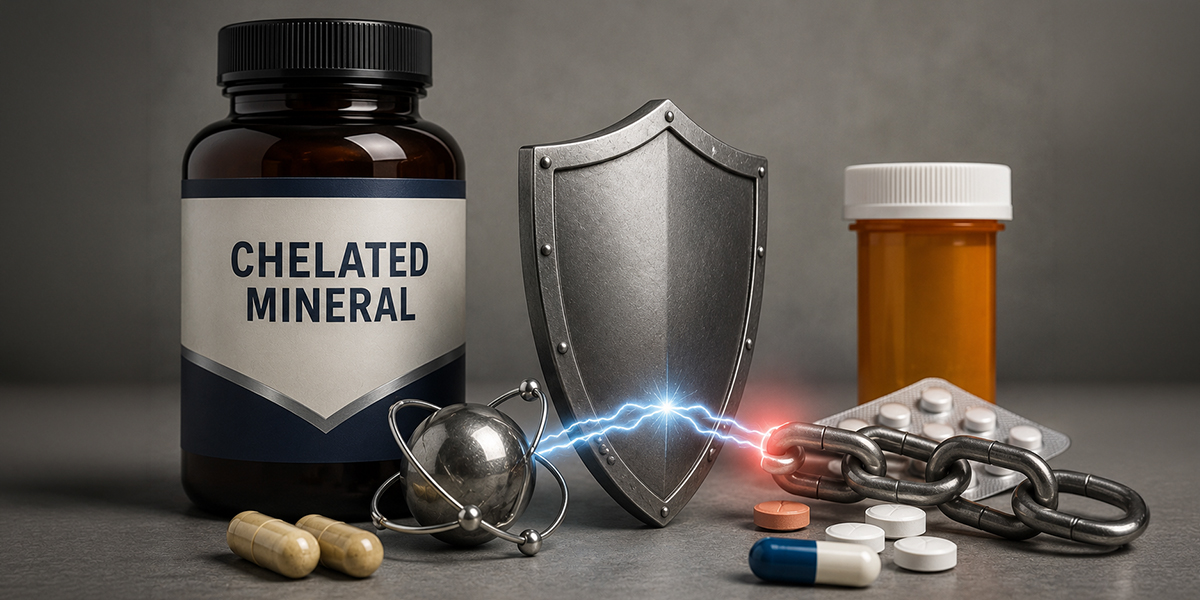
Minerals such as magnesium, calcium, zinc, and iron can interact with certain medications inside the digestive tract. In some cases, the mineral may bind to the medication and reduce its absorption into the bloodstream.
When this occurs, the medication may become less effective, the mineral may be absorbed less efficiently, or both may be affected.
These interactions can occur regardless of whether the mineral is in a traditional or chelated form.
Common Medications Affected by Mineral Supplements
Several types of medications are known to interact with mineral supplements, including:
- Certain antibiotics.
- Thyroid hormone medications.
- Osteoporosis treatments.
- Some heart medications.
- Specific prescription medications that rely on precise absorption.
For example, calcium, magnesium, iron, or zinc supplements may reduce the absorption of some antibiotics or thyroid medications when taken simultaneously.
Does Chelation Prevent These Interactions?
Chelation may improve mineral stability, absorption, and digestive tolerance. However, it does not completely eliminate the possibility of interactions with medications.
Even chelated minerals can still compete with certain medications during absorption or form complexes that reduce the effectiveness of one or both substances.
Therefore, chelated forms should not automatically be considered interaction-free.
Why Timing Matters
One of the most effective ways to reduce potential interactions is proper timing.
Many healthcare professionals recommend separating mineral supplements and certain medications by several hours to reduce competition for absorption.
The exact timing varies depending on:
- The specific mineral.
- The type of medication.
- The dosage being used.
- Individual health considerations.
Individual Factors That Influence Interactions
The likelihood and severity of interactions may vary from person to person.
Factors that may influence interactions include:
- Age.
- Digestive health.
- Kidney function.
- Overall nutritional status.
- Medication dosage.
- Number of medications being used.
Individuals taking multiple medications or managing chronic health conditions may require closer monitoring.
The Importance of Reading Labels and Guidance
Many supplement manufacturers include warnings regarding possible medication interactions directly on product labels.
Reading ingredient lists, understanding the mineral form, and following healthcare guidance can help reduce the risk of reduced medication effectiveness or unwanted side effects.
Being informed is an important part of supplement safety.
Practical Tips for Safe Use
- Read supplement and medication labels carefully.
- Follow recommended timing instructions.
- Inform healthcare providers about all supplements you take.
- Avoid assuming chelated minerals are interaction-free.
- Monitor for unexpected side effects or changes in medication response.
- Seek professional guidance when taking multiple supplements or medications.
Frequently Asked Questions
What are chelated minerals?
Chelated minerals are minerals attached to amino acids, which may improve stability, absorption, and digestive comfort.
Can chelated minerals interact with medications?
Yes. Although absorption may be improved, chelated minerals can still interact with certain medications.
Which medications are most commonly affected?
Certain antibiotics, thyroid medications, and osteoporosis treatments are among the most commonly affected.
How can I reduce the risk of interactions?
Separating supplement and medication timing by several hours may help reduce absorption interference.
Should I consult a healthcare professional?
Yes, especially if you take prescription medications, have chronic health conditions, or use multiple supplements.
Conclusion
Chelated minerals may offer improved absorption and greater digestive comfort compared to some traditional mineral forms, but they can still interact with certain medications. These interactions may affect the absorption and effectiveness of both supplements and drugs.
Proper timing, awareness of potential interactions, careful label reading, and professional guidance are essential for safely combining mineral supplements with prescription or over-the-counter medications. A thoughtful approach helps maximize benefits while minimizing unnecessary risks.