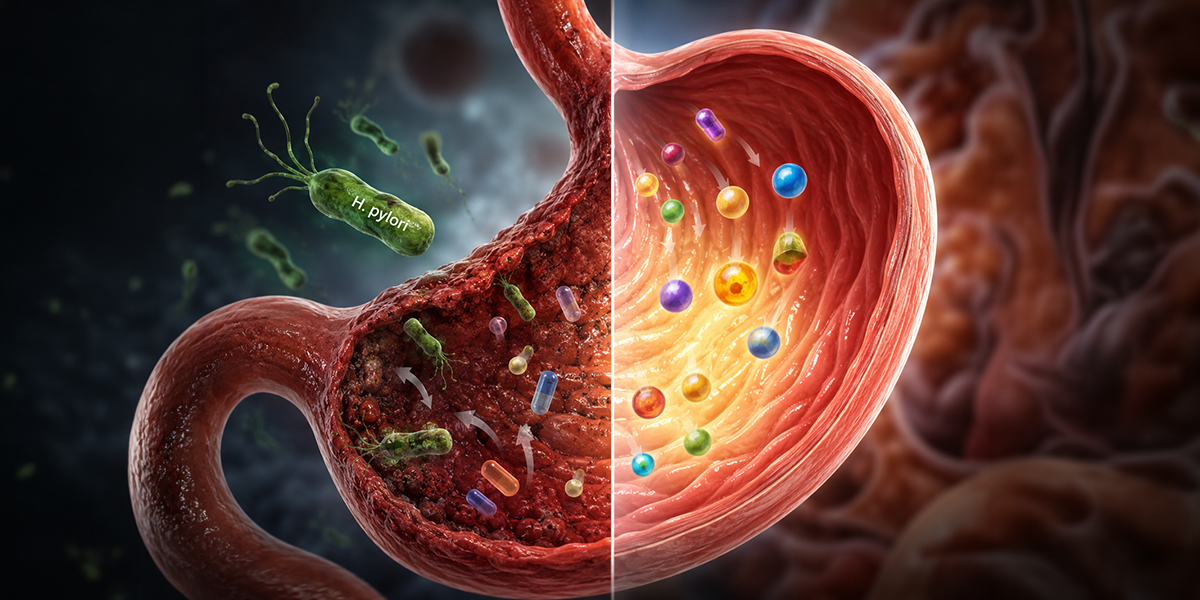


Helicobacter pylori, commonly known as H. pylori, is a bacterium that can infect the stomach lining and contribute to chronic inflammation, stomach irritation, ulcers, and changes in stomach acid secretion.
While many people start vitamins and supplements to improve energy, immunity, hair health, or general wellness, an active H. pylori infection may reduce the body’s ability to digest and absorb nutrients properly. This can make supplements appear less effective, even when the product quality and dosage are appropriate.
Table of Contents
What Is H. Pylori?
H. pylori is a type of bacteria that can live in the stomach lining and disturb the normal protective environment of the stomach.
In some people, it may cause chronic gastritis, stomach ulcers, bloating, nausea, abdominal discomfort, reflux-like symptoms, or changes in appetite.
Because the stomach plays a central role in digestion and nutrient preparation, any condition that inflames or damages the stomach lining may affect how well vitamins and minerals are absorbed.
How H. Pylori Affects Digestion
H. pylori lives in the stomach lining and may disrupt the stomach’s natural balance by causing inflammation and irritation.
This inflammation can interfere with stomach acid secretion and the first stage of digestion, where food begins to break down and nutrients are prepared for absorption.
When stomach function is disturbed, the digestive system may become less efficient at releasing nutrients from food and supplements, which can reduce the benefit of a vitamin course.
| Digestive Issue | How H. Pylori May Contribute | Possible Effect |
|---|---|---|
| Stomach Inflammation | Irritates the stomach lining | Poor digestion and discomfort |
| Altered Stomach Acid | May disturb acid balance | Reduced nutrient release and absorption |
| Poor Enzyme Activation | Stomach acid helps activate digestion | Less efficient breakdown of food |
| Reduced Supplement Benefit | Nutrients may not be properly prepared for absorption | Weak or delayed results |
Effect on Vitamin and Mineral Absorption
Reduced stomach acid and chronic stomach inflammation may impair the absorption of several important nutrients.
Vitamin B12, iron, zinc, magnesium, and calcium are among the nutrients that may be affected when stomach function is not optimal.
As a result, a person may take supplements consistently but still experience poor improvement because the body is not absorbing or utilizing the nutrients efficiently.
| Nutrient | Why Stomach Health Matters | Possible Concern with H. Pylori |
|---|---|---|
| Vitamin B12 | Needs proper stomach function for release and absorption | Fatigue, poor focus, or low B12 status |
| Iron | Acidic environment supports better absorption | Low ferritin or anemia-related symptoms |
| Zinc | Requires good digestion and mineral release | Weak immune, skin, or taste support |
| Magnesium | Absorption can be affected by gut function and supplement form | Reduced benefit from supplementation |
Why Supplements May Not Work During Infection
When the stomach lining is inflamed, supplements may not be broken down, dissolved, or absorbed as efficiently as expected.
This means nutrients may pass through the digestive tract without being fully utilized, leading to weak results despite consistent use.
In many cases, the issue is not simply the supplement dose. The real problem may be impaired digestion, inflammation, poor stomach acid balance, or an untreated digestive infection.
Can H. Pylori Cause Nutrient Deficiencies?
Yes, in some cases, H. pylori infection may contribute to nutrient deficiency symptoms, especially when it affects stomach function for a long period.
Symptoms such as fatigue, anemia, poor concentration, hair shedding, weakness, brittle nails, or low energy may occur when nutrient absorption is impaired.
However, these symptoms can have many causes, so proper testing and medical evaluation are important before assuming that H. pylori is the only reason.
| Possible Symptom | Possible Nutrient Link | Recommended Action |
|---|---|---|
| Fatigue | May relate to low B12, iron, or poor absorption | Check blood markers and digestive health |
| Anemia Symptoms | May relate to iron or B12 issues | Evaluate ferritin, B12, CBC, and infection status |
| Hair Loss | May relate to iron, zinc, protein, or other deficiencies | Identify the cause before adding many supplements |
| Poor Concentration | May relate to B12, iron, sleep, or stress | Use a complete health assessment |
Importance of Treating the Infection First
Treating H. pylori helps reduce inflammation, support healing of the stomach lining, and restore a healthier digestive environment.
Once the stomach lining and acid balance improve, digestion may become more efficient, and the body may respond better to vitamins, minerals, and other supplements.
In many cases, addressing the infection first is more effective than simply increasing supplement doses or adding more products.
- Treat the root digestive issue before relying on high-dose supplements.
- Follow the medical treatment plan fully if H. pylori is confirmed.
- Support stomach healing with gentle nutrition and medical guidance.
- Recheck nutrient status after treatment when needed.
- Choose more absorbable supplement forms if deficiencies remain.
- Avoid self-prescribing strong stomach acid or antibiotic protocols.
| Before Treatment | After Proper Treatment | Expected Benefit |
|---|---|---|
| Inflamed stomach lining | Improved stomach health | Better digestion comfort |
| Disturbed acid balance | More normal digestive function | Improved nutrient release |
| Poor supplement response | Better absorption potential | Stronger results from vitamins |
| Persistent deficiency symptoms | Clearer nutritional correction plan | More targeted supplementation |
Frequently Asked Questions
Can H. pylori reduce supplement effectiveness?
Yes. H. pylori may inflame the stomach lining and disturb stomach acid balance, which can reduce digestion and nutrient absorption.
Which vitamins and minerals may be affected by H. pylori?
Vitamin B12, iron, zinc, magnesium, and calcium may be affected when stomach inflammation or low stomach acid interferes with absorption.
Should I stop supplements completely during H. pylori infection?
Not always. Some supplements may still be useful, but treating the infection and improving digestion are often more important than simply adding more supplements.
Can H. pylori cause fatigue or anemia?
In some cases, H. pylori may contribute to poor iron or B12 absorption, which may be linked to fatigue, anemia symptoms, or low energy.
When should I start a vitamin course after H. pylori?
This depends on the treatment plan, symptoms, and test results. A healthcare professional can help decide when to begin or adjust supplementation after treatment.
Conclusion
H. pylori can significantly reduce the effectiveness of vitamins and supplements by disrupting stomach acid balance, inflaming the stomach lining, and impairing nutrient absorption.
For this reason, treating the infection before starting a vitamin course may help improve digestion, restore nutrient absorption, and allow supplements to work more effectively. In many cases, addressing the root digestive problem is the key step before increasing doses or adding more products.