

When reading supplement labels, many consumers are surprised to see certain vitamins or minerals listed at levels such as 1,000%, 2,000%, or even 5,000% of the Daily Value.
This can make a product look extremely powerful, but a higher percentage does not always mean better results. In many cases, high doses are related to absorption differences, formulation goals, nutrient type, target use, or marketing strategy.
Table of Contents
What Does the Daily Value Represent?
The Daily Value, often shown as %DV on supplement labels, is a reference amount used to help consumers understand how much of a nutrient a product provides compared with general daily nutrition needs.
These values are mainly designed to help prevent deficiency and support basic nutritional adequacy for the general population.
However, the Daily Value does not always represent the optimal intake for every individual, every health condition, or every specific goal. Needs may vary based on age, diet, absorption, lifestyle, deficiency status, pregnancy, medical conditions, and medication use.
Why Some Nutrients Are Added in Very High Doses
Companies may include nutrients at levels far above 100% of the Daily Value for several reasons.
Some nutrients have limited absorption, some are included for targeted nutritional support, and some are used in higher amounts because the body may not fully utilize the entire dose.
In other cases, high numbers are used because consumers often associate larger doses with stronger results, even when this is not always scientifically meaningful.
| Reason for High Dose | Explanation | Important Note |
|---|---|---|
| Absorption Loss | Not all of the nutrient may be absorbed or used | Dose should still remain within safe limits |
| Targeted Support | Some products are formulated for specific nutritional goals | Should match the user’s actual need |
| Nutrient Type | Some water-soluble vitamins are commonly used in higher amounts | More is not always better |
| Marketing Appeal | Large percentages may look more powerful on the label | Consumers should evaluate quality, not only numbers |
Differences in Nutrient Absorption
Not all vitamins and minerals are absorbed with the same efficiency.
Some nutrients may be affected by digestion, stomach acid, gut health, food timing, supplement form, and competition with other minerals.
Because of this, manufacturers may use larger amounts to help ensure that a meaningful amount becomes available to the body. However, this does not mean that extremely high doses are always necessary.
| Factor | How It Affects Absorption | Example |
|---|---|---|
| Nutrient Form | Some forms are absorbed better than others | Methylcobalamin vs. cyanocobalamin, chelated minerals vs. basic salts |
| Digestive Health | Poor digestion may reduce nutrient availability | Low stomach acid may affect B12, iron, and minerals |
| Food Timing | Some nutrients absorb better with food, others away from inhibitors | Iron should not be taken with calcium, coffee, or tea |
| Nutrient Competition | Minerals may compete for absorption | Calcium, zinc, magnesium, and iron may interact |
Therapeutic Versus Preventive Doses
Some supplements are designed only to cover basic daily needs, while others are formulated to support specific nutritional gaps or targeted health goals.
A preventive dose is usually closer to normal daily requirements and is intended to help maintain adequate intake.
A therapeutic or targeted nutritional dose may be higher and is often used for a specific purpose, such as correcting a deficiency, supporting energy metabolism, or addressing a clinically identified need.
| Dose Type | Purpose | When It May Be Used |
|---|---|---|
| Preventive Dose | Supports general daily nutrition | For healthy individuals with normal needs |
| Maintenance Dose | Helps maintain adequate levels | After deficiency correction or with low dietary intake |
| Therapeutic Dose | Targets a specific nutritional issue | Usually best guided by testing or professional advice |
| Megadose | Provides amounts far above daily needs | Should be used cautiously and only when appropriate |
Marketing and Consumer Perception
Large numbers on supplement labels can influence consumer perception.
Many people assume that a supplement containing 5,000% of the Daily Value must be more powerful than one containing 100% or 200%.
However, this is not always true. A well-formulated product with a moderate dose, good nutrient form, and better bioavailability may be more useful than a product with a huge number but poor formulation quality.
- A bigger percentage does not always mean better absorption.
- A higher dose does not always mean stronger benefits.
- More nutrients do not always equal a better formula.
- Bioavailability and form often matter more than label percentage.
- The best product is the one that matches the person’s actual need.
Do Higher Doses Mean Better Results?
Not necessarily. Once the body’s needs are met, increasing the dose may not provide additional benefits.
For some water-soluble vitamins, excess amounts may be excreted in urine. For other nutrients, especially certain minerals and fat-soluble vitamins, excessive intake may accumulate or increase the risk of side effects.
This is why it is important to look at the full formulation, the nutrient form, the intended use, and the safety profile rather than focusing only on the %DV.
| Nutrient Category | High-Dose Consideration | Consumer Advice |
|---|---|---|
| Water-Soluble Vitamins | Excess may be excreted, but side effects are still possible | Avoid unnecessary megadosing |
| Fat-Soluble Vitamins | May accumulate in the body | Use high doses only with guidance |
| Minerals | May compete with each other or cause imbalance | Check dose, form, and safety limits |
| Iron and Iodine | Can be risky when taken unnecessarily | Use based on need, testing, or professional advice |
Frequently Asked Questions
Is 5000% of the Daily Value dangerous?
It depends on the nutrient. Some nutrients are safer at higher doses than others, but excessive intake can still cause side effects. Safety depends on the vitamin or mineral, dose, duration, and individual health status.
Why do B vitamins often appear in very high percentages?
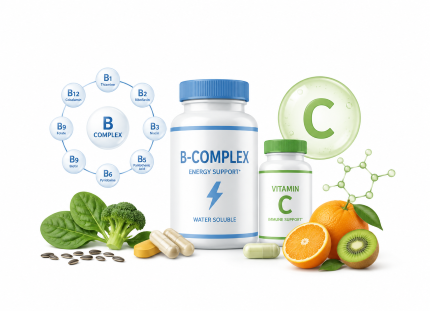
B vitamins are water-soluble, and some formulas use higher amounts to compensate for absorption differences or support targeted energy metabolism. However, high doses are not always necessary for everyone.
Does a higher percentage mean better absorption?
No. Absorption depends more on the nutrient form, digestive health, timing, and bioavailability than the percentage shown on the label.
Should I choose the supplement with the highest dose?
Not always. A supplement should be chosen based on your actual need, deficiency status, health goal, nutrient form, and safety, not simply the largest dose.
When should high-dose supplements be used?
High-dose supplements may be useful in specific cases, such as confirmed deficiency or targeted nutritional support, but they are best used under professional guidance, especially for minerals and fat-soluble vitamins.
Conclusion
A supplement containing 5,000% of the Daily Value is not automatically superior, stronger, or more effective than a lower-dose product.
Such doses may be used because of absorption challenges, targeted formulation goals, individual nutrient needs, or marketing strategy. The true quality of a supplement depends on its form, bioavailability, ingredient quality, safety, and how well it matches the user’s actual nutritional needs.