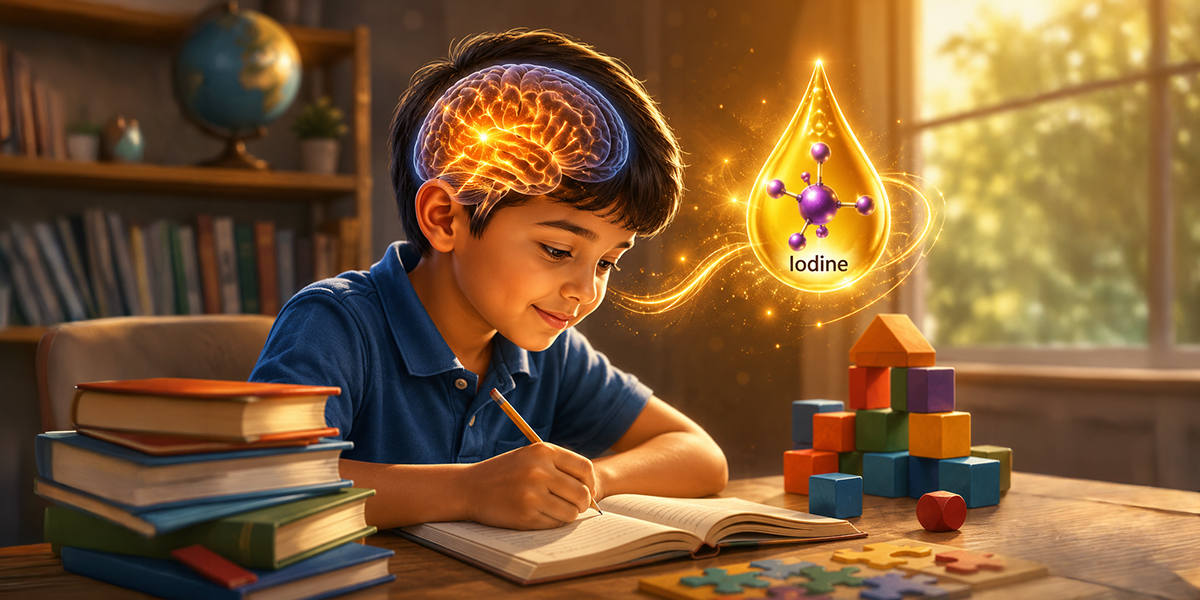


Iodine is an essential trace mineral needed for healthy thyroid function and the production of thyroid hormones.
These hormones play a vital role in brain growth, nervous system development, learning ability, and cognitive performance in children. When iodine intake is insufficient during pregnancy or early childhood, the risk of developmental delays and lower cognitive performance may increase.
Table of Contents
Why Iodine Matters for Children
Iodine is required by the thyroid gland to produce thyroid hormones, mainly thyroxine T4 and triiodothyronine T3.
These hormones help regulate growth, metabolism, nervous system development, and brain maturation during the earliest and most sensitive stages of life.
Because the brain develops rapidly during pregnancy, infancy, and childhood, adequate iodine intake during these periods is especially important for supporting normal cognitive development.
Effect of Iodine on Brain Growth
Thyroid hormones supported by iodine are involved in the formation of brain cells, the development of nerve pathways, and the communication between neurons.
These processes help build the foundation for learning, memory, attention, language development, problem-solving, and analytical thinking.
When iodine intake is adequate, the thyroid can produce the hormones needed to support normal brain development and healthy nervous system function.
| Development Area | Role of Iodine-Supported Thyroid Hormones | Possible Benefit |
|---|---|---|
| Brain Growth | Supports normal development of brain structures | Healthy cognitive foundation |
| Nerve Signaling | Helps support communication between nerve cells | Better learning and response processing |
| Learning and Memory | Supports brain energy and development | Improved learning potential |
| Attention and Focus | Supports normal nervous system function | Better concentration and school performance |
Iodine Deficiency During Pregnancy and Childhood
Iodine deficiency during pregnancy can affect fetal brain development because the baby depends on maternal thyroid hormone supply, especially in early pregnancy.
Severe deficiency may increase the risk of intellectual disability and significant developmental problems, while milder deficiency may still be associated with reduced cognitive performance or lower IQ potential.
In early childhood, inadequate iodine intake may contribute to poor concentration, learning difficulties, delayed cognitive development, and reduced school performance compared with peers.
| Life Stage | Why Iodine Is Important | Possible Risk of Deficiency |
|---|---|---|
| Pregnancy | Supports fetal brain and nervous system development | Developmental delays or lower cognitive potential |
| Infancy | Supports rapid brain growth | Delayed developmental milestones |
| Childhood | Supports learning, focus, and mental development | Poor concentration and learning difficulties |
| School Age | Supports cognitive performance and attention | Reduced academic performance |
Dietary Sources of Iodine
Iodine can be obtained through several foods, especially when the diet includes iodized salt, seafood, dairy products, eggs, and some seaweeds.
Iodized salt is one of the most common public health strategies used to help prevent iodine deficiency in populations.
Seaweeds such as kelp may contain very high amounts of iodine, so they should be used carefully, especially in children, because excessive iodine intake may affect thyroid function.
| Food Source | Iodine Contribution | Practical Note |
|---|---|---|
| Iodized Salt | Common iodine source | Use moderately as part of a balanced diet |
| Fish and Seafood | Naturally rich in iodine | Useful when included regularly and safely |
| Dairy Products | Can contribute to iodine intake | Milk, yogurt, and cheese may help support intake |
| Seaweed and Kelp | May be very high in iodine | Use cautiously, especially for children |
Importance of Balance and Prevention
Maintaining balanced iodine intake is essential because both too little and too much iodine can affect thyroid function.
Deficiency may impair normal mental development, while excessive iodine intake may contribute to thyroid dysfunction in sensitive individuals.
For this reason, iodine intake should match the child’s age, diet, health status, and individual needs. Professional guidance is especially important before using iodine supplements.
- Use iodized salt moderately when appropriate.
- Include iodine-rich foods as part of a balanced diet.
- Avoid giving high-iodine seaweed products to children without guidance.
- Assess thyroid health if there are growth, energy, or learning concerns.
- Consult a doctor or nutritionist before starting iodine supplements.
- Maintain balance rather than focusing only on high iodine intake.
Who May Be at Higher Risk of Iodine Deficiency?
Some children may be more likely to have low iodine intake depending on diet, geography, food choices, and family nutrition patterns.
Children who consume little seafood or dairy, families that do not use iodized salt, and children on restricted diets may need closer attention to iodine intake.
Pregnant and breastfeeding women also require adequate iodine intake because maternal iodine status can influence the child’s brain and thyroid development.
| Higher-Risk Group | Why Risk May Be Higher | Recommended Approach |
|---|---|---|
| Children with Low Seafood Intake | Seafood is a natural iodine source | Review diet and include suitable sources |
| Children Avoiding Dairy | Dairy can contribute to iodine intake | Consider alternative iodine sources |
| Families Not Using Iodized Salt | May have lower routine iodine intake | Use appropriate iodine sources under guidance |
| Pregnancy and Breastfeeding | Maternal iodine supports child development | Follow prenatal or medical nutrition advice |
Frequently Asked Questions
Why is iodine important for children’s intelligence?
Iodine helps the thyroid produce hormones that support brain growth, nerve development, learning ability, and normal cognitive function.
Can iodine deficiency lower IQ?
Severe iodine deficiency during pregnancy or early childhood may increase the risk of impaired cognitive development and lower intellectual performance.
What are good food sources of iodine for children?
Iodized salt, fish, seafood, dairy products, eggs, and some seaweeds can provide iodine, but high-iodine seaweed products should be used cautiously.
Should children take iodine supplements?
Children should only take iodine supplements when recommended by a healthcare professional, because both deficiency and excess iodine can affect thyroid health.
Can too much iodine be harmful?
Yes. Excessive iodine intake may disturb thyroid function, especially in sensitive individuals or children with thyroid-related conditions.
Conclusion
Iodine is crucial for thyroid hormone production, brain growth, nervous system development, and the development of learning and intelligence in children.
Maintaining normal iodine levels through a balanced diet and preventing deficiency can support healthy cognitive development from pregnancy through childhood. However, iodine intake must remain balanced, because excessive intake may also affect thyroid function. For children, supplementation should always be guided by a healthcare professional.