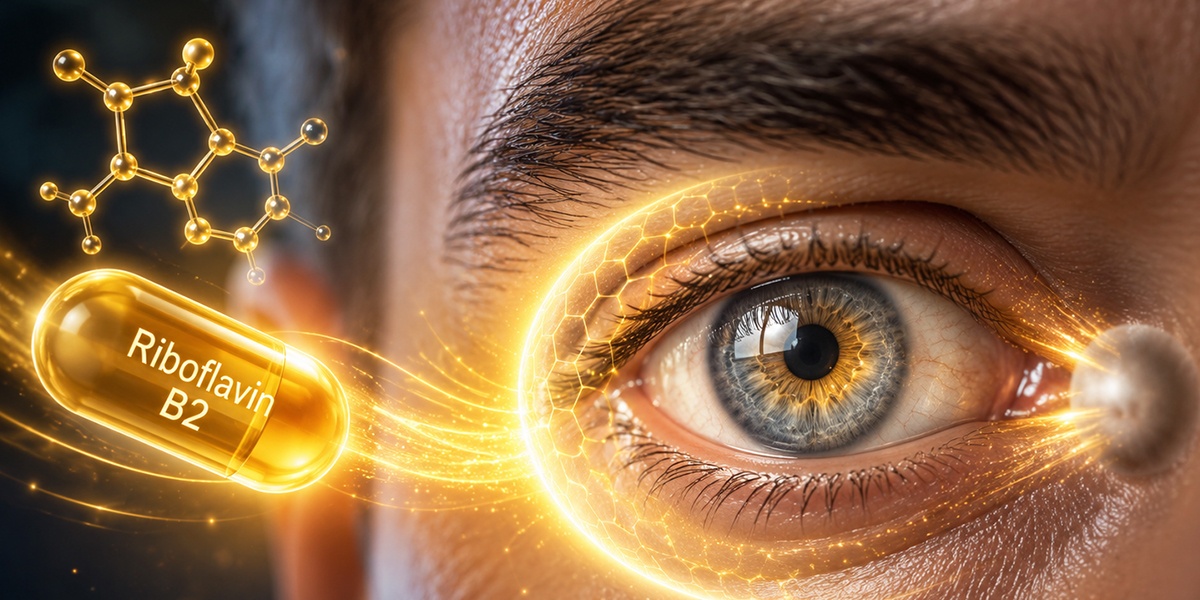


Riboflavin, also known as Vitamin B2, is an essential water-soluble vitamin that supports cellular energy production, antioxidant defense, and healthy tissue function.
For eye health, riboflavin plays an important role in protecting delicate eye tissues from oxidative stress, supporting the cornea and lens, and helping maintain long-term visual function. Adequate intake may also support strategies aimed at reducing the risk of age-related eye problems such as cataracts.
Table of Contents
Why Riboflavin Matters for Eye Health
The eyes require continuous energy and strong antioxidant protection because they are constantly exposed to light, oxygen, and environmental stress.
Riboflavin supports the production of cellular energy and helps maintain the health of tissues involved in vision, including the cornea, lens, and surrounding eye structures.
Because oxidative stress is associated with age-related changes in the lens and other eye tissues, maintaining adequate riboflavin levels may be important for long-term vision support.
How Riboflavin Supports Eye Tissues
Vitamin B2 contributes to normal eye function by supporting energy metabolism inside eye cells.
The cornea and lens depend on healthy cellular function to remain clear, stable, and able to support proper light transmission.
Riboflavin also helps maintain the integrity of mucous membranes and epithelial tissues, which are important for eye comfort, surface protection, and normal visual function.
| Eye Structure | How Riboflavin Supports It | Potential Benefit |
|---|---|---|
| Cornea | Supports healthy surface tissues | Helps maintain comfort and clear vision |
| Lens | Supports antioxidant protection | May help protect against age-related clouding |
| Eye Cells | Supports cellular energy production | Helps maintain normal eye function |
| Mucous Membranes | Supports tissue integrity | May support eye surface comfort |
Protection Against Oxidative Stress
Oxidative stress occurs when free radicals build up faster than the body can neutralize them.
The eye’s lens is especially vulnerable to oxidative stress because it must remain transparent and functional over many years.
Riboflavin acts as a cofactor in antioxidant systems, including those involved in glutathione recycling. This helps the body neutralize free radicals and protect eye tissues from damage.
- Supports antioxidant enzyme activity.
- Helps protect the lens from oxidative damage.
- Supports cellular repair and maintenance.
- May help reduce stress linked to age-related eye changes.
- Works alongside other antioxidants such as vitamin C, vitamin E, zinc, selenium, and carotenoids.
Role in Cataract Prevention
Cataracts occur when the eye’s lens becomes cloudy, which can gradually affect vision quality, clarity, and light sensitivity.
Low riboflavin status has been associated with a higher risk of cataract formation in some populations, especially when antioxidant protection is insufficient.
Adequate riboflavin intake may help support the lens by reducing oxidative stress and maintaining normal cellular function, which may contribute to long-term cataract prevention strategies.
| Factor | Impact on Cataract Risk | Supportive Action |
|---|---|---|
| Low Antioxidant Defense | May increase oxidative damage to the lens | Maintain adequate riboflavin and antioxidant intake |
| Poor Riboflavin Intake | May reduce support for eye tissue protection | Include B2-rich foods regularly |
| Aging | Natural oxidative stress may increase over time | Support eye health through diet and routine checkups |
| UV and Environmental Stress | May contribute to lens damage | Use proper eye protection and healthy nutrition |
Signs of Riboflavin Deficiency Affecting the Eyes
Riboflavin deficiency may affect the eyes because Vitamin B2 is involved in maintaining healthy tissues and supporting normal cellular function.
Low intake may contribute to light sensitivity, eye fatigue, burning sensations, excessive tearing, redness, or blurred vision in some individuals.
These symptoms can have many causes, so they should not be used alone to diagnose deficiency. Persistent eye symptoms should be assessed by a healthcare professional.
| Possible Sign | How It May Relate to B2 | What to Do |
|---|---|---|
| Light Sensitivity | May reflect stressed eye tissues | Review diet and seek eye evaluation if persistent |
| Eye Fatigue | May occur with poor cellular energy support | Improve nutrition and reduce eye strain |
| Burning or Redness | May be linked to tissue irritation or dryness | Check for dryness, allergy, infection, or deficiency |
| Blurred Vision | Can have many causes beyond B2 deficiency | Consult an eye specialist promptly |
Dietary Sources and Supplement Support
Riboflavin is found naturally in many common foods, especially dairy products, eggs, lean meats, fish, almonds, mushrooms, and green vegetables.
A balanced diet usually provides enough Vitamin B2 for most people, but individuals with limited dietary intake, higher nutritional needs, digestive issues, or restrictive diets may require additional support.
Supplementation may be useful when dietary intake is low or when advised by a healthcare professional, but it should be part of a broader approach that includes regular eye exams and overall nutritional balance.
- Dairy products such as milk, yogurt, and cheese.
- Eggs.
- Lean meats, poultry, and fish.
- Almonds and other nuts.
- Mushrooms.
- Leafy green vegetables.
- Fortified cereals and grains.
Frequently Asked Questions
Why is riboflavin important for eye health?
Riboflavin supports energy production in eye cells and helps antioxidant systems protect the lens and other eye tissues from oxidative stress.
Can Vitamin B2 help prevent cataracts?
Adequate riboflavin intake may support lens health and antioxidant protection, which may help reduce factors associated with cataract formation over time.
What eye symptoms may occur with riboflavin deficiency?
Possible symptoms may include light sensitivity, eye fatigue, burning sensations, redness, excessive tearing, or blurred vision, although these symptoms may have many other causes.
What foods are rich in riboflavin?
Good sources include dairy products, eggs, lean meats, fish, almonds, mushrooms, leafy green vegetables, and fortified grains.
Should I take riboflavin supplements for eye health?
Supplements may help people with low intake or increased needs, but they should be used appropriately and should not replace regular eye examinations or professional medical advice.
Conclusion
Riboflavin is essential for protecting eye tissues, supporting cellular energy production, and maintaining antioxidant defense within the eye.
Maintaining adequate Vitamin B2 levels through a balanced diet, and supplementation when needed, may help support long-term vision health and reduce factors associated with cataract formation. For best results, riboflavin should be part of a complete eye-health approach that includes healthy nutrition, eye protection, and regular professional checkups.